
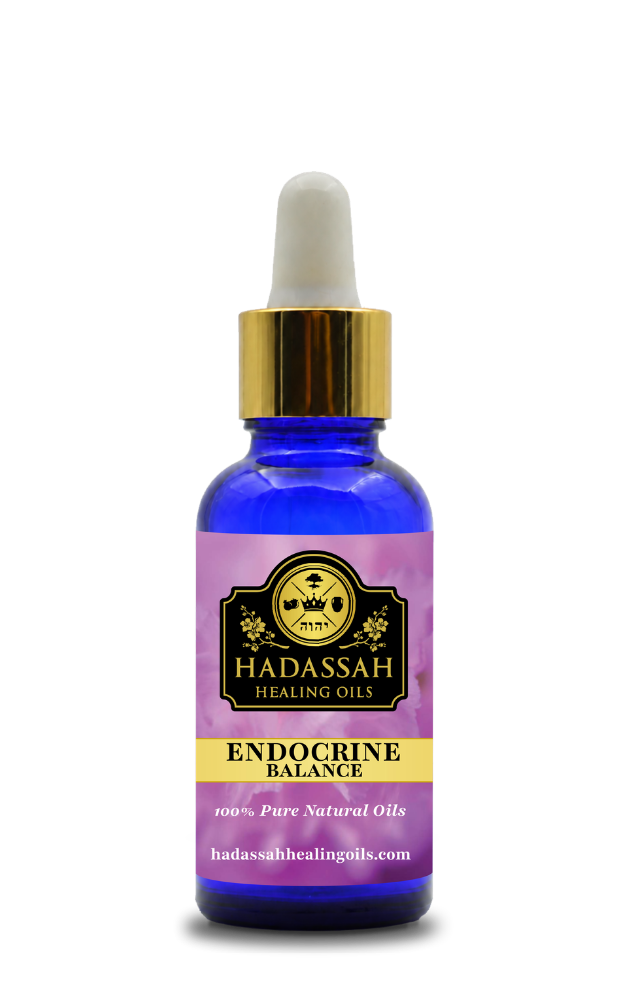
ENDOCRINE BALANCE BLEND 30ML
R520.00 Incl. VAT
ENDOCRINE BALANCE BLEND 30ML
Support the interconnected systems responsible for hormonal communication, metabolic regulation, reproductive health and the physiological stress response.
- 3-5 working days
- All products include VAT.
- Client Testimonies
- 100% Natural
- 100% Pure Essential Oils
- 100% Manufacturing Guarantee
- Share to social media
Description
Directions for Use
Warning
Ingredients
Technical Information
ENDOCRINE BALANCE BLEND 30ML
Endocrine Balance Blend is a concentrated medicinal botanical formulation developed to support the interconnected systems responsible for hormonal communication, metabolic regulation, reproductive health and the physiological stress response.
The endocrine system operates through interconnected signalling networks rather than isolated glands. The hypothalamus and pituitary communicate with the thyroid, adrenal glands and reproductive organs; insulin regulates metabolic signalling; cortisol coordinates the stress response; and ovarian hormones interact with the brain, bone, cardiovascular system, skin and reproductive tissues.
Endocrine Balance has therefore been formulated as a multi-target botanical support system, addressing several biological pathways that influence endocrine health:
•HPA-axis and stress-response regulation
• Insulin and metabolic signalling
• Inflammatory cytokine activity
• Oxidative stress
• Women’s reproductive physiology
• Prostaglandin metabolism
• Neuroendocrine signalling
• Cellular protection and recovery
ENDOCRINE BALANCE
Target the pathways.
Support metabolic signalling.
Regulate the stress response.
Support women’s physiology.
Control inflammatory burden.
Protect cellular function.
Advanced botanical support for the interconnected endocrine system.
ENDOCRINE BALANCE BLEND 30ML
TOPICAL APPLICATION
Apply a small amount and gently massage into intact skin.
Suggested application areas include:
Lower abdomen • Lower back • Wrists • Feet
For stress and sleep-related support, apply to the wrists or feet in the evening.
For cyclical women’s wellness, massage gently over the lower abdomen or lower back as required.
INTERNAL USE
Drink one capsule filled once a day or as needed.
All our blend’s come in a 30ml glass bottle, with a glass pipette and a rubber bulb on top. Don’t forget to buy empty veggie capsules when purchasing an ingestible blend. (Our veggie capsules are now available in 90’s and 150’s).
Never pre-fill capsules for future use, as this will compromise the veggie capsule and melt. Instead, always fill the capsules just before drinking it. (But if no other option, only prepare up to 3 days’ supply. You MUST then keep them upright in the refrigerator in a marked container; to know which blend it is filled with.)
Method – open the veggie capsule, then open your blend, squeeze and release the rubber bulb to draw the oil blend up into the glass pipette dropper. Then gently squeeze the rubber bulb to fill the larger part of the open capsule. Close the capsule before drinking it. Dosage is always a full capsule of a specific blend (between 15 to 18 drops).
If you have to drink more than one capsule a day, spread them throughout the day, never more than two capsules at a time. Spreading the capsules throughout the day assists the body with proper absorption. Always good to have a very small snack/fruit before drinking capsules.
ENDOCRINE BALANCE BLEND 30ML
Avoid eyes, mucous membranes, broken skin and intimate areas.
Patch test before first use.
ENDOCRINE BALANCE BLEND 30ML
Frankincense
Myrrh
Lavender
Evening Primrose Oil
Black Seed Oil
Rosehip Oil
Clary Sage
Geranium
Roman Chamomile
Sweet Basil
Holy Basil
Sandalwood
Bergamot
Rose Absolute
Olive Oil.
ENDOCRINE BALANCE BLEND 30ML
Endocrine Balance is a concentrated medicinal botanical formulation developed to support the interconnected systems responsible for hormonal communication, metabolic regulation, reproductive health and the physiological stress response.
The formulation combines Frankincense, Myrrh, Lavender, Evening Primrose Oil, Black Seed Oil, Rosehip Oil, Clary Sage, Geranium, Roman Chamomile, Sweet Basil, Holy Basil, Sandalwood, Bergamot, Rose Absolute and Olive Oil.
The endocrine system operates through interconnected signalling networks rather than isolated glands. The hypothalamus and pituitary communicate with the thyroid, adrenal glands and reproductive organs; insulin regulates metabolic signalling; cortisol coordinates the stress response; and ovarian hormones interact with the brain, bone, cardiovascular system, skin and reproductive tissues.
Endocrine Balance has therefore been formulated as a multi-target botanical support system, addressing several biological pathways that influence endocrine health:
HPA-axis and stress-response regulation • Insulin and metabolic signalling • Inflammatory cytokine activity • Oxidative stress • Women’s reproductive physiology • Prostaglandin metabolism • Neuroendocrine signalling • Cellular protection and recovery
HOW ENDOCRINE DYSREGULATION DEVELOPS
Hormonal dysfunction is rarely explained by one hormone operating independently.
The major endocrine axes include:
HPA axis — hypothalamus → pituitary → adrenal glands
HPT axis — hypothalamus → pituitary → thyroid
HPG axis — hypothalamus → pituitary → ovaries/testes
Pancreatic endocrine system — insulin, glucagon and glucose regulation
These systems continually interact.
Chronic stress can alter HPA-axis activity. Insulin resistance can influence ovarian steroidogenesis. Inflammatory signalling can interfere with insulin-receptor pathways. Oxidative stress can affect endocrine tissues. Sleep and circadian disruption can alter cortisol, appetite hormones and glucose regulation.
The objective of Endocrine Balance is therefore not indiscriminate hormonal stimulation.
It is to provide botanical compounds capable of supporting regulatory pathways surrounding endocrine function.
BLACK SEED OIL
Thymoquinone — Metabolic, Insulin & Inflammatory Regulation
Black Seed Oil from Nigella sativa is one of the most pharmacologically significant components of Endocrine Balance.
Its principal researched bioactive compound is:
THYMOQUINONE
Thymoquinone has demonstrated antioxidant, anti-inflammatory, metabolic and immunomodulatory properties across extensive experimental research.
Nigella sativa preparations have also been evaluated clinically for metabolic outcomes.
Meta-analyses of controlled trials have reported improvements in several measures of glycaemic control, including fasting glucose and HbA1c, although effects and preparations vary between studies.
This is highly relevant to endocrine health because insulin is itself a hormone.
Insulin resistance can disrupt metabolic signalling and is particularly important in disorders such as metabolic syndrome and PCOS.
At the molecular level, thymoquinone has been investigated for effects involving:
AMPK signalling
PI3K/Akt pathways
Glucose metabolism
NF-κB
Nrf2 antioxidant signalling
TNF-α
IL-6
Oxidative stress
PRINCIPAL ACTIVE COMPONENT
Thymoquinone
PRIMARY PHARMACOLOGICAL RELEVANCE
Insulin/metabolic support • Antioxidant defence • NF-κB modulation • Cytokine regulation • Cellular protection
.
EVENING PRIMROSE OIL
Gamma-Linolenic Acid & Prostaglandin Biology
Evening Primrose Oil provides an entirely different mechanism.
Its principal medicinally relevant constituent is:
GAMMA-LINOLENIC ACID — GLA
GLA is an omega-6 polyunsaturated fatty acid.
After absorption, GLA can be elongated to dihomo-γ-linolenic acid (DGLA).
DGLA participates in eicosanoid metabolism and can serve as a precursor for series-1 prostaglandins, including prostaglandin E1.
This gives Evening Primrose a plausible biochemical relationship with inflammatory regulation and women’s physiology.
Evening Primrose has consequently been investigated in PMS, cyclical breast discomfort, menopausal symptoms and inflammatory conditions, although clinical outcomes vary between indications.
PRINCIPAL ACTIVE COMPONENT
Gamma-Linolenic Acid (GLA)
PRIMARY PHARMACOLOGICAL RELEVANCE
Eicosanoid metabolism • Prostaglandin precursor pathways • Essential-fatty-acid support • Women’s physiological support
This makes Evening Primrose considerably more than a carrier oil within this formula.
It contributes an actual lipid-signalling substrate.
HOLY BASIL
Stress Physiology, Glucose Regulation & Adaptation
Holy Basil — Ocimum tenuiflorum / sanctum — is one of the most important stress-response botanicals represented in Endocrine Balance.
Its phytochemical profile can include compounds such as:
Eugenol
Rosmarinic acid
Ursolic acid
Linalool
β-Caryophyllene
depending on the plant preparation and chemotype.
Research involving Holy Basil preparations has investigated psychological stress, metabolic parameters, blood glucose, inflammation and oxidative stress.
This makes Holy Basil particularly relevant to the interface between:
STRESS ↔ CORTISOL ↔ METABOLISM ↔ ENDOCRINE FUNCTION
Chronic stress activates the hypothalamic-pituitary-adrenal axis.
The hypothalamus releases CRH, stimulating pituitary ACTH, which subsequently stimulates adrenal cortisol secretion.
Cortisol then influences glucose metabolism, immune activity, cardiovascular physiology and numerous other systems.
Holy Basil therefore occupies the stress-metabolic interface of this formulation.
IMPORTANT BIOACTIVE COMPOUNDS
Eugenol • Rosmarinic acid • Ursolic acid • Linalool • β-Caryophyllene
PRIMARY PHARMACOLOGICAL RELEVANCE
Stress-response support • Antioxidant activity • Inflammatory regulation • Metabolic support
LAVENDER
Linalool, Linalyl Acetate & Neuroendocrine Regulation
Lavender contains two particularly important volatile compounds:
LINALOOL
LINALYL ACETATE
These constituents interact with the nervous system rather than directly supplying reproductive hormones.
Linalool has been investigated for effects involving neuronal excitability, glutamatergic signalling and autonomic nervous-system activity.
Clinical studies of standardised oral lavender preparations have demonstrated anxiolytic activity, while inhalational studies have investigated physiological stress responses.
This matters because the endocrine and nervous systems are inseparable.
The hypothalamus is simultaneously a neurological structure and a central endocrine regulator.
Stress perception can initiate:
Hypothalamic CRH → Pituitary ACTH → Adrenal cortisol
Lavender therefore contributes to Endocrine Balance primarily through neuroendocrine stress regulation, rather than through a simplistic claim that it increases or decreases estrogen.
PRINCIPAL ACTIVE COMPONENTS
Linalool • Linalyl acetate
PRIMARY PHARMACOLOGICAL RELEVANCE
Neuronal modulation • Autonomic regulation • Stress-response support • Sleep and relaxation physiology
CLARY SAGE
Sclareol, Linalyl Acetate & Women’s Neuroendocrine Support
Clary Sage — Salvia sclarea — contains a complex volatile fraction that commonly includes:
Linalyl acetate
Linalool
α-Terpineol
Germacrene D
and the diterpene sclareol is characteristic of the plant and certain preparations.
Clary Sage is particularly relevant to women’s health because experimental and limited human research has explored its physiological effects around stress, menstruation and menopause.
Its most defensible medicinal role is at the interface between autonomic nervous-system regulation, smooth-muscle physiology and women’s reproductive wellbeing.
Sclareol is frequently described commercially as “estrogen-like,” but its clinically meaningful estrogenic activity in humans has not been established sufficiently to treat it as hormone replacement.
PRINCIPAL COMPONENTS
Linalyl acetate • Linalool • Sclareol and other terpenoids
PRIMARY PHARMACOLOGICAL RELEVANCE
Women’s physiological support • Neuroendocrine regulation • Smooth-muscle support • Stress-response modulation
GERANIUM
Citronellol & Geraniol
Geranium essential oil typically contains significant concentrations of:
CITRONELLOL
GERANIOL
together with linalool and other monoterpenes depending upon origin.
These constituents have demonstrated anti-inflammatory, antioxidant and antimicrobial activity in experimental research.
Geranium has also been investigated in women’s-health aromatherapy settings.
Its role in Endocrine Balance is therefore broader than simply calling it a “hormone oil.”
It contributes biologically active monoterpenes relevant to inflammatory signalling and women’s physiological wellbeing.
PRINCIPAL ACTIVE COMPONENTS
Citronellol • Geraniol • Linalool
PRIMARY PHARMACOLOGICAL RELEVANCE
Inflammatory modulation • Antioxidant activity • Women’s physiological support
SWEET BASIL
Linalool/Eugenol Chemotypes & Metabolic-Herbal Support
Sweet Basil — Ocimum basilicum — is pharmacologically interesting but highly chemotype-dependent.
Its essential oil may contain substantial concentrations of:
Linalool
Eugenol
Methyl chavicol/estragole
1,8-Cineole
depending on cultivar and geographical origin.
Linalool contributes neurological and anti-inflammatory activity.
Eugenol has significant experimental antioxidant and inflammatory effects.
Basil preparations have also been studied for metabolic and glucose-related effects, although evidence from whole-herb extracts cannot automatically be transferred to essential oil.
PRINCIPAL ACTIVE COMPONENTS
Chemotype dependent: Linalool • Eugenol • 1,8-Cineole • Estragole
PRIMARY PHARMACOLOGICAL RELEVANCE
Antioxidant • Inflammatory modulation • Metabolic-supportive phytochemistry
For a medicinal product, the chemotype and GC-MS profile of the actual Sweet Basil oil should form part of raw-material quality control.
FRANKINCENSE
Terpenes & Inflammatory Signalling
Frankincense contributes a complex mixture of volatile monoterpenes and sesquiterpenes.
Depending on Boswellia species, compounds may include:
α-Pinene
Limonene
α-Thujene
Sabinene
β-Caryophyllene and other terpenes
Experimental research on frankincense volatile fractions has demonstrated effects on inflammatory signalling, including COX-2-related mechanisms.
The endocrine relevance is indirect but important.
Chronic inflammatory signalling interacts with insulin sensitivity, adipose-tissue signalling and endocrine physiology.
Frankincense therefore provides a secondary inflammatory-regulation layer within the formula.
PRINCIPAL ACTIVE COMPONENTS
Species-dependent monoterpenes and sesquiterpenes
PRIMARY PHARMACOLOGICAL RELEVANCE
Inflammatory-mediator regulation • Cellular stress support
MYRRH
Sesquiterpenes & Cellular Protection
Myrrh contains a particularly interesting collection of furano-sesquiterpenes and other terpenoids.
Reported constituents vary by Commiphora species and extraction method.
Experimental research has demonstrated:
Antioxidant activity
Inflammatory modulation
Metabolic effects
Cellular protective mechanisms
Within Endocrine Balance, Myrrh complements Frankincense as part of the resin-derived anti-inflammatory and antioxidant component.
PRINCIPAL BIOACTIVE CLASS
Furano-sesquiterpenes and related terpenoids
PRIMARY PHARMACOLOGICAL RELEVANCE
Inflammatory modulation • Antioxidant activity • Cellular protection
ROMAN CHAMOMILE
Ester-Rich Neuro-Muscular Support
Roman Chamomile — Chamaemelum nobile — differs chemically from German Chamomile.
Its essential oil is characteristically rich in esters such as angelates, with exact composition dependent upon source.
These compounds contribute to the oil’s pharmacological profile involving smooth-muscle relaxation, antispasmodic effects and inflammatory modulation.
Within an endocrine formulation this is especially relevant to women’s cyclical physical discomfort and the interaction between autonomic tension and reproductive symptoms.
PRINCIPAL ACTIVE FRACTION
Ester-rich volatile fraction, particularly angelate derivatives
PRIMARY PHARMACOLOGICAL RELEVANCE
Smooth-muscle regulation • Antispasmodic activity • Inflammatory support • Neurophysiological calming
BERGAMOT
Limonene, Linalyl Acetate & Neuroendocrine Stress Response
Bergamot essential oil contains compounds including:
Limonene
Linalyl acetate
Linalool
γ-Terpinene
β-Pinene
depending on production method.
Bergamot has been studied in human aromatherapy research examining stress, anxiety, autonomic activity and cortisol-related physiological responses.
Its value within Endocrine Balance lies principally in the brain–stress–endocrine connection.
PRINCIPAL ACTIVE COMPONENTS
Limonene • Linalyl acetate • Linalool
PRIMARY PHARMACOLOGICAL RELEVANCE
Autonomic modulation • Stress-response support • Neuroendocrine regulation
SANDALWOOD
α-Santalol & β-Santalol
Sandalwood’s characteristic pharmacologically active sesquiterpene alcohols are:
α-SANTALOL
β-SANTALOL
Experimental research has demonstrated anti-inflammatory activity involving cytokines and eicosanoid mediators.
Santalols have also been investigated for effects on the central nervous system and cellular signalling.
Within Endocrine Balance, Sandalwood contributes to both the neurophysiological and inflammatory components of the formulation.
PRINCIPAL ACTIVE COMPONENTS
α-Santalol • β-Santalol
PRIMARY PHARMACOLOGICAL RELEVANCE
Inflammatory-mediator modulation • Neurophysiological regulation • Cellular signalling
ROSE ABSOLUTE
Citronellol, Geraniol & Neurophysiological Effects
Rose preparations contain a complex mixture of volatile aromatic compounds that can include:
Citronellol
Geraniol
Nerol
Phenethyl alcohol
Rose has been investigated in human studies involving stress, anxiety, pain and women’s physiological settings.
Its role within Endocrine Balance is principally neurophysiological and women’s-health supportive, complementing Lavender, Clary Sage, Geranium and Bergamot.
ROSEHIP OIL
Linoleic & α-Linolenic Acids
Rosehip is a fixed oil rather than an essential oil.
Its lipid profile commonly contains substantial amounts of:
Linoleic acid — omega-6
α-Linolenic acid — omega-3
Oleic acid
These fatty acids contribute to membrane structure and skin-barrier physiology.
Fatty acids are also fundamental biological substrates in cellular signalling and eicosanoid metabolism.
Within Endocrine Balance, Rosehip contributes to the nutritive lipid matrix and cellular-membrane support of the formulation.
OLIVE OIL
Oleic Acid & Polyphenol-Rich Carrier Matrix
Olive Oil provides the primary lipid carrier.
Its major fatty acid is:
OLEIC ACID
Virgin olive oils can additionally contain minor bioactive compounds such as hydroxytyrosol derivatives, tyrosol and other phenolics, although concentrations depend strongly on processing and grade.
Its role is both pharmaceutical and biological:
Dilution of concentrated volatile compounds
Lipid delivery vehicle
Skin emollience
Carrier for lipid-soluble constituents
THE MULTI-TARGET MECHANISM OF ENDOCRINE BALANCE
The formula can be understood as acting supportively across five interconnected biological systems.
1. METABOLIC & INSULIN SIGNALLING
Black Seed / Thymoquinone
Holy Basil phytochemicals
provide the strongest metabolic component.
This is particularly relevant because metabolic dysfunction and insulin resistance can directly interact with endocrine and reproductive physiology.
2. HPA-AXIS & NEUROENDOCRINE STRESS
Lavender / Linalool + Linalyl acetate
Bergamot / Limonene + Linalyl acetate
Clary Sage
Roman Chamomile
Sandalwood / Santalols
Rose
provide complementary compounds acting on neurological, autonomic and stress-response pathways.
The biological sequence is:
Stress perception → Hypothalamus → CRH → Pituitary → ACTH → Adrenal glands → Cortisol
Persistent dysregulation of this system can influence sleep, glucose metabolism, appetite and reproductive physiology.
3. INFLAMMATORY SIGNALLING
Thymoquinone • Frankincense terpenes • Myrrh sesquiterpenes • Geraniol • Eugenol • Santalols
provide overlapping activity relevant to pathways such as:
NF-κB
COX-related signalling
TNF-α
IL-6
Oxidative inflammatory signalling
4. WOMEN’S REPRODUCTIVE PHYSIOLOGY
Evening Primrose / GLA
Clary Sage
Geranium
Roman Chamomile
Rose
provide a combination of lipid-signalling precursors, smooth-muscle-supporting compounds and neuroendocrine botanicals.
The principal mechanism of Evening Primrose is especially clear:
GLA → DGLA → eicosanoid/prostaglandin pathways
5. OXIDATIVE-STRESS DEFENCE
Thymoquinone • Holy Basil phytochemicals • Frankincense/Myrrh terpenes • Geraniol • Rosehip lipids
provide complementary antioxidant and cellular-protective activity.
HOW CAN ENDOCRINE BALANCE SUPPORT HORMONAL HEALTH?
The purpose of Endocrine Balance is to support several physiological systems that influence endocrine function simultaneously.
METABOLIC HORMONE SUPPORT
Insulin is one of the body’s major endocrine hormones.
Black Seed provides one of the strongest evidence-based components of the formula for metabolic support.
STRESS-HORMONE SUPPORT
Lavender, Bergamot, Holy Basil, Chamomile, Sandalwood and Rose address different aspects of the neurological and physiological stress response.
WOMEN’S HORMONAL WELLNESS
Evening Primrose contributes GLA and prostaglandin-related lipid biology, while Clary Sage, Geranium, Rose and Chamomile provide complementary women’s-health and neurophysiological mechanisms.
INFLAMMATORY BALANCE
Low-grade chronic inflammation can interact with insulin signalling, adipose tissue, reproductive function and metabolic health.
The resin, seed and essential-oil components provide overlapping inflammatory-regulation mechanisms.
CELLULAR PROTECTION
Oxidative stress can disrupt cellular signalling and damage endocrine tissues.
Thymoquinone and multiple terpenoid compounds provide antioxidant and cellular-protective activity in experimental research.
CONDITIONS AND LIFE STAGES WHERE THESE PATHWAYS ARE RELEVANT
The biological mechanisms addressed by Endocrine Balance are relevant to areas of women’s and metabolic health including:
PMS and cyclical symptoms
Perimenopausal transition
Menopausal wellbeing
Stress-associated endocrine symptoms
Metabolic dysfunction
Insulin resistance
PCOS-associated metabolic disturbances
Sleep and stress dysregulation
General women’s hormonal wellness
The blend provides complementary physiological support rather than replacing diagnosis or condition-specific endocrine therapy.
DIRECTIONS FOR USE
TOPICAL APPLICATION
Apply a small amount and gently massage into intact skin.
Suggested application areas include:
Lower abdomen • Lower back • Wrists • Feet
For stress and sleep-related support, apply to the wrists or feet in the evening.
For cyclical women’s wellness, massage gently over the lower abdomen or lower back as required.
Avoid eyes, mucous membranes, broken skin and intimate areas.
Patch test before first use.
INTERNAL USE
Drink one capsule filled once a day or as needed.
IMPORTANT BIOACTIVE COMPOUNDS
Thymoquinone — Black Seed
Gamma-Linolenic Acid (GLA) — Evening Primrose
Eugenol / Rosmarinic Acid / Ursolic Acid — Holy Basil preparations
Linalool / Linalyl Acetate — Lavender
Linalyl Acetate / Linalool / Sclareol-related chemistry — Clary Sage
Citronellol / Geraniol — Geranium
Linalool / Eugenol — Sweet Basil, chemotype dependent
α-Santalol / β-Santalol — Sandalwood
Limonene / Linalyl Acetate / Linalool — Bergamot
Citronellol / Geraniol / Nerol — Rose aromatic fraction
Linoleic / α-Linolenic Acids — Rosehip
Oleic Acid — Olive Oil
Terpenoid fractions — Frankincense and Myrrh
INGREDIENTS
Frankincense, Myrrh, Lavender, Evening Primrose Oil, Black Seed Oil, Rosehip Oil, Clary Sage, Geranium, Roman Chamomile, Sweet Basil, Holy Basil, Sandalwood, Bergamot, Rose Absolute and Olive Oil.
ENDOCRINE BALANCE
Multi-Pathway Botanical Endocrine Support
Endocrine Balance has not been formulated around the simplistic idea of a single “hormone-balancing oil.”
It is built around interconnected endocrine physiology.
Thymoquinone from Black Seed targets metabolic, inflammatory and oxidative pathways.
GLA from Evening Primrose enters biologically important fatty-acid and prostaglandin pathways.
Holy Basil phytochemicals contribute stress, inflammatory and metabolic mechanisms.
Linalool and linalyl acetate from Lavender contribute neurophysiological and stress-response regulation.
Clary Sage, Geranium, Rose and Roman Chamomile provide complementary mechanisms relevant to women’s reproductive and neuroendocrine physiology.
Santalols from Sandalwood contribute anti-inflammatory and neurophysiological activity.
Frankincense and Myrrh terpenoids reinforce inflammatory and cellular-protective pathways.
Rosehip, Black Seed, Evening Primrose and Olive Oil provide the medicinal lipid matrix.
The result is a multi-system formulation addressing the interconnected pathways of:
STRESS → HPA AXIS → METABOLISM → INSULIN → INFLAMMATION → REPRODUCTIVE PHYSIOLOGY → CELLULAR RECOVERY
ENDOCRINE BALANCE
Target the pathways.
Support metabolic signalling.
Regulate the stress response.
Support women’s physiology.
Control inflammatory burden.
Protect cellular function.
Advanced botanical support for the interconnected endocrine system.


