SCIATICA COMFORT BLEND 30ML
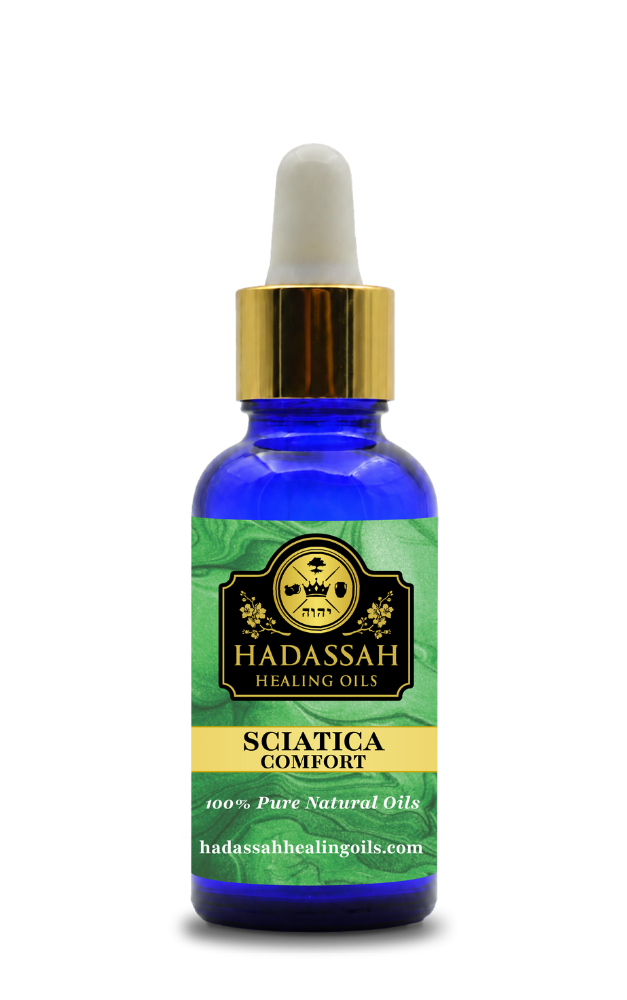
R450.00 Incl. VAT
SCIATICA COMFORT BLEND 30ML
Sciatica Comfort is developed around the major biological mechanisms involved in sciatic nerve pain and associated lower-back, buttock and leg discomfort.
- 3-5 working days
- All products include VAT.
- Client Testimonies
- 100% Natural
- 100% Pure Essential Oils
- 100% Manufacturing Guarantee
- Share to social media
Description
Directions for Use
Warning
Ingredients
Technical Information
SCIATICA COMFORT BLEND 30ML
Sciatica Comfort is a concentrated topical botanical formulation developed around the major biological mechanisms involved in sciatic nerve pain and associated lower-back, buttock and leg discomfort.
Sciatica is not simply lower-back pain.
It describes symptoms produced when structures forming or surrounding the sciatic nerve pathway become compressed, irritated or inflamed.
The resulting symptoms can include:
Shooting pain
Burning pain
Electric-shock sensations
Tingling
Pins and needles
Numbness
Hypersensitivity
Buttock pain
Pain radiating down the leg
Muscle tightness and guarding
SCIATICA COMFORT BLEND 30ML
Apply a small amount to clean, intact skin over the symptomatic:
Lower back
Upper buttock
or along the external area associated with discomfort.
Massage gently.
Aggressive deep massage is not necessary and may worsen symptoms during an acute flare.
Because this formulation contains DMSO, the application area and hands should be clean and free from unwanted topical chemicals.
Do not combine immediately with other topical medicines unless professionally approved.
SCIATICA COMFORT BLEND 30ML
Sciatica Comfort is a highly concentrated topical formulation containing DMSO and multiple pharmacologically active essential oils.
For external use only.
Do not ingest.
Do not apply to broken skin.
Do not apply directly to mucous membranes.
Do not use on freshly shaved or chemically treated skin.
Patch test before broader application.
Because DMSO enhances skin penetration, greater care is required regarding both:
SCIATICA COMFORT BLEND 30ML
Dimethyl Sulfoxide (DMSO),
Peppermint,
Lavender,
Frankincense,
Arnica,
St John’s Wort Oil,
Black Seed Oil,
Helichrysum italicum,
Copaiba,
Sweet Marjoram,
Ginger,
Cypress,
Cedarwood,
Eucalyptus radiata,
Blue Tansy,
Turmeric and Olive Oil.
SCIATICA COMFORT BLEND 30ML
Sciatica Comfort is a concentrated topical botanical formulation developed around the major biological mechanisms involved in sciatic nerve pain and associated lower-back, buttock and leg discomfort.
The formulation combines:
DMSO • Peppermint • Lavender • Frankincense • Arnica • St John’s Wort Oil • Black Seed Oil • Helichrysum italicum • Copaiba • Sweet Marjoram • Ginger • Cypress • Cedarwood • Eucalyptus radiata • Blue Tansy • Turmeric • Olive Oil
Sciatica is not simply lower-back pain.
It describes symptoms produced when structures forming or surrounding the sciatic nerve pathway become compressed, irritated or inflamed.
The resulting symptoms can include:
Shooting pain
Burning pain
Electric-shock sensations
Tingling
Pins and needles
Numbness
Hypersensitivity
Buttock pain
Pain radiating down the leg
Muscle tightness and guarding
Sciatica Comfort is therefore formulated around five interconnected targets:
Abnormal peripheral nerve signalling
Neuropathic pain and sensory hypersensitivity
Neuroinflammatory signalling
Secondary muscle spasm and guarding
Local inflammatory and oxidative stress
Enhanced dermal delivery
UNDERSTANDING SCIATICA
The sciatic nerve is the largest peripheral nerve in the body.
It is formed predominantly from nerve roots originating from:
L4 • L5 • S1 • S2 • S3
These nerve roots combine within the pelvis to form the sciatic nerve, which travels through the buttock and down the posterior leg.
Sciatica commonly develops when a spinal nerve root becomes irritated or compressed.
Potential causes include:
Lumbar disc herniation
Degenerative spinal changes
Foraminal narrowing
Spinal stenosis
Spondylolisthesis
Inflammatory irritation surrounding a nerve root
Less commonly, irritation may occur farther along the sciatic nerve pathway.
WHAT HAPPENS TO AN IRRITATED SCIATIC NERVE?
Mechanical compression alone does not fully explain sciatic pain.
An irritated nerve root can develop a combination of:
MECHANICAL COMPRESSION
Pressure may alter nerve conduction and local microcirculation.
INFLAMMATORY SIGNALLING
Damaged disc or surrounding tissue can release inflammatory mediators.
These can include:
TNF-α
IL-1β
IL-6
Prostaglandins
Reactive oxygen species
PERIPHERAL SENSITISATION
Sensory neurons become more responsive.
ABNORMAL ION-CHANNEL ACTIVITY
Changes in sodium, calcium and TRP channels can increase abnormal electrical firing.
NEUROINFLAMMATION
Inflammatory signalling surrounding neural tissue can further increase nociceptive transmission.
This explains why sciatica can produce:
Burning
Shooting
Electrical
or
tingling
pain rather than the dull ache typical of ordinary muscular discomfort.
PEPPERMINT
Menthol — TRPM8 & Neuropathathic Sensory Modulation
Peppermint provides:
MENTHOL
Menthol activates:
TRPM8
Transient Receptor Potential Melastatin-8
TRPM8 is a sensory ion channel expressed on peripheral neurons.
Activation produces cooling sensation but also modifies nociceptive signalling.
Menthol additionally interacts with neuronal ion channels involved in nerve impulse generation.
This is particularly relevant to neuropathic pain, where sensory nerves can become excessively excitable.
PRINCIPAL ACTIVE COMPONENT
Menthol
SECONDARY COMPONENTS
Menthone • Menthyl Acetate • 1,8-Cineole
PRIMARY PHARMACOLOGICAL RELEVANCE
TRPM8 activation • Sensory-nerve modulation • Cooling analgesic activity • Neuropathic discomfort support
Peppermint forms one of the primary direct sensory-modulation components of Sciatica Comfort.
COPAIBA
β-Caryophyllene — CB2 & Neuroinflammatory Regulation
Copaiba commonly contains high concentrations of:
β-CARYOPHYLLENE
β-Caryophyllene is particularly relevant because it functions as a selective agonist of:
CANNABINOID CB2 RECEPTORS
CB2 receptors participate extensively in:
Immune regulation
Inflammatory signalling
Neuroinflammation
Pain processing
Experimental β-caryophyllene research has demonstrated activity involving:
NF-κB
TNF-α
IL-1β
IL-6
Oxidative stress
Neuropathic pain pathways
The mechanism can therefore be represented as:
β-CARYOPHYLLENE
↓
CB2 ACTIVATION
↓
IMMUNE & INFLAMMATORY MODULATION
↓
REDUCED NEUROINFLAMMATORY SIGNALLING
↓
SUPPORT FOR SENSITISED NERVES
PRINCIPAL ACTIVE COMPONENT
β-Caryophyllene
PRIMARY PHARMACOLOGICAL RELEVANCE
CB2 agonism • Neuroinflammatory regulation • Cytokine modulation • Neuropathic-pain support
BLACK SEED OIL
Thymoquinone — NF-κB, Nrf2 & Neuroinflammatory Support
Black Seed — Nigella sativa — provides:
THYMOQUINONE
one of the major pharmacologically active compounds associated with Black Seed.
Thymoquinone has been investigated extensively in experimental models involving:
Oxidative stress
Inflammation
Neurological injury
Pain
Its molecular targets include pathways involving:
NF-κB
an important regulator of inflammatory gene expression.
Nrf2
an important regulator of cellular antioxidant defence.
Thymoquinone has also been investigated in relation to:
TNF-α
IL-1β
IL-6
Reactive oxygen species
This makes Black Seed particularly relevant to the inflammatory environment surrounding sensitised neural tissue.
PRINCIPAL ACTIVE COMPONENT
Thymoquinone
PRIMARY PHARMACOLOGICAL RELEVANCE
NF-κB regulation • Nrf2 antioxidant defence • Cytokine modulation • Neuroinflammatory support • Cellular protection
ST JOHN’S WORT OIL
Hypericum & Neuropathic-Pain Support
St John’s Wort — Hypericum perforatum — has an unusually relevant history in topical preparations used for painful and irritated tissues.
Depending upon how the St John’s Wort oil has been prepared, Hypericum preparations can contain varying quantities of:
Hyperforin
Hypericin-related compounds
Flavonoids
Other lipophilic plant constituents
Experimental research involving Hypericum has investigated its effects on:
Neuropathic pain
Hyperalgesia
Nociceptive hypersensitivity
Inflammatory signalling
Research involving Hypericum constituents has identified mechanisms involving:
PROTEIN KINASE C — PKC
and signalling systems including:
NF-κB
CREB
STAT1
Hyperforin and hypericin have also been investigated as important contributors to Hypericum’s analgesic pharmacology.
Neuropathic-pain support • Nociceptive regulation • Inflammatory support • Traditional nerve-comfort application
LAVENDER
Linalool & Linalyl Acetate — Neuronal Excitability
Lavender provides:
LINALOOL
LINALYL ACETATE
These compounds demonstrate neuropharmacological activity involving:
Glutamatergic signalling
NMDA-associated pathways
Voltage-dependent calcium channels
Neuronal excitability
This is relevant because neuropathic pain involves abnormal excitability within sensory pathways.
PRINCIPAL ACTIVE COMPONENTS
Linalool • Linalyl Acetate
PRIMARY PHARMACOLOGICAL RELEVANCE
Neuronal-excitability regulation • Sensory modulation • Inflammatory support • Neuromuscular relaxation
HELICHRYSUM ITALICUM
Neryl Acetate & Tissue-Recovery Support
Helichrysum italicum can contain:
NERYL ACETATE
γ-CURCUMENE
α-PINENE
SELINENES
depending upon chemotype.
Its experimental pharmacology includes:
Anti-inflammatory activity
Antioxidant activity
Tissue-protective activity
Within Sciatica Comfort, Helichrysum supports the biological environment surrounding irritated and inflamed tissues.
PRINCIPAL ACTIVE FRACTION
Neryl Acetate • γ-Curcumene • Sesquiterpene fraction
PRIMARY PHARMACOLOGICAL RELEVANCE
Inflammatory regulation • Oxidative protection • Tissue-recovery support
BLUE TANSY
Chamazulene-Rich Inflammatory Support
Blue Tansy — Tanacetum annuum — contains a distinctive blue volatile fraction associated with:
CHAMAZULENE
alongside compounds that may include:
Sabinene
Camphor
β-Pinene
depending upon the oil.
Chamazulene is associated with experimental anti-inflammatory activity.
Its inclusion therefore strengthens the formula’s inflammatory-support component.
PRINCIPAL ACTIVE COMPONENT
Chamazulene
PRIMARY PHARMACOLOGICAL RELEVANCE
Inflammatory regulation • Tissue comfort • Antioxidant support
TURMERIC ESSENTIAL OIL
Turmerones — Neuroinflammatory & Oxidative Support
Turmeric essential oil should be distinguished from Curcumin extracts.
Steam-distilled Turmeric oil contains volatile compounds including:
ar-TURMERONE
α-TURMERONE
β-TURMERONE
rather than being a significant source of curcumin.
Turmerones have been investigated experimentally for:
Neuroinflammatory regulation
Antioxidant effects
Cellular protection
PRINCIPAL ACTIVE COMPONENTS
ar-Turmerone • α-Turmerone • β-Turmerone
PRIMARY PHARMACOLOGICAL RELEVANCE
Neuroinflammatory support • Oxidative-stress regulation • Cellular protection
FRANKINCENSE
Volatile Terpenes & Inflammatory Support
Frankincense essential oil contains species-dependent concentrations of:
α-Pinene
α-Thujene
Limonene
Sabinene
and related volatile terpenes.
These compounds provide experimental:
Inflammatory
Antioxidant
Neuroactive
pharmacology.
Frankincense therefore contributes to the inflammatory and tissue-comfort component of the formulation.
PRIMARY PHARMACOLOGICAL RELEVANCE
Inflammatory regulation • Tissue comfort • Neurological support
GINGER
Zingiberene-Rich Pain & Inflammatory Support
Ginger essential oil commonly contains:
α-ZINGIBERENE
β-SESQUIPHELLANDRENE
β-BISABOLENE
These volatile constituents differ from gingerol- and shogaol-rich extracts.
The essential-oil fraction nevertheless provides experimental:
Anti-inflammatory
Antioxidant
Analgesic-supporting
activity.
PRIMARY PHARMACOLOGICAL RELEVANCE
Inflammatory regulation • Musculoskeletal comfort • Tissue support
SWEET MARJORAM
Neuromuscular Spasm & Guarding
Sweet Marjoram — Origanum majorana — commonly contains compounds including:
Terpinen-4-ol
Sabinene Hydrates
γ-Terpinene
α-Terpinene
depending upon source.
This component becomes particularly relevant because sciatic pain frequently produces:
PROTECTIVE MUSCULAR GUARDING
Pain causes surrounding muscles to tighten.
This can involve the:
Lumbar musculature
Gluteal muscles
Deep hip rotators
Hamstrings
Persistent muscular tension may then increase discomfort and restrict movement.
PRIMARY PHARMACOLOGICAL RELEVANCE
Neuromuscular relaxation • Antispasmodic support • Secondary muscular-pain support
ARNICA
Sesquiterpene Lactones & Musculoskeletal Support
Arnica — usually Arnica montana — contains characteristic sesquiterpene lactones, particularly compounds related to:
HELENALIN
Arnica preparations have been investigated for:
Bruising
Musculoskeletal pain
Inflammatory conditions
Post-traumatic tissue discomfort
Helanalin-related compounds have experimental effects on inflammatory signalling, including pathways involving:
NF-κB
Within Sciatica Comfort, Arnica is therefore best positioned for the secondary musculoskeletal and inflammatory component, rather than as a direct treatment for nerve-root compression.
PRIMARY PHARMACOLOGICAL RELEVANCE
Musculoskeletal comfort • Inflammatory support • Post-traumatic tissue support
EUCALYPTUS RADIATA
1,8-Cineole
Eucalyptus radiata commonly contains substantial:
1,8-CINEOLE / EUCALYPTOL
with:
α-Pinene
Limonene
α-Terpineol
depending upon source.
1,8-Cineole has substantial inflammatory pharmacology and provides additional sensory and tissue-comfort support.
PRINCIPAL ACTIVE COMPONENT
1,8-Cineole
PRIMARY PHARMACOLOGICAL RELEVANCE
Inflammatory modulation • Sensory support • Musculoskeletal comfort
CYPRESS
α-Pinene & Monoterpene Support
Cypress — Cupressus sempervirens — commonly contains:
α-PINENE
with additional monoterpenes and sesquiterpenes.
It contributes primarily to:
Inflammatory support
Tissue comfort
Local sensory support
Its role in this formula is supportive rather than directly neuropathic.
CEDARWOOD
Sesquiterpene-Rich Tissue & Sensory Support
If Cedrus atlantica is used, Cedarwood commonly contains:
β-HIMACHALENE
α-HIMACHALENE
γ-HIMACHALENE
ATLANTONES
These heavier sesquiterpenes complement the faster volatile monoterpenes in Peppermint and Eucalyptus.
PRIMARY PHARMACOLOGICAL RELEVANCE
Inflammatory support • Sensory regulation • Tissue comfort
DMSO
Pharmaceutical Penetration Enhancement
DMSO — Dimethyl Sulfoxide — is one of the most pharmacologically important components of this formula.
It is not simply a carrier oil.
DMSO is an established:
TRANSDERMAL PENETRATION ENHANCER
The outermost layer of the skin—the:
STRATUM CORNEUM
normally acts as a highly effective barrier.
DMSO can alter this barrier and increase the penetration of accompanying compounds.
Its mechanisms involve interactions with:
Stratum-corneum lipids
Keratin and proteins
Solvent partitioning
Skin permeability
The result can be increased movement of certain substances into and through the skin.
This makes Sciatica Comfort fundamentally different from an ordinary essential-oil massage blend.
DMSO
↓
ALTERED STRATUM-CORNEUM BARRIER
↓
INCREASED DERMAL / TRANSDERMAL PENETRATION POTENTIAL
PRIMARY PHARMACEUTICAL FUNCTION
Penetration enhancement • Dermal delivery • Transdermal-delivery support
WHY DMSO REQUIRES SPECIAL CARE
Because DMSO increases skin permeability, the application area should be:
Clean
Dry
Free from perfumes
Free from body lotions
Free from topical medicines unless professionally approved
Free from cleaning products or chemical residues
Only high-purity material appropriate for topical pharmaceutical formulation should be considered.
DMSO should not be treated as though it merely makes an oil “stronger.”
It materially changes the delivery behaviour of the formulation.
THE MULTI-TARGET MECHANISM OF SCIATICA COMFORT
- ABNORMAL NERVE SIGNALLING
PEPPERMINT
Menthol → TRPM8
LAVENDER
Linalool → neuronal-excitability modulation
ST JOHN’S WORT
Hypericum-associated neuropathic-pain pathways
↓
PERIPHERAL SENSORY MODULATION
↓
SUPPORT FOR BURNING / SHOOTING / ELECTRIC NERVE DISCOMFORT
- NEUROINFLAMMATORY REGULATION
COPAIBA
β-Caryophyllene → CB2
BLACK SEED
Thymoquinone → NF-κB / Nrf2
BLUE TANSY
Chamazulene
TURMERIC
Turmerones
HELICHRYSUM
Neryl Acetate + Sesquiterpenes
FRANKINCENSE
Volatile Terpenes
↓
INFLAMMATORY & OXIDATIVE-SIGNAL MODULATION
↓
SUPPORT FOR THE IRRITATED NERVE ENVIRONMENT
- SECONDARY MUSCLE SPASM
Sciatica frequently produces a cycle:
NERVE PAIN
↓
PROTECTIVE MUSCLE GUARDING
↓
GLUTEAL / LUMBAR TENSION
↓
RESTRICTED MOVEMENT
↓
GREATER DISCOMFORT
The principal muscular-support components are:
Sweet Marjoram
Lavender
Ginger
Peppermint
Arnica
These provide complementary neuromuscular and musculoskeletal support.
- LOCAL TISSUE & INFLAMMATORY SUPPORT
Arnica
Helichrysum
Ginger
Frankincense
Eucalyptus radiata
Cypress
support the musculoskeletal and inflammatory environment surrounding the symptomatic region.
- ENHANCED TOPICAL DELIVERY
The formula combines:
DMSO
a pharmaceutical penetration enhancer
with
ESSENTIAL-OIL TERPENES
many of which themselves possess skin-permeation-enhancing properties.
This potentially increases delivery beyond what would be expected from a simple carrier-oil blend.
For this reason, conservative topical use is appropriate.
SCIATICA COMFORT — COMPLETE MECHANISM
DISC / SPINAL / NERVE-ROOT IRRITATION
↓
MECHANICAL + INFLAMMATORY NERVE STRESS
↓
ABNORMAL SENSORY NERVE FIRING
Menthol • Linalool • Hypericum Phytochemistry
↓
NEUROPATHIC-PAIN SUPPORT
NEUROINFLAMMATION
β-Caryophyllene • Thymoquinone • Chamazulene • Turmerones • Helichrysum Terpenes
↓
CB2 + NF-κB + Nrf2 + INFLAMMATORY-PATHWAY SUPPORT
MUSCLE GUARDING
Marjoram • Lavender • Ginger • Arnica
↓
NEUROMUSCULAR COMFORT
LOCAL TISSUE STRESS
Helichrysum • Frankincense • Arnica • Eucalyptus • Cypress
↓
TISSUE-RECOVERY SUPPORT
TOPICAL APPLICATION
DMSO + TERPENE-RICH BOTANICALS
↓
ENHANCED DERMAL DELIVERY
RELEVANT USES
Sciatica Comfort has been formulated as complementary topical support for:
Sciatic-type nerve discomfort
Pain radiating from the lower back into the buttock or leg
Burning nerve discomfort
Shooting or electric sensations
Tingling associated with sciatic irritation
Muscular tightness accompanying sciatica
Gluteal tension
Lower-back muscular guarding
Post-activity sciatic discomfort
Persistent local sensitivity following a sciatic flare
The formulation supports the symptoms and biological environment surrounding nerve irritation.
It does not mechanically reverse a herniated disc, remove spinal stenosis or physically decompress a compressed nerve root.
DIRECTIONS FOR TOPICAL USE
Apply a small amount to clean, intact skin over the symptomatic:
Lower back
Upper buttock
or along the external area associated with discomfort.
Massage gently.
Aggressive deep massage is not necessary and may worsen symptoms during an acute flare.
Because this formulation contains DMSO, the application area and hands should be clean and free from unwanted topical chemicals.
Do not combine immediately with other topical medicines unless professionally approved.
Avoid:
Eyes
Mucous membranes
Genitals
Broken skin
Open wounds
Freshly shaved skin
Significantly irritated skin
Wash hands after use.
INGREDIENTS
Dimethyl Sulfoxide (DMSO), Peppermint, Lavender, Frankincense, Arnica, St John’s Wort Oil, Black Seed Oil, Helichrysum italicum, Copaiba, Sweet Marjoram, Ginger, Cypress, Cedarwood, Eucalyptus radiata, Blue Tansy, Turmeric and Olive Oil.
IMPORTANT SAFETY INFORMATION
Sciatica Comfort is a highly concentrated topical formulation containing DMSO and multiple pharmacologically active essential oils.
For external use only.
Do not ingest.
Do not apply to broken skin.
Do not apply directly to mucous membranes.
Do not use on freshly shaved or chemically treated skin.
Patch test before broader application.
Because DMSO enhances skin penetration, greater care is required regarding both:
The purity of the ingredients
and
What is present on the skin at the time of application.
St John’s Wort preparations may also contribute to photosensitivity depending upon their composition and hypericin content.
SCIATICA RED FLAGS
Most uncomplicated sciatica is not a medical emergency.
However, urgent assessment is required when sciatic symptoms are accompanied by:
New loss of bladder control
New loss of bowel control
Difficulty initiating urination associated with neurological symptoms
Numbness around the genitals, perineum or saddle area
Rapidly progressive leg weakness
Severe weakness affecting walking
Symptoms affecting both legs with neurological deterioration
These can indicate serious compression of the nerves at the lower end of the spinal canal and require urgent medical assessment.
Persistent or progressive weakness, foot drop, significant numbness or worsening neurological symptoms also require medical evaluation.