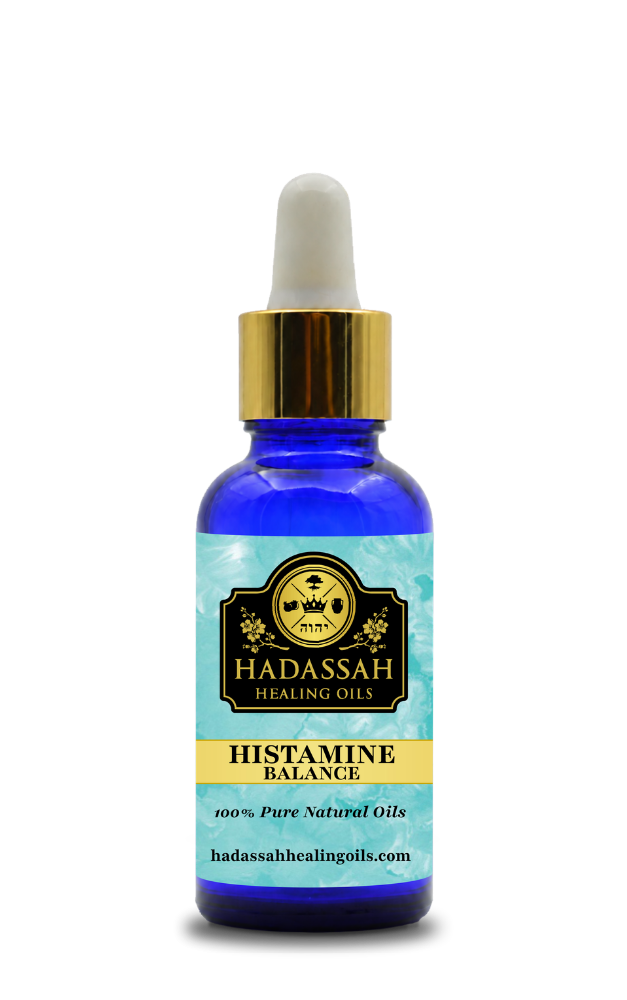
HISTAMINE BALANCE BLEND 30ML
R450.00 Incl. VAT
HISTAMINE BALANCE BLEND 30ML
Support the biological pathways involved in histamine release, mast-cell activation, allergic inflammation, inflammatory mediator production, oxidative stress and histamine-associated skin and respiratory symptoms.
- 3-5 working days
- All products include VAT.
- Client Testimonies
- 100% Natural
- 100% Pure Essential Oils
- 100% Manufacturing Guarantee
- Share to social media
Description
Directions for Use
Warning
Ingredients
Technical Information
HISTAMINE BALANCE BLEND 30ML
Histamine Balance Blend is a concentrated medicinal botanical formulation developed to support the biological pathways involved in histamine release, mast-cell activation, allergic inflammation, inflammatory mediator production, oxidative stress and histamine-associated skin and respiratory symptoms.
The formula has been designed around several complementary pharmacological mechanisms rather than relying upon a single ingredient.
Its primary areas of support are:
Mast-cell stabilisation and modulation
Histamine-release regulation
IgE-associated inflammatory response
Inflammatory cytokine modulation
Eicosanoid and arachidonic-acid pathway regulation
Oxidative-stress control
Skin inflammatory-response support
Histamine-associated itching and sensory irritation
This makes Histamine Balance particularly relevant as complementary botanical support for people who experience patterns of histamine sensitivity, seasonal allergic symptoms, reactive skin, itching, inflammatory sensitivity and exaggerated responses to environmental triggers.
HISTAMINE BALANCE BLEND 30ML
Drink one Capsule full a day as needed.
Apply a small amount to the desired area and gently massage into intact skin.
For reactive or itchy skin, apply conservatively to a small area first and assess tolerance.
For general histamine-support use, suitable application areas include the:
Wrists • Back • Chest • Neck • Feet or affected intact skin
All our blend’s come in a 30ml glass bottle, with a glass pipette and a rubber bulb on top. Don’t forget to buy empty veggie capsules when purchasing an ingestible blend. (Our veggie capsules are now available in 90’s and 150’s).
Never pre-fill capsules for future use, as this will compromise the veggie capsule and melt. Instead, always fill the capsules just before drinking it. (But if no other option, only prepare up to 3 days’ supply. You MUST then keep them upright in the refrigerator in a marked container; to know which blend it is filled with.)
Method – open the veggie capsule, then open your blend, squeeze and release the rubber bulb to draw the oil blend up into the glass pipette dropper. Then gently squeeze the rubber bulb to fill the larger part of the open capsule. Close the capsule before drinking it. Dosage is always a full capsule of a specific blend (between 15 to 18 drops).
If you have to drink more than one capsule a day, spread them throughout the day, never more than two capsules at a time. Spreading the capsules throughout the day assists the body with proper absorption. Always good to have a very small snack/fruit before drinking capsules.
HISTAMINE BALANCE BLEND 30ML
Avoid eyes, eyelids, inside the nose, lips and other mucous membranes.
Do not apply to broken or severely inflamed skin.
Patch test before broader use.
Peppermint produces a cooling sensation through TRPM8 activation; this is a normal pharmacological property of menthol, but significant burning or irritation indicates that use should be discontinued.
HISTAMINE BALANCE BLEND 30ML
Black Seed Oil
Rosehip Oil
German Chamomile
Lavender
Frankincense
Copaiba
Helichrysum italicum
Roman Chamomile
Blue Tansy
Sandalwood
Lemon
Peppermint
Olive Oil
HISTAMINE BALANCE BLEND 30ML
Histamine Balance is a concentrated medicinal botanical formulation developed to support the biological pathways involved in histamine release, mast-cell activation, allergic inflammation, inflammatory mediator production, oxidative stress and histamine-associated skin and respiratory symptoms.
The formulation combines:
Black Seed Oil • Rosehip Oil • German Chamomile • Lavender • Frankincense • Copaiba • Helichrysum italicum • Roman Chamomile • Blue Tansy • Sandalwood • Lemon • Peppermint • Olive Oil
The formula has been designed around several complementary pharmacological mechanisms rather than relying upon a single ingredient.
Its primary areas of support are:
Mast-cell stabilisation and modulation
Histamine-release regulation
IgE-associated inflammatory response
Inflammatory cytokine modulation
Eicosanoid and arachidonic-acid pathway regulation
Oxidative-stress control
Skin inflammatory-response support
Histamine-associated itching and sensory irritation
This makes Histamine Balance particularly relevant as complementary botanical support for people who experience patterns of histamine sensitivity, seasonal allergic symptoms, reactive skin, itching, inflammatory sensitivity and exaggerated responses to environmental triggers.
UNDERSTANDING HISTAMINE
Histamine is not inherently harmful.
It is an essential signalling molecule involved in:
- Immune defence
- Gastric acid secretion
- Vascular regulation
- Wakefulness and neurological signalling
- Tissue responses to injury
- Allergic and inflammatory reactions
Problems arise when histamine release becomes excessive, degradation is insufficient, or tissues become exposed to more histamine than they tolerate comfortably.
Histamine is stored predominantly within mast cells and basophils.
When mast cells are activated, they can degranulate and rapidly release histamine together with other inflammatory mediators.
In classical allergic responses, an allergen can cross-link IgE antibodies attached to FcεRI receptors on mast cells.
This initiates intracellular signalling and calcium mobilisation, resulting in mast-cell degranulation.
Histamine is then released into surrounding tissue.
Depending upon where this occurs, histamine can contribute to:
Itching
Flushing
Nasal congestion
Sneezing
Watery eyes
Increased mucus secretion
Vascular permeability
Tissue swelling
Bronchial responses
Skin reactivity
Mast cells can simultaneously produce additional inflammatory mediators including prostaglandins, leukotrienes, TNF-α, IL-6 and other cytokines.
Histamine-related inflammation is therefore considerably more complex than histamine alone.
Histamine Balance was formulated around this broader biological picture.
BLACK SEED OIL
Thymoquinone — The Core Medicinal Component
Black Seed Oil from Nigella sativa is the pharmacological foundation of Histamine Balance.
Its best-characterised active constituent is thymoquinone (TQ), a bioactive quinone extensively investigated for anti-inflammatory, antioxidant, immunomodulatory and anti-allergic activity.
Research involving Nigella sativa and thymoquinone has demonstrated effects on several mechanisms relevant to allergic and histamine-mediated responses.
These include modulation of:
Mast-cell activity
Histamine release
IgE-associated immune responses
Th2 inflammatory signalling
IL-4
TNF-α
IL-1β
Oxidative stress
Experimental allergic-rhinitis models have shown that thymoquinone can reduce inflammatory cytokines and eosinophilic infiltration.
Reviews of Nigella sativa research describe antihistaminic, anti-allergic, anti-inflammatory and immunomodulatory activity across experimental and human studies. (PubMed)
Importantly, Nigella sativa has progressed beyond laboratory research.
A randomized double-blind placebo-controlled clinical study published in 2024 evaluated a standardised Nigella sativa oil preparation in adults with seasonal allergy.
Participants receiving the Nigella preparation experienced greater improvements in total nasal and ocular allergy symptom scores than placebo. (PubMed Central (PMC))
Earlier controlled clinical research has also investigated Nigella sativa oil in allergic rhinitis, including symptoms such as nasal congestion, rhinorrhoea, nasal itching and sneezing. (PubMed)
PRINCIPAL ACTIVE COMPONENT:
Thymoquinone
PRIMARY PHARMACOLOGICAL RELEVANCE:
Anti-allergic • Immunomodulatory • Anti-inflammatory • Antioxidant • Histamine-response support
GERMAN CHAMOMILE
Mast Cells, Histamine & Arachidonic-Acid Inflammation
German Chamomile — Matricaria recutita — is particularly relevant to a histamine formulation because it has been studied directly in mast-cell-mediated allergy models.
German Chamomile preparations have demonstrated:
Reduced mast-cell degranulation
Reduced histamine release
Mast-cell membrane stabilisation
Reduced nitric oxide production
Anti-pruritic activity
In experimental allergy research, Matricaria recutita extract produced dose-dependent inhibition of mast-cell degranulation and histamine release. (ScienceDirect)
German Chamomile essential oil itself contains pharmacologically active terpenoids including:
α-Bisabolol
Bisabolol oxides
Chamazulene
β-Farnesene
Ene-yne dicycloethers
The evidence is chemically specific.
Research examining individual essential-oil constituents found that the chamomile ene-yne dicycloether partially inhibited mast-cell degranulation, whereas chamazulene and α-bisabolol did not demonstrate the same direct histamine-release inhibition in that experiment. (PubMed)
Chamazulene nevertheless has important anti-inflammatory activity through different mechanisms, including reported effects on 5-lipoxygenase and leukotriene formation.
This matters because leukotrienes are important downstream inflammatory mediators in allergic disease.
PRINCIPAL ACTIVE COMPONENTS:
α-Bisabolol • Bisabolol oxides • Chamazulene • Ene-yne dicycloethers
PRIMARY PHARMACOLOGICAL RELEVANCE:
Mast-cell modulation • Histamine-release regulation • Leukotriene/inflammatory pathway modulation • Skin-inflammatory support
COPAIBA
β-Caryophyllene — CB2 Receptor & Mast-Cell Regulation
Copaiba contributes another highly relevant pharmacological constituent:
β-CARYOPHYLLENE
β-Caryophyllene is a naturally occurring sesquiterpene and a selective agonist of the cannabinoid CB2 receptor.
Unlike CB1 receptors, CB2 receptors are strongly associated with immune and inflammatory regulation.
Experimental mast-cell research has demonstrated that β-caryophyllene can:
Reduce mast-cell degranulation
Reduce histamine release
Decrease intracellular calcium signalling
Reduce TNF-α
Reduce IL-6
Suppress NF-κB inflammatory signalling
In experimental allergic models, β-caryophyllene attenuated both compound 48/80-induced and IgE-mediated allergic reactions. (J-STAGE)
This gives Copaiba a particularly logical role in Histamine Balance.
It does not merely provide general “anti-inflammatory” activity.
Its major sesquiterpene has direct experimental relevance to mast-cell-derived allergic inflammation.
PRINCIPAL ACTIVE COMPONENT:
β-Caryophyllene
PRIMARY PHARMACOLOGICAL RELEVANCE:
CB2 receptor activation • Mast-cell modulation • Reduced histamine release • NF-κB modulation • Cytokine regulation
BLUE TANSY
Chamazulene-Rich Anti-Inflammatory Support
Blue Tansy — Tanacetum annuum — provides a complex volatile fraction containing compounds that can include:
Chamazulene
Sabinene
Camphor
Myrcene
β-Pinene
α-Phellandrene
p-Cymene
The characteristic blue colour originates predominantly from chamazulene and related azulene derivatives.
Chamazulene is pharmacologically interesting because of its anti-inflammatory and antioxidant activity, including effects reported within arachidonic-acid inflammatory pathways.
This makes Blue Tansy particularly useful for the secondary inflammatory phase surrounding histamine release—where prostaglandins, leukotrienes, cytokines and oxidative mediators contribute to persistent tissue irritation.
PRINCIPAL ACTIVE COMPONENTS:
Chamazulene • Sabinene • Camphor • Myrcene • β-Pinene
PRIMARY PHARMACOLOGICAL RELEVANCE:
Anti-inflammatory • Antioxidant • Secondary inflammatory-mediator support
FRANKINCENSE
COX-2 & Inflammatory-Mediator Modulation
Frankincense contributes volatile monoterpenes and other compounds that vary substantially by Boswellia species and origin.
Important volatile constituents can include:
α-Pinene
Limonene
Linalool
Octyl acetate and related terpenes/esters, depending on species.
Experimental research examining frankincense oil fractions found that α-pinene, linalool and 1-octanol contributed to topical anti-inflammatory and analgesic effects and reduced COX-2 overexpression in inflammatory models.
COX-2 is responsible for increased production of inflammatory prostaglandins during inflammatory activation.
Frankincense therefore contributes primarily to the downstream inflammatory component of Histamine Balance rather than functioning as a conventional H1 antihistamine.
PRINCIPAL ACTIVE COMPONENTS:
Species-dependent monoterpenes, particularly α-pinene and other volatile terpenoids
PRIMARY PHARMACOLOGICAL RELEVANCE:
COX-2 modulation • Prostaglandin-associated inflammatory support • Topical anti-inflammatory activity
HELICHRYSUM ITALICUM
Neryl Acetate, α-Pinene & Tissue Inflammation
Helichrysum italicum contains a chemically complex volatile fraction.
Depending upon geographic origin and chemotype, significant constituents can include:
Neryl acetate
Nerol
α-Pinene
Limonene
γ-Curcumene
α-Selinene
β-Selinene
Research reviews describe antioxidant and anti-inflammatory activity for Helichrysum italicum extracts and essential oils. (PubMed Central (PMC))
α-Pinene itself has demonstrated anti-inflammatory effects in experimental models, including inhibition of IL-1β-induced nitric oxide production in human chondrocytes.
Helichrysum therefore contributes primarily to tissue-level inflammatory regulation and recovery rather than acting as a direct antihistamine.
PRINCIPAL ACTIVE COMPONENTS:
Neryl acetate • α-Pinene • Nerol • Limonene • γ-Curcumene
PRIMARY PHARMACOLOGICAL RELEVANCE:
Anti-inflammatory • Antioxidant • Tissue-response modulation
LAVENDER
Linalool & Linalyl Acetate
Lavender essential oil is chemically dominated, in quality oils, by varying proportions of:
Linalool
Linalyl acetate
with smaller amounts of other monoterpenes.
These constituents have substantial pharmacological literature involving neuronal excitability, inflammatory responses and smooth-muscle physiology.
Linalyl acetate has demonstrated smooth-muscle relaxation involving nitric-oxide/cGMP signalling and reduced myosin-light-chain phosphorylation in experimental vascular tissue. (PubMed)
Within Histamine Balance, Lavender therefore contributes to the formulation’s neuro-inflammatory, smooth-muscle and inflammatory-response support, while also helping moderate sensory discomfort associated with reactive skin.
PRINCIPAL ACTIVE COMPONENTS:
Linalool • Linalyl acetate
PRIMARY PHARMACOLOGICAL RELEVANCE:
Inflammatory modulation • Neuro-sensory regulation • Smooth-muscle effects • Skin comfort
PEPPERMINT
Menthol — TRPM8 & Histamine-Associated Itching
Peppermint provides one of the most pharmacologically distinct mechanisms in the entire formula.
Its principal constituent is generally:
MENTHOL
Menthol activates TRPM8 — Transient Receptor Potential Melastatin-8 channels.
TRPM8 is a cold-sensitive ion channel expressed in sensory neurons.
Activation creates the characteristic cooling sensation associated with menthol and modifies sensory signalling.
This is particularly relevant to histamine because one of the most troublesome effects of cutaneous histamine release is:
PRURITUS — ITCHING.
Topical menthol has a recognised molecular mechanism as a TRPM8 agonist and counter-irritant. (PubMed)
Recent experimental work also demonstrated that topical menthol significantly reduced compound-48/80-induced pruritus through a TRPM8-dependent mechanism and reduced associated p38/microglial activation. (PubMed)
Human experimental research with TRPM8 activation has likewise demonstrated inhibition of histamine-induced itch. (PubMed)
Peppermint therefore contributes something fundamentally different from Black Seed or Copaiba.
It does not need to reduce histamine itself to be useful.
It can modify the neuronal itch signalling that occurs downstream of histamine release.
PRINCIPAL ACTIVE COMPONENT:
Menthol
PRIMARY PHARMACOLOGICAL RELEVANCE:
TRPM8 activation • Antipruritic activity • Sensory modulation • Cooling analgesic action
SANDALWOOD
α-Santalol & β-Santalol — Cutaneous Inflammatory Control
Sandalwood contains high-value sesquiterpene alcohols, principally:
α-Santalol
β-Santalol
These compounds have demonstrated direct anti-inflammatory effects in human skin-cell models.
Research using human dermal fibroblasts and keratinocytes found that sandalwood oils and purified α- and β-santalol suppressed numerous inflammatory cytokines and chemokines.
They also reduced production of:
Prostaglandin E2 — PGE2
and
Thromboxane B2 — TXB2
indicating effects within arachidonic-acid inflammatory metabolism. (PubMed)
Sandalwood research has additionally reported effects involving 5-lipoxygenase, inflammatory cytokines and keratinocyte inflammatory responses. (PubMed Central (PMC))
PRINCIPAL ACTIVE COMPONENTS:
α-Santalol • β-Santalol
PRIMARY PHARMACOLOGICAL RELEVANCE:
Cytokine modulation • PGE2 reduction • Eicosanoid regulation • Cutaneous anti-inflammatory activity
This is particularly relevant where histamine problems manifest through the skin.
ROMAN CHAMOMILE
Ester-Rich Calming Inflammatory Support
Roman Chamomile — Chamaemelum nobile — has a different chemical profile from German Chamomile.
Its essential oil is characteristically rich in esters, with composition varying according to origin and cultivation.
Roman Chamomile contributes to the formula through anti-inflammatory, antispasmodic and skin-calming pharmacological properties rather than serving as the principal direct mast-cell component.
Using both German and Roman Chamomile therefore provides two chemically different chamomile fractions rather than simply duplicating the same oil.
German Chamomile contributes its azulene/bisabolol/dicycloether chemistry.
Roman Chamomile contributes its ester-rich volatile chemistry.
LEMON
Limonene-Rich Citrus Fraction
Lemon essential oil contains a high proportion of:
D-LIMONENE
alongside β-pinene, γ-terpinene and other volatile terpenes depending on the oil.
Limonene has been investigated experimentally for anti-inflammatory, antioxidant and immunomodulatory activity.
Within Histamine Balance, Lemon primarily contributes to the secondary inflammatory and oxidative-stress component rather than functioning as a pharmaceutical antihistamine.
PRINCIPAL ACTIVE COMPONENT:
D-Limonene
PRIMARY PHARMACOLOGICAL RELEVANCE:
Anti-inflammatory • Antioxidant • Immunomodulatory support
ROSEHIP OIL
Essential Fatty Acids & Skin-Barrier Support
Rosehip is different from the essential oils in this formulation.
It is a fixed botanical oil providing lipid components rather than a concentrated volatile fraction.
Rosehip oil contains substantial quantities of essential fatty acids, particularly:
Linoleic acid
α-Linolenic acid
alongside other lipid-soluble constituents depending upon extraction and quality.
This is important because histamine-associated disorders frequently manifest at barrier tissues—especially the skin.
A compromised epidermal barrier can increase water loss and environmental penetration and contribute to inflammatory skin reactivity.
Rosehip therefore provides the lipid-replenishing component of Histamine Balance.
PRINCIPAL ACTIVE COMPONENTS:
Linoleic acid • α-Linolenic acid and other unsaturated fatty acids
PRIMARY PHARMACOLOGICAL RELEVANCE:
Skin-barrier lipid support • Emollient activity • Barrier recovery
OLIVE OIL
Lipid Carrier & Barrier Support
Olive Oil forms the principal carrier matrix.
Its lipid fraction contains predominantly oleic acid, with smaller proportions of linoleic acid and naturally occurring minor compounds depending upon the grade and processing.
Its primary pharmaceutical function within this formulation is to:
Dilute concentrated essential oils
Improve topical spreadability
Provide an emollient lipid vehicle
Facilitate prolonged contact between the active botanical fraction and the skin
Together with Rosehip and Black Seed, it creates the lipid phase in which the volatile pharmacologically active compounds are delivered.
THE MULTI-TARGET MECHANISM OF HISTAMINE BALANCE
Histamine Balance has been formulated to intervene supportively at multiple stages of the histamine-inflammatory cascade.
1. MAST-CELL ACTIVATION
Black Seed • German Chamomile • Copaiba
Target the upstream biological environment surrounding mast-cell activation and degranulation.
2. HISTAMINE RELEASE
Black Seed / Thymoquinone
German Chamomile constituents
Copaiba / β-Caryophyllene
have experimental evidence relevant to histamine release or mast-cell-mediated allergic activity. (PubMed)
3. INFLAMMATORY CYTOKINES
Thymoquinone • β-Caryophyllene • Sandalwood constituents • Helichrysum constituents
have demonstrated effects on inflammatory signalling involving mediators such as:
TNF-α
IL-1β
IL-6
NF-κB
in experimental systems.
4. EICOSANOID INFLAMMATION
German Chamomile • Frankincense • Sandalwood
provide compounds investigated in pathways involving:
COX-2
5-LOX
Prostaglandins
Leukotrienes
These pathways are important because allergic inflammation continues well beyond the initial release of histamine.
5. OXIDATIVE STRESS
Black Seed • German Chamomile • Helichrysum • Blue Tansy • Sandalwood • Lemon
provide multiple compounds with experimentally demonstrated antioxidant activity.
6. HISTAMINE-ASSOCIATED ITCH
Peppermint / Menthol
targets the sensory component through TRPM8 activation, providing a separate neuropharmacological mechanism for controlling itch perception. (PubMed)
7. SKIN-BARRIER SUPPORT
Rosehip • Black Seed • Olive Oil
provide the lipid matrix required to condition and support barrier tissues.
WHAT HISTAMINE BALANCE IS DESIGNED TO SUPPORT
Histamine Balance has been developed as complementary botanical support for adults experiencing patterns associated with:
Histamine sensitivity
Seasonal environmental allergies
Sneezing and nasal irritation associated with allergic triggers
Reactive or itchy skin
Histamine-associated pruritus
Flushing and inflammatory skin reactivity
Environmental sensitivity
Mast-cell-mediated inflammatory responses
Post-allergic inflammatory irritation
The formulation addresses the biological cascade from several directions rather than relying upon one mechanism alone.
HISTAMINE INTOLERANCE VS ALLERGY
These terms should not be treated as identical.
ALLERGY
Classical allergy commonly involves an immune response to a specific allergen and can involve IgE-mediated mast-cell activation.
HISTAMINE INTOLERANCE
Histamine intolerance is a proposed condition in which accumulated histamine exceeds an individual’s capacity to metabolise or tolerate it.
The intestinal enzyme diamine oxidase — DAO participates in degradation of extracellular dietary histamine.
Histamine is also metabolised intracellularly through histamine-N-methyltransferase — HNMT.
Histamine Balance is primarily formulated around mast-cell, inflammatory, tissue and symptom-support pathways.
It should not be described as a direct DAO replacement.
TOPICAL DIRECTIONS
Apply a small amount to the desired area and gently massage into intact skin.
For reactive or itchy skin, apply conservatively to a small area first and assess tolerance.
For general histamine-support use, suitable application areas include the:
Wrists • Back • Chest • Neck • Feet or affected intact skin
Avoid eyes, eyelids, inside the nose, lips and other mucous membranes.
Do not apply to broken or severely inflamed skin.
Patch test before broader use.
Peppermint produces a cooling sensation through TRPM8 activation; this is a normal pharmacological property of menthol, but significant burning or irritation indicates that use should be discontinued.
Drink one capsule full a day as needed.
KEY BIOACTIVE COMPOUNDS
Thymoquinone — Black Seed
β-Caryophyllene — Copaiba
Chamazulene / Bisabolol derivatives / Dicycloethers — German Chamomile
Menthol — Peppermint
α-Santalol / β-Santalol — Sandalwood
Neryl acetate / α-Pinene / Limonene — Helichrysum italicum
Linalool / Linalyl acetate — Lavender
Chamazulene / Sabinene / Camphor / Myrcene — Blue Tansy
α-Pinene and other monoterpenes — Frankincense
D-Limonene — Lemon
Linoleic / α-Linolenic acids — Rosehip
INGREDIENTS
Black Seed Oil, Rosehip Oil, German Chamomile, Lavender, Frankincense, Copaiba, Helichrysum italicum, Roman Chamomile, Blue Tansy, Sandalwood, Lemon, Peppermint and Olive Oil.
IMPORTANT SAFETY INFORMATION
Histamine reactions vary substantially between individuals.
Patch test before topical use.
Avoid eyes and mucous membranes.
Keep out of reach of children.
Seek medical assessment for persistent or unexplained histamine-type symptoms, particularly when reactions are increasing in severity.
ANAPHYLAXIS IS A MEDICAL EMERGENCY.
Difficulty breathing, throat or tongue swelling, wheezing, collapse, severe dizziness or a rapidly progressing systemic allergic reaction requires immediate emergency medical treatment.
Histamine Balance is not a substitute for adrenaline/epinephrine in anaphylaxis.
Individuals prescribed an adrenaline/epinephrine autoinjector should follow their emergency allergy plan.
THE MEDICINAL FORMULATION STRATEGY
Histamine Balance is not formulated simply as a collection of “calming oils.”
It is a multi-target botanical formulation.
Thymoquinone from Black Seed addresses allergic and inflammatory signalling.
German Chamomile contributes compounds relevant to mast-cell biology, histamine release and leukotriene pathways.
β-Caryophyllene from Copaiba targets CB2-mediated immune signalling and has experimental evidence for reducing mast-cell degranulation, histamine release, TNF-α, IL-6 and NF-κB signalling.
Frankincense contributes COX-2-related inflammatory modulation.
Sandalwood santalols suppress inflammatory cytokines, prostaglandin E2 and other inflammatory mediators in skin models.
Helichrysum contributes neryl acetate, α-pinene and other terpenes associated with inflammatory and oxidative regulation.
Blue Tansy supplies chamazulene-rich azulene chemistry.
Peppermint-derived menthol activates TRPM8 and targets the neuronal pathway involved in itching.
Rosehip, Black Seed and Olive Oil provide the lipid phase supporting skin-barrier function.
The result is a formulation designed around the complete biological sequence:
TRIGGER → MAST CELL → HISTAMINE → CYTOKINES → EICOSANOIDS → TISSUE INFLAMMATION → ITCH & REACTIVITY
Rather than addressing only one step, Histamine Balance provides botanical compounds with pharmacological activity across several points within this cascade.