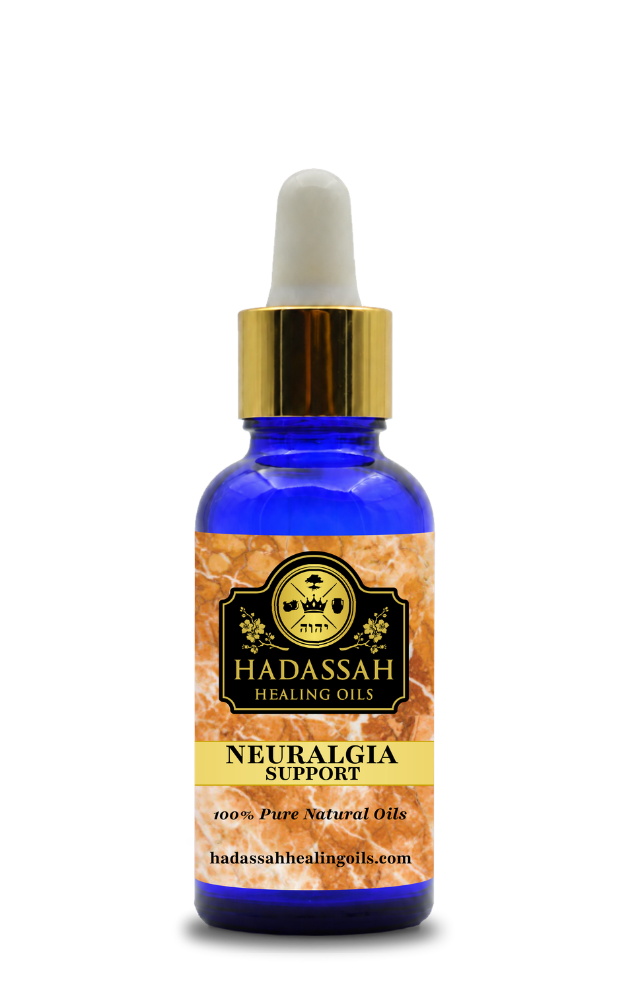
NEURALGIA SUPPORT BLEND 30ML
R420.00 Incl. VAT
NEURALGIA SUPPORT BLEND 30ML
Neuralgia Support is a concentrated medicinal developed specifically around the biological mechanisms involved in nerve-associated pain.
Neuralgia differs fundamentally from ordinary muscular pain.
- 3-5 working days
- All products include VAT.
- Client Testimonies
- 100% Natural
- 100% Pure Essential Oils
- 100% Manufacturing Guarantee
- Share to social media
Description
Directions for Use
Warning
Ingredients
Technical Information
NEURALGIA SUPPORT BLEND 30ML
Neuralgia Support is a concentrated medicinal botanical formulation developed specifically around the biological mechanisms involved in nerve-associated pain.
Neuralgia differs fundamentally from ordinary muscular pain.
When a peripheral nerve becomes injured, compressed, inflamed or sensitised, the nerve itself can begin producing abnormal electrical signals.
Pain may then occur without ongoing tissue injury.
Neuralgia Support has been constructed around the biology of sensitised peripheral nerves, rather than treating nerve pain as ordinary muscular discomfort.
Neuralgia describes pain occurring along the distribution of a nerve.
Neuropathic pain can result when the somatosensory nervous system becomes damaged or diseased.
Symptoms are often very different from conventional muscular pain.
They may include:
Burning
Shooting pain
Electric-shock sensations
Stabbing pain
Pins and needles
Tingling
Abnormal sensitivity
Pain from light touch
Cold sensitivity
Numbness accompanied by pain
Two important neurological phenomena are:
ALLODYNIA
Pain produced by a stimulus that would not normally be painful—for example clothing or light touch against the skin.
HYPERALGESIA
An exaggerated pain response to a stimulus that would normally produce some pain.
These symptoms arise because pain-processing pathways can become sensitised.
NEURALGIA SUPPORT BLEND 30ML
Apply a small amount to intact skin over or surrounding the affected area and massage gently.
Do not aggressively massage directly over a severely painful or hypersensitive nerve.
For touch-sensitive areas, a thin gentle application may be better tolerated.
NEURALGIA SUPPORT BLEND 30ML
Avoid:
Eyes
Face
Mucous membranes
Open wounds
Broken skin
Severely inflamed skin
Wash hands after application.
Patch test before first use.
Peppermint produces cooling and Clove may produce warming or irritation in sensitive skin.
Discontinue if significant burning, redness or worsening nerve pain occurs.
NEURALGIA SUPPORT BLEND 30ML
Frankincense
Peppermint
Lavender
Copaiba
St John’s Wort
Helichrysum italicum
German Chamomile
Black Spruce
Ginger
Sweet Marjoram
Cedarwood
Clove
Olive Oil
NEURALGIA SUPPORT BLEND 30ML
Neuralgia Support is a concentrated medicinal botanical formulation developed specifically around the biological mechanisms involved in nerve-associated pain.
The formulation combines:
Frankincense • Peppermint • Lavender • Copaiba • St John’s Wort • Helichrysum italicum • German Chamomile • Black Spruce • Ginger • Sweet Marjoram • Cedarwood • Clove • Olive Oil
Neuralgia differs fundamentally from ordinary muscular pain.
When a peripheral nerve becomes injured, compressed, inflamed or sensitised, the nerve itself can begin producing abnormal electrical signals.
Pain may then occur without ongoing tissue injury.
Neuralgia Support has therefore been formulated around several interconnected targets:
Peripheral sensory-nerve excitability
TRPM8-mediated analgesic signalling
Voltage-gated ion-channel activity
Peripheral sensitisation
Neuroinflammatory signalling
CB2 receptor activity
Inflammatory cytokines
Oxidative stress
Secondary muscular tension
The objective is not simply to create a warming or cooling sensation.
It is to support the biological environment surrounding an irritated, sensitised or painful peripheral nerve.
WHAT IS NEURALGIA?
Neuralgia describes pain occurring along the distribution of a nerve.
Neuropathic pain can result when the somatosensory nervous system becomes damaged or diseased.
Symptoms are often very different from conventional muscular pain.
They may include:
Burning
Shooting pain
Electric-shock sensations
Stabbing pain
Pins and needles
Tingling
Abnormal sensitivity
Pain from light touch
Cold sensitivity
Numbness accompanied by pain
Two important neurological phenomena are:
ALLODYNIA
Pain produced by a stimulus that would not normally be painful—for example clothing or light touch against the skin.
HYPERALGESIA
An exaggerated pain response to a stimulus that would normally produce some pain.
These symptoms arise because pain-processing pathways can become sensitised.
WHAT HAPPENS TO AN IRRITATED NERVE?
Following nerve injury or inflammation, several processes can occur.
ALTERED ION-CHANNEL EXPRESSION
Sensory neurons depend upon sodium, calcium, potassium and TRP ion channels to generate electrical signals.
Changes in these channels can increase spontaneous nerve firing.
PERIPHERAL SENSITISATION
Nociceptors become more responsive to stimuli.
NEUROINFLAMMATION
Immune cells, Schwann cells and other cells surrounding the nerve can release inflammatory mediators.
These can include:
TNF-α
IL-1β
IL-6
Prostaglandins
Reactive oxygen species
CENTRAL SENSITISATION
Persistent peripheral nerve signalling can eventually increase excitability within spinal-cord pain-processing pathways.
Neuralgia therefore requires a different formulation strategy from ordinary muscular pain.
PEPPERMINT
Menthol — TRPM8 & Neuropathic Analgesic Signalling
Peppermint provides one of the most mechanistically relevant compounds in the entire formulation:
MENTHOL
Menthol activates:
TRPM8
Transient Receptor Potential Melastatin-8
TRPM8 is expressed on sensory neurons, including neurons within the dorsal-root and trigeminal ganglia.
Activation produces cooling sensation—but its neurological function extends beyond simply feeling cold.
TRPM8 activation has been shown experimentally to reduce:
Mechanical allodynia
Thermal hyperalgesia
Sensitised pain signalling following nerve injury
Menthol additionally interacts with:
Voltage-gated sodium channels
Calcium influx
TRPA1 at higher concentrations
and downstream analgesic signalling systems.
Voltage-gated sodium channels are particularly important because they generate and propagate the electrical impulses travelling along peripheral nerves.
Modulation of these channels provides an additional mechanism through which menthol may reduce abnormal nociceptive signalling.
PRINCIPAL ACTIVE COMPONENT
Menthol
SECONDARY COMPONENTS
Menthone • Menthyl Acetate • 1,8-Cineole
PRIMARY PHARMACOLOGICAL RELEVANCE
TRPM8 activation • Peripheral analgesic signalling • Sodium-channel modulation • Mechanical-allodynia support • Thermal-hyperalgesia support
Peppermint therefore forms the principal sensory nerve-modulation component of Neuralgia Support.
COPAIBA
β-Caryophyllene — CB2 Receptor & Neuroinflammatory Regulation
Copaiba commonly contains substantial concentrations of:
β-CARYOPHYLLENE
β-Caryophyllene is particularly interesting in neuropathic pain because it acts as a selective agonist of:
CANNABINOID CB2 RECEPTORS
CB2 receptors are involved in immune-cell signalling and inflammatory regulation without producing the psychotropic effects associated with CB1 activation.
β-Caryophyllene has demonstrated experimental activity relevant to:
Neuropathic pain
Neuroinflammation
Oxidative stress
Microglial activation
TNF-α
IL-1β
IL-6
NF-κB-associated inflammatory signalling
The mechanism can therefore be represented as:
β-CARYOPHYLLENE
↓
CB2 RECEPTOR ACTIVATION
↓
IMMUNE / INFLAMMATORY MODULATION
↓
REDUCED NEUROINFLAMMATORY SIGNALLING
↓
SUPPORT FOR SENSITISED NERVES
PRINCIPAL ACTIVE COMPONENT
β-Caryophyllene
PRIMARY PHARMACOLOGICAL RELEVANCE
CB2 agonism • Neuroinflammatory regulation • Analgesic mechanisms • Cytokine modulation • Neuroprotective support
Copaiba therefore provides one of the strongest mechanistically defined neuroinflammatory components of the formula.
ST JOHN’S WORT
Hyperforin, Hypericin & Neurological Phytochemistry
St John’s Wort — Hypericum perforatum — has a long history of topical use for painful and irritated nerves.
Whole-plant preparations contain biologically active compounds including:
HYPERFORIN
HYPERICIN / PSEUDOHYPERICIN
FLAVONOIDS
depending upon the extract and preparation.
Hyperforin is a particularly pharmacologically active constituent with effects involving neuronal signalling and several neurotransmitter systems.
Experimental studies of Hypericum preparations have investigated:
Neuropathic pain
Hyperalgesia
Nerve-injury pain
Inflammatory pain
PRIMARY PHARMACOLOGICAL RELEVANCE
Traditional nerve-pain support • Neuroactive phytochemistry • Inflammatory modulation
For medicinal standardisation, the exact St John’s Wort preparation should be documented.
LAVENDER
Linalool & Linalyl Acetate — Neuronal Excitability
Lavender contains:
LINALOOL
LINALYL ACETATE
These compounds demonstrate pharmacological effects involving:
Glutamatergic signalling
NMDA-associated pathways
Voltage-dependent calcium channels
Voltage-dependent sodium channels
Neuronal excitability
This is particularly relevant in neuralgia because abnormal nerve excitability is central to neuropathic pain.
Lavender therefore complements Menthol through a different neurological mechanism.
PRINCIPAL ACTIVE COMPONENTS
Linalool • Linalyl Acetate
PRIMARY PHARMACOLOGICAL RELEVANCE
Neuronal-excitability regulation • Ion-channel modulation • Sensory regulation • Inflammatory support
GERMAN CHAMOMILE
Chamazulene & α-Bisabolol — Inflammatory Pain Support
German Chamomile — Matricaria recutita — differs chemically from Roman Chamomile.
Its essential oil contains compounds including:
CHAMAZULENE
α-BISABOLOL
BISABOLOL OXIDES
depending upon source.
These compounds demonstrate significant experimental anti-inflammatory activity.
Chamazulene has been investigated in relation to inflammatory pathways including:
5-LIPOXYGENASE — 5-LOX
which participates in leukotriene synthesis.
α-Bisabolol also demonstrates:
Anti-inflammatory
Analgesic
Antioxidant
pharmacology experimentally.
PRINCIPAL ACTIVE COMPONENTS
Chamazulene • α-Bisabolol • Bisabolol Oxides
PRIMARY PHARMACOLOGICAL RELEVANCE
Inflammatory mediator regulation • Antioxidant support • Pain-pathway support
German Chamomile therefore supports the inflammatory environment surrounding sensitised nerves.
HELICHRYSUM ITALICUM
Neryl Acetate & Sesquiterpene Tissue Support
Helichrysum italicum can contain:
NERYL ACETATE
γ-CURCUMENE
α-PINENE
SELINENES
and related compounds depending upon chemotype.
Its experimental pharmacology includes:
Anti-inflammatory activity
Antioxidant activity
Tissue-protective effects
Within Neuralgia Support, Helichrysum is best positioned as part of the tissue-recovery and inflammatory-support complex surrounding the affected nerve.
PRINCIPAL ACTIVE FRACTION
Neryl Acetate • γ-Curcumene • Pinene and sesquiterpene fractions
PRIMARY PHARMACOLOGICAL RELEVANCE
Inflammatory regulation • Antioxidant support • Tissue recovery
CLOVE
Eugenol — Nociceptive & Ion-Channel Pharmacology
Clove provides:
EUGENOL
one of the more pharmacologically potent phenolic compounds in the formulation.
Eugenol has demonstrated:
Analgesic
Local anaesthetic-like
Anti-inflammatory
Antioxidant
activity.
Its analgesic effects involve several neuronal mechanisms, including effects on:
Voltage-gated sodium channels
TRP channels
Nociceptive nerve signalling
Sodium-channel inhibition is especially relevant because neuropathic pain frequently involves abnormal electrical activity within damaged sensory nerves.
PRINCIPAL ACTIVE COMPONENT
Eugenol
PRIMARY PHARMACOLOGICAL RELEVANCE
Nociceptive signalling modulation • Sodium-channel activity • Local analgesic mechanisms • Inflammatory regulation
Clove therefore complements Menthol and Lavender within the formula’s ion-channel and peripheral nerve component.
FRANKINCENSE
Terpene-Mediated Inflammatory & Neurological Support
Frankincense essential oil contains species-dependent concentrations of:
α-Pinene
α-Thujene
Limonene
Sabinene
and other terpenes.
These compounds demonstrate experimental inflammatory and neuroactive effects.
Frankincense contributes primarily to the inflammatory environment surrounding painful tissues and nerves.
It is important medicinally to distinguish Frankincense essential oil from Boswellia resin extracts containing boswellic acids, because boswellic acids are not major volatile components of conventional distilled Frankincense oil.
PRINCIPAL ACTIVE FRACTION
α-Pinene and related volatile Boswellia terpenes
PRIMARY PHARMACOLOGICAL RELEVANCE
Inflammatory regulation • Neurological support • Tissue comfort
GINGER
Zingiberene-Rich Inflammatory Support
Ginger essential oil commonly contains:
α-ZINGIBERENE
β-SESQUIPHELLANDRENE
β-BISABOLENE
and related volatile compounds.
These differ from gingerol-rich extracts.
The volatile fraction nevertheless demonstrates experimental antioxidant and inflammatory activity.
Within Neuralgia Support, Ginger contributes primarily to:
Inflammatory regulation
Physical discomfort support
Circulatory and tissue support
PRINCIPAL ACTIVE COMPONENTS
α-Zingiberene • β-Sesquiphellandrene • β-Bisabolene
SWEET MARJORAM
Terpinen-4-ol & Neuromuscular Regulation
Sweet Marjoram — Origanum majorana — commonly contains:
Terpinen-4-ol
Sabinene hydrates
γ-Terpinene
α-Terpinene
depending upon chemotype.
Marjoram is particularly useful when nerve pain is accompanied by protective muscular spasm and tension.
Persistent neuralgia frequently causes surrounding muscles to tighten.
That secondary muscular tension can then create additional mechanical stress around the painful region.
PRIMARY PHARMACOLOGICAL RELEVANCE
Neuromuscular relaxation • Antispasmodic support • Secondary muscular-pain support
BLACK SPRUCE
Bornyl Acetate & Monoterpene Support
Black Spruce — Picea mariana — commonly contains:
BORNYL ACETATE
alongside:
α-Pinene
β-Pinene
Camphene
and related monoterpenes.
It contributes principally to:
Musculoskeletal comfort
Inflammatory support
Physical recovery
rather than acting as the primary neuropathic-pain component.
CEDARWOOD
Himachalenes & Sesquiterpene-Rich Support
If the Cedarwood used is Cedrus atlantica, its chemistry commonly contains:
β-HIMACHALENE
α-HIMACHALENE
γ-HIMACHALENE
ATLANTONES
and related sesquiterpenes.
Cedarwood therefore provides a heavier sesquiterpene fraction complementing the rapidly acting menthol and linalool components.
PRIMARY PHARMACOLOGICAL RELEVANCE
Inflammatory support • CNS support • Sensory regulation
THE MULTI-TARGET MECHANISM OF NEURALGIA SUPPORT
The formulation is built around four major components of neuropathic pain.
- ABNORMAL SENSORY NERVE SIGNALLING
PEPPERMINT
Menthol → TRPM8
CLOVE
Eugenol → ion-channel/nociceptive signalling
LAVENDER
Linalool → neuronal-excitability and ion-channel regulation
This forms the principal:
PERIPHERAL NERVE-SIGNALLING COMPLEX
The target is:
SENSITISED NERVE
↓
ABNORMAL ELECTRICAL ACTIVITY
↓
BURNING / SHOOTING / ELECTRIC PAIN
↓
MENTHOL + EUGENOL + LINALOOL
↓
SENSORY-SIGNAL MODULATION
- NEUROINFLAMMATION
COPAIBA
β-Caryophyllene → CB2
GERMAN CHAMOMILE
Chamazulene + Bisabolol
FRANKINCENSE
Terpene-mediated inflammatory regulation
HELICHRYSUM
Neryl Acetate + Sesquiterpenes
provide overlapping support for inflammatory signalling surrounding sensitised neural tissues.
The pathways of interest include:
NF-κB
TNF-α
IL-1β
IL-6
5-LOX-associated inflammatory pathways
Oxidative stress
- NERVE & TISSUE RECOVERY ENVIRONMENT
St John’s Wort
Helichrysum
Copaiba
Frankincense
Ginger
provide complementary phytochemistry relevant to the biological environment surrounding injured or irritated peripheral nerves.
The objective is to support the tissue environment rather than claiming to regenerate severed nerves.
- SECONDARY MUSCULAR TENSION
Sweet Marjoram
Lavender
Black Spruce
Ginger
Copaiba
address the muscular guarding that frequently develops around chronic painful regions.
This matters because neuropathic pain can produce a cycle:
NERVE PAIN
↓
PROTECTIVE MUSCLE TENSION
↓
LOCAL MECHANICAL STRESS
↓
GREATER DISCOMFORT
↓
MORE MUSCULAR GUARDING
Supporting the muscular component can therefore complement direct sensory-nerve support.
THE NEURALGIA PAIN CYCLE
Neuralgia can be represented physiologically as:
NERVE INJURY / COMPRESSION / IRRITATION
↓
ION-CHANNEL & MEMBRANE CHANGES
↓
ABNORMAL NERVE FIRING
↓
PERIPHERAL SENSITISATION
↓
NEUROINFLAMMATORY MEDIATORS
↓
LOWERED PAIN THRESHOLD
↓
ALLODYNIA / HYPERALGESIA
↓
PERSISTENT NEUROPATHIC PAIN
Neuralgia Support has been formulated to address several points within this cycle simultaneously.
RELEVANT TYPES OF NERVE-ASSOCIATED DISCOMFORT
The biological mechanisms addressed by Neuralgia Support may be relevant as complementary support for:
Burning nerve pain
Shooting or electric-shock sensations
Tingling and painful pins-and-needles sensations
Localized neuropathic pain
Peripheral nerve irritation
Painful hypersensitivity to touch
Post-injury nerve sensitivity
Nerve-associated muscular guarding
Sciatic-type nerve discomfort
Post-herpetic nerve discomfort
Peripheral neuropathic discomfort
The underlying cause should be medically assessed when symptoms are persistent, progressive, severe or unexplained.
DIRECTIONS FOR TOPICAL USE
Apply a small amount to intact skin over or surrounding the affected area and massage gently.
Do not aggressively massage directly over a severely painful or hypersensitive nerve.
For touch-sensitive areas, a thin gentle application may be better tolerated.
Avoid:
Eyes
Face
Mucous membranes
Open wounds
Broken skin
Severely inflamed skin
Wash hands after application.
Patch test before first use.
Peppermint produces cooling and Clove may produce warming or irritation in sensitive skin.
Discontinue if significant burning, redness or worsening nerve pain occurs.
IMPORTANT MEDICAL INFORMATION
Neuralgia is a description of nerve-associated pain, not necessarily the underlying diagnosis.
Persistent neuropathic pain can result from conditions including:
Nerve compression
Diabetes
Shingles
Spinal disorders
Vitamin deficiencies
Medication or chemotherapy-associated neuropathy
Traumatic nerve injury
Autoimmune or inflammatory disorders
and numerous other neurological conditions.
New or progressive numbness, weakness, loss of coordination or muscle wasting requires medical assessment.
SEEK URGENT MEDICAL ATTENTION
for nerve pain accompanied by:
Sudden weakness or paralysis
Loss of bladder or bowel control
Numbness around the groin/saddle area
New facial weakness
Difficulty speaking
Sudden severe neurological symptoms
or rapidly progressive loss of sensation.
Neuralgia Support is intended as complementary topical support and does not replace investigation or treatment of the underlying neurological disorder.
NEURALGIA SUPPORT
Advanced Neuropathic Pain & Nerve-Calming Support
Neuralgia Support has been constructed around the biology of sensitised peripheral nerves, rather than treating nerve pain as ordinary muscular discomfort.
Menthol from Peppermint activates TRPM8 receptors on sensory neurons and influences voltage-gated ion channels, providing a defined mechanism relevant to allodynia, hyperalgesia and neuropathic pain.
β-Caryophyllene from Copaiba activates CB2 receptors, providing a complementary mechanism involving neuroinflammation, immune signalling and neuropathic-pain pathways.
Linalool from Lavender supports regulation of neuronal excitability and ion-channel signalling.
Eugenol from Clove contributes analgesic, local anaesthetic-like and sodium-channel-related activity.
German Chamomile contributes chamazulene and α-bisabolol to inflammatory-pain regulation.
Helichrysum, Frankincense, Ginger and St John’s Wort preparations support the inflammatory and tissue environment surrounding irritated nerves.
Sweet Marjoram, Black Spruce and Lavender address the secondary muscular tension frequently accompanying chronic neuralgia.
The resulting strategy is:
IRRITATED / DAMAGED NERVE
↓
ABNORMAL ELECTRICAL FIRING
Menthol • Eugenol • Linalool
↓
SENSORY-NERVE MODULATION
PERIPHERAL SENSITISATION
Menthol → TRPM8
↓
ALLODYNIA / HYPERALGESIA SUPPORT
NEUROINFLAMMATION
β-Caryophyllene → CB2
Chamazulene • Bisabolol • Frankincense Terpenes
↓
INFLAMMATORY-SIGNAL REGULATION
OXIDATIVE & TISSUE STRESS
Helichrysum • Copaiba • Ginger • Frankincense
↓
NERVE-ENVIRONMENT SUPPORT
SECONDARY MUSCULAR GUARDING
Marjoram • Lavender • Black Spruce • Ginger
↓
NEUROMUSCULAR COMFORT
NEURALGIA SUPPORT
Calm abnormal sensory signalling.
Target peripheral nerve hypersensitivity.
Support TRPM8-mediated analgesic pathways.
Regulate neuroinflammatory signalling.
Support the tissue environment surrounding irritated nerves.
Reduce secondary muscular tension.