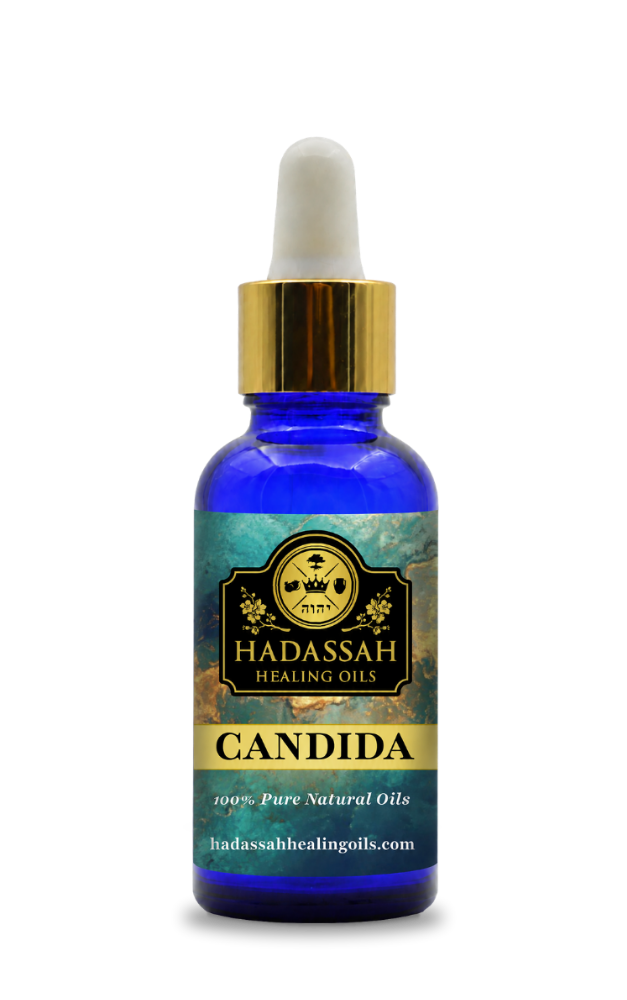
ACNE AND SCAR BLEND (20ML)

R380.00 Original price was: R380.00.R361.00Current price is: R361.00. Incl. VAT
ACNE AND SCAR BLEND (20ML)
Give blemish-prone, stressed and uneven-looking skin the gentle botanical care it deserves.
Only 2 left in stock
- 3-5 working days
- All products include VAT.
- Client Testimonies
- 100% Natural
- 100% Pure Essential Oils
- 100% Manufacturing Guarantee
- Share to social media
Description
Directions for Use
Warning
Ingredients
Technical Information
ACNE AND SCAR BLEND (20ML)
Give blemish-prone, stressed and uneven-looking skin the gentle botanical care it deserves.
Hadassah Healing Oils Acne & Scar Restore Blend is a carefully selected combination of essential oils and nutrient-rich botanical carrier oils, developed to support the appearance and condition of skin affected by blemishes, post-acne marks, dryness and visible scarring.
Each ingredient contributes different properties, from supporting the skin’s moisture barrier and providing antioxidant compounds to offering botanical constituents being studied for their antimicrobial and anti-inflammatory activity.
The result is a concentrated botanical skincare blend designed to complement a consistent, gentle skincare routine.
ACNE AND SCAR BLEND (20ML)
After washing your face with Organic Face Wash, apply over acne, scars, or pigmentation, twice daily.
For external skincare use only.
Once the final formula has been confirmed suitable for facial application:
- Cleanse the face gently and pat dry.
- Apply a small amount to the affected areas, avoiding the eyes and lips.
- Begin with application on alternate evenings to assess tolerance.
- Increase use only if the skin remains comfortable.
- Use a broad-spectrum SPF 30 or higher sunscreen during the day.
Discontinue use if burning, itching, swelling or persistent redness occurs.
Protocol
ACNE AND SCAR BLEND (20ML)
IMPORTANT PRECAUTIONS
- External use only. Do not ingest.
- Do not apply to open wounds, infected skin or broken skin.
- Avoid contact with eyes, mucous membranes, inner ears, and sensitive areas,
if contact occurs, rinse well with water. - Patch test before using it on a larger area of the skin.
- Do not use on infants
- Seek professional advice before use during pregnancy or breastfeeding.
- Avoid use if allergic to any listed ingredient
- Discontinue use if redness, irritation, or other discomfort occurs.
- Keep out of children’s reach.
- Discontinue use if burning, itching, swelling or persistent redness occurs.
- Store in a cool and dry place, away from heat and direct sunlight.
ACNE AND SCAR BLEND (20ML)
Boswellia carteri, Lavandula angustifolia, Melaleuca alternifolia, Commiphora myrrha, and Vitis vinifera.
ACNE AND SCAR BLEND (20ML)
WHAT CAN THIS BLEND HELP SUPPORT?
- Blemish-prone skin: Provides botanical care for skin experiencing occasional spots and breakouts.
- Visible redness: Helps moisturise and comfort skin that looks stressed or irritated.
- Post-acne marks: Supports skin conditioning and a more even-looking complexion.
- Scar appearance: Helps soften and nourish the surrounding skin, which may improve the appearance of dryness and roughness.
- Skin barrier: Replenishes surface lipids and helps reduce moisture loss.
- Skin texture: Promotes a smoother, more supple appearance.
- Dryness after breakouts: Helps restore comfort to skin affected by dryness or harsh skincare products.
HOW DOES IT WORK ON THE SKIN?
Acne develops through several overlapping biological processes: increased sebum production, blocked hair follicles, activity of Cutibacterium acnes, and inflammation.
When a blemish becomes inflamed, the surrounding tissue can become red, tender and swollen. More severe inflammation can damage the skin’s supporting structures, increasing the risk of lingering marks or permanent scars.
This blend approaches skincare through three complementary pathways.
- Botanical care for blemish-prone skin
Tea Tree essential oil contains terpinen-4-ol and related compounds that have demonstrated antimicrobial and anti-inflammatory properties.
Clinical studies of certain tea tree preparations suggest modest benefits for mild-to-moderate acne, although results cannot automatically be applied to every blend.
Other essential oils in this formulation contain aromatic compounds investigated for similar biological activities, but their effects on human acne are not yet well established.
- Supporting the skin’s protective barrier
Jojoba, Sweet Almond, Grapeseed and Olive Oil supply lipids that help soften the skin and reduce moisture loss.
This matters because a damaged skin barrier can contribute to dryness, sensitivity and discomfort.
Keeping skin appropriately moisturised can help it tolerate everyday environmental stressors and skincare products.
- Supporting the appearance of recovering skin
Rosehip Oil provides essential fatty acids and antioxidant compounds, while the other botanical oils contribute emollient properties.
These ingredients help condition the skin as it undergoes its normal renewal processes.
The blend may improve the appearance of dryness and uneven texture, but it is not clinically established to rebuild damaged collagen, remove deep acne scars or permanently eliminate pigmentation.
UNDERSTANDING ACNE MARKS AND SCARS
Not every mark left behind by a pimple is a permanent scar.
Post-inflammatory marks are flat red, pink, brown or darker areas that remain after a breakout. They can gradually fade as the skin recovers.
True acne scars involve structural changes to the skin. They may appear as indentations, pits or raised tissue.
Moisturising botanical oils can improve skin comfort and surface appearance, but established acne scars generally require targeted dermatological treatments for significant improvement.
Preventing further breakouts, avoiding picking and protecting the skin from sunlight are particularly important for reducing the risk of lasting marks.
INGREDIENT INFORMATION
TEA TREE ESSENTIAL OIL — Melaleuca alternifolia
Tea Tree is one of the best-studied essential oils for acne-prone skin.
Its key constituents include terpinen-4-ol and other monoterpenes.
Skin-related properties:
- Demonstrates antimicrobial activity in laboratory studies.
- Has shown anti-inflammatory effects in experimental research.
- Certain topical formulations have demonstrated modest improvements in acne lesions.
- May complement a blemish-focused skincare routine when appropriately diluted.
Tea Tree can also cause irritation or allergic contact dermatitis, particularly when oxidised or used at high concentrations.
FRANKINCENSE ESSENTIAL OIL — Boswellia species
Frankincense has a long history of use in traditional skin preparations.
Its essential oil contains aromatic terpenes, including alpha-pinene, although the exact chemical profile depends on the botanical species.
Skin-related properties:
- Contains compounds investigated for anti-inflammatory activity.
- Contributes to the blend’s botanical skin-conditioning profile.
- May support a calming sensory experience during skincare.
Important distinction: research on boswellic acids from frankincense resin extracts should not be attributed directly to distilled frankincense essential oil, which generally contains little or none of these nonvolatile compounds.
LAVENDER ESSENTIAL OIL — Lavandula angustifolia
Lavender contains linalool and linalyl acetate, compounds studied for several biological activities.
Skin-related properties:
- Traditionally used in soothing skincare.
- Has shown anti-inflammatory and antimicrobial activity in some experimental studies.
- Contributes a calming aromatic character.
There is insufficient clinical evidence that lavender essential oil independently heals acne scars or regenerates damaged human skin.
MYRRH ESSENTIAL OIL — Commiphora myrrha
Myrrh has been used historically in skin and personal-care preparations.
Its essential oil contains various sesquiterpenes.
Skin-related properties:
- Laboratory research has investigated its antimicrobial and anti-inflammatory activities.
- Contributes botanical compounds to the formulation.
- Complements the skin-conditioning oils in the blend.
Claims that myrrh directly closes wounds or rebuilds scar tissue have not been established for this product.
HYSSOP ESSENTIAL OIL — Hyssopus officinalis
Hyssop is an aromatic botanical traditionally used in herbal preparations.
Certain varieties contain pinocamphone and isopinocamphone, compounds associated with neurological toxicity at sufficient exposure.
Although laboratory research has explored some biological activities of hyssop oil, its inclusion in a leave-on facial preparation requires particular care.
Formulation consideration: The exact hyssop chemotype, concentration and safety profile must be verified before recommending routine facial application.
CLARY SAGE ESSENTIAL OIL — Salvia sclarea
Clary Sage contains aromatic compounds such as linalyl acetate and linalool.
Skin-related properties:
- Traditionally used in cosmetic preparations.
- Contributes fragrance and botanical constituents to the formula.
- Has been investigated for antimicrobial and anti-inflammatory properties in preliminary research.
There is insufficient clinical evidence that topical Clary Sage normalises sebum production or corrects hormonal acne.
CEDARWOOD ESSENTIAL OIL — Cedrus species
Cedarwood essential oil contains sesquiterpenes and other aromatic compounds, depending on the species.
Skin-related properties:
- Traditionally used in skincare for oily or blemish-prone skin.
- Provides a woody aromatic character.
- Contains compounds studied for biological activity in laboratory settings.
Evidence that cedarwood essential oil directly reduces acne or scars in humans is limited.
JOJOBA OIL — Simmondsia chinensis
Jojoba is composed primarily of liquid wax esters.
These wax esters help condition the skin and provide a protective emollient layer.
Skin-related benefits:
- Helps soften and moisturise the skin.
- Supports surface barrier comfort.
- Can provide a relatively light, smooth skin feel.
Jojoba is useful as a carrier oil because it distributes essential oils across the skin while reducing the need to apply them undiluted.
SWEET ALMOND OIL — Prunus amygdalus dulcis
Sweet Almond Oil contains oleic and linoleic fatty acids and other naturally occurring constituents.
Skin-related benefits:
- Helps replenish surface lipids.
- Softens dry and rough skin.
- Supports moisture retention.
- Improves skin suppleness.
ROSEHIP OIL — Rosa species
Rosehip seed oil is valued for its essential fatty acids, particularly linoleic and alpha-linolenic acids, with composition varying by source.
Skin-related benefits:
- Supports skin barrier conditioning.
- Helps improve the feel of dry or rough skin.
- Provides antioxidant-associated plant constituents.
- Can contribute to a smoother-looking complexion.
Rosehip is particularly relevant to the skin-conditioning aspect of this blend, although the final formula has not been clinically proven to fade scars.
CARROT SEED OIL — Daucus carota
Carrot seed oil contributes botanical compounds used in cosmetic skincare.
The composition depends on whether the ingredient is carrot seed essential oil or a carrier-oil extract.
Skin-related benefits:
- Contributes antioxidant-associated plant constituents.
- Supports the formulation’s skin-conditioning profile.
- Complements the emollient carrier oils.
GRAPESEED OIL — Vitis vinifera
Grapeseed Oil is generally rich in linoleic acid.
Skin-related benefits:
- Provides lightweight emollience.
- Helps soften the skin.
- Supports the skin’s surface lipid layer.
- Provides a useful base for facial oil formulations.
OLIVE OIL — Olea europaea
Olive Oil is rich in oleic acid and contains minor antioxidant-associated compounds.
Skin-related benefits:
- Helps soften and moisturise dry skin.
- Provides emollient protection.
- Supports a smoother skin feel.
Some acne-prone or barrier-impaired individuals may find olive oil too rich or irritating, so individual tolerance is important.
DIRECTIONS FOR USE
For external skincare use only.
Once the final formula has been confirmed suitable for facial application:
- Cleanse the face gently and pat dry.
- Apply a small amount to the affected areas, avoiding the eyes and lips.
- Begin with application on alternate evenings to assess tolerance.
- Increase use only if the skin remains comfortable.
- Use a broad-spectrum SPF 30 or higher sunscreen during the day.
Discontinue use if burning, itching, swelling or persistent redness occurs.
IMPORTANT PRECAUTIONS
- External use only. Do not ingest.
- Do not apply to open wounds, infected skin or broken skin.
- Avoid contact with eyes and mucous membranes.
- Patch test before use.
- Do not use on infants
- Seek professional advice before use during pregnancy or breastfeeding.
- Avoid use if allergic to any listed ingredient