
VAGUS NERVE RESET BLEND 30ML
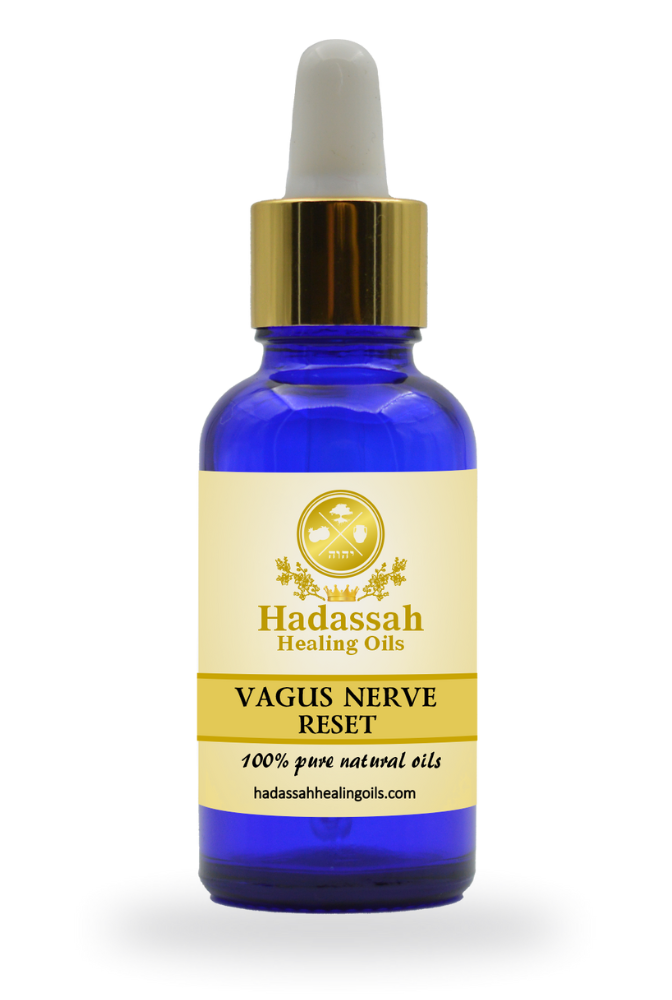
R550.00 Incl. VAT
VAGUS NERVE RESET BLEND
Neuro-calming • Parasympathetic activation • Anti-inflammatory modulation
The vagus nerve is the body’s main control cable between the brain and the organs. It runs from the brainstem through the neck, chest, and abdomen, touching the heart, lungs, stomach, intestines, and more. About 80% of its signals run from the body back up to the brain, telling the brain if you are safe, fed, calm, or in danger. When the vagus nerve is strong and active, it slows the heartbeat, relaxes breathing, stimulates digestion, and lowers inflammation — switching the body into its healing mode, often called rest and digest.
When the vagus nerve is weakened or “stuck off,” the body often gets trapped in fight-or-flight mode. This means stress hormones stay high, the heart races, digestion shuts down, and the immune system stays on edge. Over time this constant survival state can make you feel anxious, wired but tired, unable to sleep deeply, or constantly on alert.
Symptoms of low vagal tone or chronic fight-or-flight include: rapid heartbeat, shallow breathing, bloating or IBS-like symptoms, reflux, chronic fatigue, brain fog, anxiety, depression, poor sleep, frequent infections, and even autoimmune flares. Many women also experience tightness in the chest, a “lump in the throat,” nausea with stress, or migraines when the vagus nerve is dysregulated.
The encouraging truth is that the vagus nerve can be retrained and reset. Through calm breathing, gentle humming or prayer, the use of medicinal essential oils, and practices that bring safety and peace, the body can switch back into parasympathetic mode. This allows the nervous system to rest, inflammation to decrease, digestion to improve, and the whole body to begin repairing itself again.
In stock
- 100% Natural
- 100% Pure Essential Oils
- 100% Manufacturing Guarantee
- Share to social media
Description
Directions for Use
Warning
Technical Information
VAGUS NERVE RESET BLEND
Neuro-calming • Parasympathetic activation • Anti-inflammatory modulation
The vagus nerve is the body’s main control cable between the brain and the organs. It runs from the brainstem through the neck, chest, and abdomen, touching the heart, lungs, stomach, intestines, and more. About 80% of its signals run from the body back up to the brain, telling the brain if you are safe, fed, calm, or in danger. When the vagus nerve is strong and active, it slows the heartbeat, relaxes breathing, stimulates digestion, and lowers inflammation — switching the body into its healing mode, often called rest and digest.
When the vagus nerve is weakened or “stuck off,” the body often gets trapped in fight-or-flight mode. This means stress hormones stay high, the heart races, digestion shuts down, and the immune system stays on edge. Over time this constant survival state can make you feel anxious, wired but tired, unable to sleep deeply, or constantly on alert.
Symptoms of low vagal tone or chronic fight-or-flight include: rapid heartbeat, shallow breathing, bloating or IBS-like symptoms, reflux, chronic fatigue, brain fog, anxiety, depression, poor sleep, frequent infections, and even autoimmune flares. Many women also experience tightness in the chest, a “lump in the throat,” nausea with stress, or migraines when the vagus nerve is dysregulated.
The encouraging truth is that the vagus nerve can be retrained and reset. Through calm breathing, gentle humming or prayer, the use of medicinal essential oils, and practices that bring safety and peace, the body can switch back into parasympathetic mode. This allows the nervous system to rest, inflammation to decrease, digestion to improve, and the whole body to begin repairing itself again.
Symptoms of Vagus Nerve Dysfunction / Low Vagal Tone
Neurological & Cognitive
- Brain fog and poor concentration – because reduced vagal activity increases inflammation in the brain.
- Memory problems – chronic stress hormones interfere with hippocampus function.
- Anxiety and panic attacks – the vagus nerve helps calm the limbic system; if it’s weak, fear circuits dominate.
- Depression or flat mood – lack of parasympathetic activity means poor serotonin and dopamine regulation.
- Insomnia or restless sleep – the vagus nerve normally signals safety for deep sleep.
Respiratory & Chest Symptoms
- Shallow breathing – trapped in “fight-or-flight” chest breathing, rather than deep diaphragmatic breaths.
- Difficulty sighing or yawning – signs of vagal underactivity.
- Chest tightness or palpitations – vagus nerve normally regulates heart rhythm; without it, the heart races.
- Shortness of breath with stress – sympathetic overdrive squeezes the lungs.
Cardiac & Circulatory
- Fast or irregular heartbeat (palpitations) – vagus nerve keeps the heart rate balanced.
- High blood pressure spikes – sympathetic dominance raises vascular tension.
- Cold hands and feet – poor circulation because the body prioritizes survival over extremities.
Digestive System
- Bloating and indigestion – the vagus nerve controls stomach acid and motility.
- Constipation or diarrhea – poor vagal tone means weak gut movement.
- Nausea, “lump in throat,” or reflux – vagus controls the esophagus and stomach valve.
- Loss of appetite or extreme cravings – survival state dysregulates hunger hormones.
Immune & Inflammatory
- Frequent colds or infections – the vagus nerve normally lowers inflammation and boosts immunity.
- Autoimmune flare-ups – low vagal tone keeps inflammation “switched on.”
- Chronic fatigue or fibromyalgia-like pain – linked to unregulated inflammatory cytokines.
- Allergies or histamine reactions – vagus nerve failure leads to overactive mast cells.
Musculoskeletal & Pain
- Muscle tightness (especially neck, shoulders, back) – stress tension never switches off.
- Migraines or tension headaches – vagus dysfunction causes vessel instability and nerve irritation.
- Jaw clenching / teeth grinding (bruxism) – common in fight-or-flight mode.
Skin & Sensory
- Rashes, eczema, or hives – inflammation and immune imbalance flare up.
- Tinnitus (ringing ears) – linked to vagal nerve branches in the auditory system.
- Blurred vision or light sensitivity – chronic sympathetic dominance alters ocular blood flow.
Emotional & Behavioral
- Irritability, mood swings, or feeling “on edge” – the nervous system can’t downshift.
- Social withdrawal – the vagus nerve is tied to the “social engagement system”; when weak, connection feels unsafe.
- Difficulty relaxing, always “on” – never fully feeling at rest, even in safe environments.
- Startle reflex (jumpiness) – exaggerated response to small noises or stressors.
When the vagus nerve is weak or the body is stuck in fight-or-flight, symptoms can appear in every system:
- Brain: anxiety, depression, brain fog
- Heart/lungs: palpitations, shallow breath
- Gut: IBS, reflux, nausea
- Immune: inflammation, frequent illness
- Muscles/skin: pain, rashes, headaches
Because the vagus nerve touches nearly every organ, dysfunction creates a picture that often looks like “many different diseases” but is actually one root problem: the body cannot switch back into rest, digest, and heal mode.
What this blend is designed to do
The vagus nerve is the body’s “healing switch.” It carries ~80% afferent signals that determine stress vs. safety and controls heart rate variability, breathing rhythm, gastric motility, bile secretion, insulin signaling, and the cholinergic anti-inflammatory pathway. When vagal tone is high, the body shifts from sympathetic (“fight/flight”) into parasympathetic (“rest, digest, repair”)—lowering inflammation, improving digestion/sleep, stabilizing mood, and enabling trauma processing.
Vagus Nerve Reset Blend is a clinical-grade synergy of essential oils chosen for their neurocalming, vagotonic, anti-inflammatory, and cardiorespiratory-regulating actions to help the nervous system re-enter parasympathetic dominance.
Breath in Scripture and Hebrew Understanding
- Neshamah (נְשָׁמָה) – the Breath of Life
- First appears in Genesis 2:7:
“Then the LORD God formed man of the dust of the ground and breathed into his nostrils the breath (neshamah) of life, and man became a living soul.” - Neshamah comes from the root נָשַׁם (nasham) = “to blow, to breathe.”
- It means the God-given breath that makes man alive — not just biologically, but spiritually aware.
- Hebrew letters:
- נ (Nun): life, seed, continuation
- ש (Shin): fire, divine presence, transformation
- מ (Mem): water, flow, the womb
- ה (Hey): breath, revelation, Spirit
Together: The flowing fire of God that brings life and revelation into the seed of man.
- Ruach (רוּחַ) – Spirit, Wind, Breath
- Used in Genesis 1:2:
“And the Spirit (Ruach) of God was hovering over the face of the waters.” - Ruach means breath, wind, or spirit — it is both the moving air and the moving of God’s Spirit.
- Hebrew letters:
- ר (Resh): head, authority
- ו (Vav): nail, connection
- ח (Chet): life, doorway
Together: The Head who connects us to life — the doorway where Spirit enters.
- Nefesh (נֶפֶשׁ) – Soul, Living Being
- In Genesis 2:7, after God breathed into Adam, man became a nefesh chayah — a “living soul.”
- Breath is what transformed clay into a soul.
- Hebrew letters:
- נ (Nun): life/continuity
- פ (Peh): mouth, speech, expression
- ש (Shin): fire, divine presence
Together: Life expressed through the mouth with the fire of God. Breath and speech are inseparable.
- New Testament Connection (Greek: Pneuma, πνεῦμα)
- The Greek pneuma means both “breath” and “Spirit.”
- Jesus in John 20:22: “And He breathed on them, and said, ‘Receive the Holy Spirit.’”
- The act of breath itself transmits the Spirit of God.
Biblical Themes of Breath
- Breath = Life: Without breath, man is dust. With breath, he becomes a living soul.
- Breath = Spirit: Ruach is both oxygen and God’s Spirit.
- Breath = Speech: Breath flows through the mouth (Peh), releasing word and prayer. Scripture and prophecy ride on breath.
- Breath = Reset & Healing: Ezekiel 37 (Valley of Dry Bones) — “Prophesy to the breath, prophesy, son of man, and say to the breath: ‘Thus says the Lord GOD: Come from the four winds, O breath, and breathe on these slain, that they may live.’” Breath restores what was dead.
Why This Matters for the Vagus Nerve
Breath is not only biological but spiritual. When we practice deep, slow, God-centered breathing:
- Biologically → we activate the vagus nerve, lower stress hormones, restore digestion, and heal the body.
- Biblically → we align with God’s own Spirit-breath, remembering that every inhale is His gift of life, and every exhale is surrender back to Him.
In Hebrew thought, to breathe is to pray. Every breath repeats the sacred name YHWH — inhaling “Yah,” exhaling “Weh.” Even without words, our breathing proclaims His name and reminds us that our life is sustained by Him.
10 Medicinal Breathing Techniques to Reset the Vagus Nerve
- Diaphragmatic Breathing (Belly Breathing)
- How: Place one hand on chest, one on belly. Inhale slowly through the nose so the belly rises first, exhale gently so the belly falls.
- Why: Activates the vagus nerve through diaphragm movement and increased lung stretch receptors.
- 6 Breaths Per Minute Breathing
- How: Inhale for 5 seconds, exhale for 5 seconds → about 6 breaths per minute.
- Why: Clinically shown to maximize HRV and vagal activation.
- Extended Exhale Breathing
- How: Inhale through nose for 4 counts, exhale through nose for 6–8 counts.
- Why: The vagus nerve activates most strongly during exhalation, lowering heart rate and blood pressure.
- 4-7-8 Breathing (Medical Relaxation Method)
- How: Inhale for 4 counts, hold for 7 counts, exhale for 8 counts.
- Why: Regulates autonomic nervous system, reduces anxiety, and lengthens vagal exhalation tone.
- Resonance Frequency Breathing
- How: Most adults’ “resonance” point is ~5.5–6 breaths per minute. Inhale 4.5–5 sec, exhale 4.5–5 sec.
- Why: Optimizes baroreflex (blood pressure regulation) and vagal feedback loops to the heart.
- 4 count Breathing
- How: Inhale 4 counts → Hold 4 counts → Exhale 4 counts → Hold 4 counts. Repeat.
- Why: Calms overactive stress responses, strengthens vagal balance, improves focus.
- Humming Exhale Breathing
- How: Inhale deeply through nose, exhale slowly while humming.
- Why: Vibrations directly stimulate vagus nerve branches in the throat and sinuses, proven to increase nitric oxide and vagal tone.
- Alternate Nostril Breathing (Nasal Cycling, Medical Form)
- How: Use thumb to close right nostril, inhale left → close left, exhale right → inhale right, exhale left. Continue cycle.
- Why: Balances autonomic nervous system engages vagal nasal reflex pathways.
- Cued Yawning or Sigh Breathing
- How: Inhale deeply through nose, long exaggerated sigh or yawn-like exhale.
- Why: Natural vagus-activating reflex — stretches diaphragm, lowers sympathetic arousal.
- Breathing with Gentle Pressure (Valsalva Modified)
- How: Inhale deeply, exhale slowly against slight resistance (like pursed lips, or blowing gently through a straw).
- Why: Stimulates vagus via baroreceptors, used clinically to calm arrhythmias and improve vagal tone.
The common keys for vagus-nerve-reset breathing are:
- Slow pace (5–7 breaths per minute)
- Nose breathing (activates nitric oxide & vagal reflexes)
- Longer exhalations than inhalations
- Gentle sound or vibration (humming, sighing, prayer)
These methods are clinically tested (in cardiology, psychology, neurology) and do not rely on spiritual or new-age frameworks.
VAGUS NERVE RESET BLEND
Apply Topical — cervical vagus pathway & cardiac area
- Areas:
- Behind the ears over the mastoid (auricular vagus branches)
- Along the sternocleidomastoid (side of neck; over the carotid sheath)
- Over the sternum/heart and upper abdomen (solar plexus/enteric)
- Over the vagus nerve
- Frequency: 1–3× daily; best morning and evening or before breathwork/prayer.
Direct inhalation (palms)
- Place 3-5 drops in palm, rub gently, cup over nose, with deep breathing for vagus nerve reset .
You can use this blend with our Trauma Products: Trauma Diffuser Oil 10ml, Trauma Ingestible Blend 30ml, Rescue Diffuser Oil 10ml and Rescue Inhaler.
You can also use this blend with our 22 Hebrew letter Anointing Oils in Prayer
You can also use this blend with our Spinal Therapy Large Blend 100ml, over the spine 30drops at night, Mineral Infusion daily and Magnesium Complex daily
VAGUS NERVE RESET BLEND
For external use only. Do not ingest.
Avoid contact with eyes, mucous membranes, and sensitive skin.
If irritation, dizziness, or discomfort occurs, discontinue use.
Keep out of reach of children. Store in a cool, dark place.
For more technical advice, please contact one of our distributors in your area.
Description
Directions for Use
Ingredients
Warning
VAGUS NERVE RESET BLEND
Neuro-calming • Parasympathetic activation • Anti-inflammatory modulation
The vagus nerve is the body’s main control cable between the brain and the organs. It runs from the brainstem through the neck, chest, and abdomen, touching the heart, lungs, stomach, intestines, and more. About 80% of its signals run from the body back up to the brain, telling the brain if you are safe, fed, calm, or in danger. When the vagus nerve is strong and active, it slows the heartbeat, relaxes breathing, stimulates digestion, and lowers inflammation — switching the body into its healing mode, often called rest and digest.
When the vagus nerve is weakened or “stuck off,” the body often gets trapped in fight-or-flight mode. This means stress hormones stay high, the heart races, digestion shuts down, and the immune system stays on edge. Over time this constant survival state can make you feel anxious, wired but tired, unable to sleep deeply, or constantly on alert.
Symptoms of low vagal tone or chronic fight-or-flight include: rapid heartbeat, shallow breathing, bloating or IBS-like symptoms, reflux, chronic fatigue, brain fog, anxiety, depression, poor sleep, frequent infections, and even autoimmune flares. Many women also experience tightness in the chest, a “lump in the throat,” nausea with stress, or migraines when the vagus nerve is dysregulated.
The encouraging truth is that the vagus nerve can be retrained and reset. Through calm breathing, gentle humming or prayer, the use of medicinal essential oils, and practices that bring safety and peace, the body can switch back into parasympathetic mode. This allows the nervous system to rest, inflammation to decrease, digestion to improve, and the whole body to begin repairing itself again.
Symptoms of Vagus Nerve Dysfunction / Low Vagal Tone
Neurological & Cognitive
- Brain fog and poor concentration – because reduced vagal activity increases inflammation in the brain.
- Memory problems – chronic stress hormones interfere with hippocampus function.
- Anxiety and panic attacks – the vagus nerve helps calm the limbic system; if it’s weak, fear circuits dominate.
- Depression or flat mood – lack of parasympathetic activity means poor serotonin and dopamine regulation.
- Insomnia or restless sleep – the vagus nerve normally signals safety for deep sleep.
Respiratory & Chest Symptoms
- Shallow breathing – trapped in “fight-or-flight” chest breathing, rather than deep diaphragmatic breaths.
- Difficulty sighing or yawning – signs of vagal underactivity.
- Chest tightness or palpitations – vagus nerve normally regulates heart rhythm; without it, the heart races.
- Shortness of breath with stress – sympathetic overdrive squeezes the lungs.
Cardiac & Circulatory
- Fast or irregular heartbeat (palpitations) – vagus nerve keeps the heart rate balanced.
- High blood pressure spikes – sympathetic dominance raises vascular tension.
- Cold hands and feet – poor circulation because the body prioritizes survival over extremities.
Digestive System
- Bloating and indigestion – the vagus nerve controls stomach acid and motility.
- Constipation or diarrhea – poor vagal tone means weak gut movement.
- Nausea, “lump in throat,” or reflux – vagus controls the esophagus and stomach valve.
- Loss of appetite or extreme cravings – survival state dysregulates hunger hormones.
Immune & Inflammatory
- Frequent colds or infections – the vagus nerve normally lowers inflammation and boosts immunity.
- Autoimmune flare-ups – low vagal tone keeps inflammation “switched on.”
- Chronic fatigue or fibromyalgia-like pain – linked to unregulated inflammatory cytokines.
- Allergies or histamine reactions – vagus nerve failure leads to overactive mast cells.
Musculoskeletal & Pain
- Muscle tightness (especially neck, shoulders, back) – stress tension never switches off.
- Migraines or tension headaches – vagus dysfunction causes vessel instability and nerve irritation.
- Jaw clenching / teeth grinding (bruxism) – common in fight-or-flight mode.
Skin & Sensory
- Rashes, eczema, or hives – inflammation and immune imbalance flare up.
- Tinnitus (ringing ears) – linked to vagal nerve branches in the auditory system.
- Blurred vision or light sensitivity – chronic sympathetic dominance alters ocular blood flow.
Emotional & Behavioral
- Irritability, mood swings, or feeling “on edge” – the nervous system can’t downshift.
- Social withdrawal – the vagus nerve is tied to the “social engagement system”; when weak, connection feels unsafe.
- Difficulty relaxing, always “on” – never fully feeling at rest, even in safe environments.
- Startle reflex (jumpiness) – exaggerated response to small noises or stressors.
When the vagus nerve is weak or the body is stuck in fight-or-flight, symptoms can appear in every system:
- Brain: anxiety, depression, brain fog
- Heart/lungs: palpitations, shallow breath
- Gut: IBS, reflux, nausea
- Immune: inflammation, frequent illness
- Muscles/skin: pain, rashes, headaches
Because the vagus nerve touches nearly every organ, dysfunction creates a picture that often looks like “many different diseases” but is actually one root problem: the body cannot switch back into rest, digest, and heal mode.
What this blend is designed to do
The vagus nerve is the body’s “healing switch.” It carries ~80% afferent signals that determine stress vs. safety and controls heart rate variability, breathing rhythm, gastric motility, bile secretion, insulin signaling, and the cholinergic anti-inflammatory pathway. When vagal tone is high, the body shifts from sympathetic (“fight/flight”) into parasympathetic (“rest, digest, repair”)—lowering inflammation, improving digestion/sleep, stabilizing mood, and enabling trauma processing.
Vagus Nerve Reset Blend is a clinical-grade synergy of essential oils chosen for their neurocalming, vagotonic, anti-inflammatory, and cardiorespiratory-regulating actions to help the nervous system re-enter parasympathetic dominance.
Breath in Scripture and Hebrew Understanding
- Neshamah (נְשָׁמָה) – the Breath of Life
- First appears in Genesis 2:7:
“Then the LORD God formed man of the dust of the ground and breathed into his nostrils the breath (neshamah) of life, and man became a living soul.” - Neshamah comes from the root נָשַׁם (nasham) = “to blow, to breathe.”
- It means the God-given breath that makes man alive — not just biologically, but spiritually aware.
- Hebrew letters:
- נ (Nun): life, seed, continuation
- ש (Shin): fire, divine presence, transformation
- מ (Mem): water, flow, the womb
- ה (Hey): breath, revelation, Spirit
Together: The flowing fire of God that brings life and revelation into the seed of man.
- Ruach (רוּחַ) – Spirit, Wind, Breath
- Used in Genesis 1:2:
“And the Spirit (Ruach) of God was hovering over the face of the waters.” - Ruach means breath, wind, or spirit — it is both the moving air and the moving of God’s Spirit.
- Hebrew letters:
- ר (Resh): head, authority
- ו (Vav): nail, connection
- ח (Chet): life, doorway
Together: The Head who connects us to life — the doorway where Spirit enters.
- Nefesh (נֶפֶשׁ) – Soul, Living Being
- In Genesis 2:7, after God breathed into Adam, man became a nefesh chayah — a “living soul.”
- Breath is what transformed clay into a soul.
- Hebrew letters:
- נ (Nun): life/continuity
- פ (Peh): mouth, speech, expression
- ש (Shin): fire, divine presence
Together: Life expressed through the mouth with the fire of God. Breath and speech are inseparable.
- New Testament Connection (Greek: Pneuma, πνεῦμα)
- The Greek pneuma means both “breath” and “Spirit.”
- Jesus in John 20:22: “And He breathed on them, and said, ‘Receive the Holy Spirit.’”
- The act of breath itself transmits the Spirit of God.
Biblical Themes of Breath
- Breath = Life: Without breath, man is dust. With breath, he becomes a living soul.
- Breath = Spirit: Ruach is both oxygen and God’s Spirit.
- Breath = Speech: Breath flows through the mouth (Peh), releasing word and prayer. Scripture and prophecy ride on breath.
- Breath = Reset & Healing: Ezekiel 37 (Valley of Dry Bones) — “Prophesy to the breath, prophesy, son of man, and say to the breath: ‘Thus says the Lord GOD: Come from the four winds, O breath, and breathe on these slain, that they may live.’” Breath restores what was dead.
Why This Matters for the Vagus Nerve
Breath is not only biological but spiritual. When we practice deep, slow, God-centered breathing:
- Biologically → we activate the vagus nerve, lower stress hormones, restore digestion, and heal the body.
- Biblically → we align with God’s own Spirit-breath, remembering that every inhale is His gift of life, and every exhale is surrender back to Him.
In Hebrew thought, to breathe is to pray. Every breath repeats the sacred name YHWH — inhaling “Yah,” exhaling “Weh.” Even without words, our breathing proclaims His name and reminds us that our life is sustained by Him.
10 Medicinal Breathing Techniques to Reset the Vagus Nerve
- Diaphragmatic Breathing (Belly Breathing)
- How: Place one hand on chest, one on belly. Inhale slowly through the nose so the belly rises first, exhale gently so the belly falls.
- Why: Activates the vagus nerve through diaphragm movement and increased lung stretch receptors.
- 6 Breaths Per Minute Breathing
- How: Inhale for 5 seconds, exhale for 5 seconds → about 6 breaths per minute.
- Why: Clinically shown to maximize HRV and vagal activation.
- Extended Exhale Breathing
- How: Inhale through nose for 4 counts, exhale through nose for 6–8 counts.
- Why: The vagus nerve activates most strongly during exhalation, lowering heart rate and blood pressure.
- 4-7-8 Breathing (Medical Relaxation Method)
- How: Inhale for 4 counts, hold for 7 counts, exhale for 8 counts.
- Why: Regulates autonomic nervous system, reduces anxiety, and lengthens vagal exhalation tone.
- Resonance Frequency Breathing
- How: Most adults’ “resonance” point is ~5.5–6 breaths per minute. Inhale 4.5–5 sec, exhale 4.5–5 sec.
- Why: Optimizes baroreflex (blood pressure regulation) and vagal feedback loops to the heart.
- 4 count Breathing
- How: Inhale 4 counts → Hold 4 counts → Exhale 4 counts → Hold 4 counts. Repeat.
- Why: Calms overactive stress responses, strengthens vagal balance, improves focus.
- Humming Exhale Breathing
- How: Inhale deeply through nose, exhale slowly while humming.
- Why: Vibrations directly stimulate vagus nerve branches in the throat and sinuses, proven to increase nitric oxide and vagal tone.
- Alternate Nostril Breathing (Nasal Cycling, Medical Form)
- How: Use thumb to close right nostril, inhale left → close left, exhale right → inhale right, exhale left. Continue cycle.
- Why: Balances autonomic nervous system engages vagal nasal reflex pathways.
- Cued Yawning or Sigh Breathing
- How: Inhale deeply through nose, long exaggerated sigh or yawn-like exhale.
- Why: Natural vagus-activating reflex — stretches diaphragm, lowers sympathetic arousal.
- Breathing with Gentle Pressure (Valsalva Modified)
- How: Inhale deeply, exhale slowly against slight resistance (like pursed lips, or blowing gently through a straw).
- Why: Stimulates vagus via baroreceptors, used clinically to calm arrhythmias and improve vagal tone.
The common keys for vagus-nerve-reset breathing are:
- Slow pace (5–7 breaths per minute)
- Nose breathing (activates nitric oxide & vagal reflexes)
- Longer exhalations than inhalations
- Gentle sound or vibration (humming, sighing, prayer)
These methods are clinically tested (in cardiology, psychology, neurology) and do not rely on spiritual or new-age frameworks.
VAGUS NERVE RESET BLEND
Apply Topical — cervical vagus pathway & cardiac area
- Areas:
- Behind the ears over the mastoid (auricular vagus branches)
- Along the sternocleidomastoid (side of neck; over the carotid sheath)
- Over the sternum/heart and upper abdomen (solar plexus/enteric)
- Over the vagus nerve
- Frequency: 1–3× daily; best morning and evening or before breathwork/prayer.
Direct inhalation (palms)
- Place 3-5 drops in palm, rub gently, cup over nose, with deep breathing for vagus nerve reset .
You can use this blend with our Trauma Products: Trauma Diffuser Oil 10ml, Trauma Ingestible Blend 30ml, Rescue Diffuser Oil 10ml and Rescue Inhaler.
You can also use this blend with our 22 Hebrew letter Anointing Oils in Prayer
You can also use this blend with our Spinal Therapy Large Blend 100ml, over the spine 30drops at night, Mineral Infusion daily and Magnesium Complex daily
Primary Ingredients
VAGUS NERVE RESET BLEND
Frankincense (Boswellia carterii)
Rich in α-pinene, limonene → calms limbic reactivity, supports slow diaphragmatic breathing, modulates neuroinflammation and the perceived “threat” signal; helpful for prayer/meditation focus.
Lavender (Lavandula angustifolia)
Linalool, linalyl acetate → GABA-ergic, reduces cortisol and heart rate, improves HRV, eases muscle tension; classic parasympathetic promoter.
Roman Chamomile (Chamaemelum nobile)
Isobutyl/isoamyl angelates (esters) → smooth-muscle relaxing, antispasmodic for gut and diaphragm; useful for vagal GI symptoms (nausea, cramping).
Clary Sage (Salvia sclarea)
Linalyl acetate, sclareol → balances HPA axis and estrogen-linked stress responses; mood stabilizing, supports deep exhalation and vagal brake.
Ylang Ylang (Cananga odorata)
Germacrene, β-caryophyllene → slows rapid pulse, eases hypertension-linked tension; potent emotional de-escalation when the system is “stuck on high.”
Bergamot (Citrus bergamia)
Linalool, linalyl acetate → dual calming/brightening, reduces autonomic arousal and somatic anxiety; supports coherent breathing cadence.
Myrrh (Commiphora myrrha)
Sesquiterpenes (furanoeudesma-1,3-diene) → grounding, anti-inflammatory; encourages vagus-mediated gut–brain quieting and mucosal repair.
Rose (Rosa damascena)
Citronellol, geraniol, nerol → lowers sympathetic tone, cardiac soothing, supports trauma release and a sense of safety (key for vagal re-learning).
Neroli / Orange Blossom (Citrus aurantium var. amara)
Linalool, linalyl acetate, nerolidol → reduces palpitations, eases visceral anxiety; gentle cardiac-vagal harmonizer.
Jasmine (Jasminum grandiflorum)
Benzyl acetate, indole → mood regulation and gentle endocrine support; restores balanced arousal without sedation (useful daytime vagal work).
Magnolia (Michelia alba)
High linalool → profound quieting of limbic overdrive; excellent for nervous exhaustion and sleep-onset support.
Sandalwood (Santalum album)
α/β-santalol → deep CNS calming, promotes slow nasal breathing, enhances HRV; anchors the blend for sustained parasympathetic tone.
Spikenard (Nardostachys jatamansi)
Jatamansone/valeranone → trance-quieting, settles somatic memories; assists trauma processing.
Helichrysum (Helichrysum italicum)
Neryl acetate, italidiones → neuro-soothing, microcirculatory support, anti-inflammatory; helpful for “wired-tired” states and tension headaches.
VAGUS NERVE RESET BLEND
For external use only. Do not ingest.
Avoid contact with eyes, mucous membranes, and sensitive skin.
If irritation, dizziness, or discomfort occurs, discontinue use.
Keep out of reach of children. Store in a cool, dark place.


