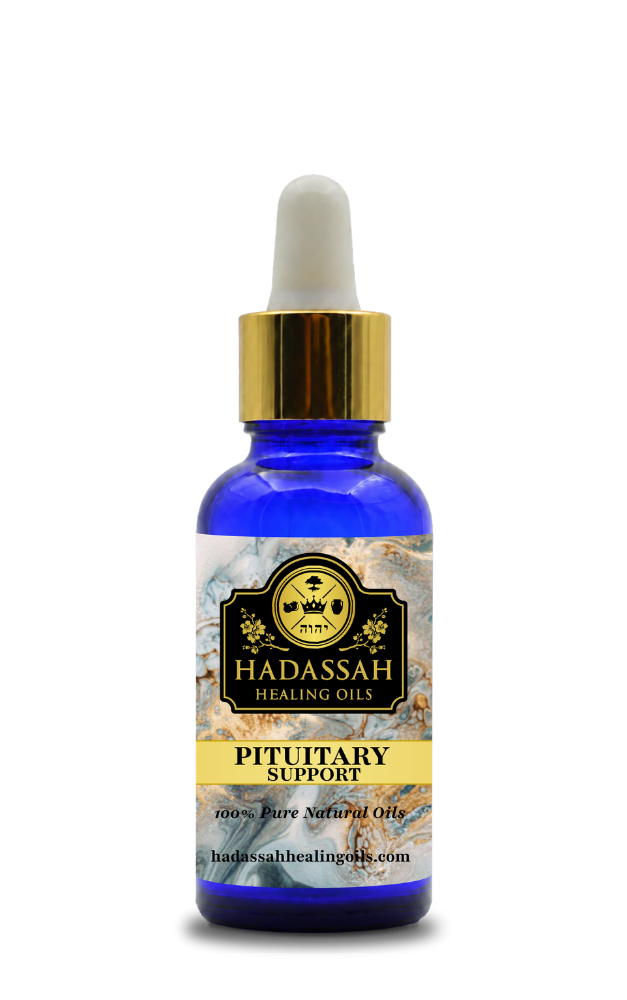
PITUITARY SUPPORT BLEND 30ML
R450.00 Incl. VAT
PITUITARY SUPPORT BLEND 30ML
Support the neuroendocrine environment surrounding normal hypothalamic and pituitary function.
- 3-5 working days
- All products include VAT.
- Client Testimonies
- 100% Natural
- 100% Pure Essential Oils
- 100% Manufacturing Guarantee
- Share to social media
Description
Directions for Use
Warning
Ingredients
Technical Information
PITUITARY SUPPORT BLEND 30ML
Pituitary Support is a concentrated botanical formulation developed to support the neuroendocrine environment surrounding normal hypothalamic and pituitary function.
The pituitary gland is sometimes called the “master gland,” but physiologically it does not operate independently.
It forms part of an interconnected system involving the:
Hypothalamus
Pituitary gland
Adrenal glands
Thyroid gland
Ovaries or testes
and numerous peripheral tissues.
The pituitary receives regulatory signals primarily from the hypothalamus and then releases hormones that communicate with endocrine organs throughout the body.
PITUITARY SUPPORT BLEND 30ML
Apply a small amount to clean, intact skin.
Suitable areas include:
Back of neck
Upper chest
Shoulders
Wrists
Feet
A small amount may also be gently applied to the temples, provided it is kept well away from the eyes.
There is no physiological requirement to apply the product directly over the anatomical location of the pituitary gland.
The pituitary is located deep within the skull and cannot be reached by simply applying essential oils to the forehead.
PITUITARY SUPPORT BLEND 30ML
Avoid:
Eyes
Inside the nose
Mouth
Mucous membranes
Broken or irritated skin
Patch test before first use.
For external use only.
PITUITARY SUPPORT BLEND 30ML
Evening Primrose Oil • Black Seed Oil • Rosehip Oil • Rosemary • Pomegranate Oil • Frankincense • Holy Basil • Lavender • Clary Sage • Rose Geranium • Bergamot • Sandalwood • Neroli • Cedarwood • Grapeseed Oil
Supporting the Communication Centre of the Endocrine System
BLACK SEED / THYMOQUINONE
supports NF-κB, Nrf2, inflammatory and antioxidant pathways.
HOLY BASIL
supports stress adaptation and the wider HPA-axis environment.
CLARY SAGE
provides linalyl acetate and linalool with human neuroendocrine research involving cortisol and serotonin.
LAVENDER + BERGAMOT + NEROLI + SANDALWOOD
provide a concentrated central nervous-system and autonomic-support complex.
EVENING PRIMROSE
provides GLA and essential fatty acids supporting lipid-mediator physiology.
POMEGRANATE
provides punicic acid and lipid antioxidant support.
ROSEHIP + GRAPESEED
strengthen the essential-fatty-acid and tissue-support matrix.
ROSE GERANIUM
provides female reproductive and neuroendocrine-supporting phytochemistry.
ROSEMARY
provides 1,8-cineole-rich cognitive and neurological support.
FRANKINCENSE + CEDARWOOD
complete the neuroinflammatory, tissue and nervous-system support complex.
PITUITARY SUPPORT BLEND 30ML
Pituitary Support is a concentrated botanical formulation developed to support the neuroendocrine environment surrounding normal hypothalamic and pituitary function.
The formulation combines:
Evening Primrose Oil • Black Seed Oil • Rosehip Oil • Rosemary • Pomegranate Oil • Frankincense • Holy Basil • Lavender • Clary Sage • Rose Geranium • Bergamot • Sandalwood • Neroli • Cedarwood • Grapeseed Oil
The pituitary gland is sometimes called the “master gland,” but physiologically it does not operate independently.
It forms part of an interconnected system involving the:
Hypothalamus
Pituitary gland
Adrenal glands
Thyroid gland
Ovaries or testes
and numerous peripheral tissues.
The pituitary receives regulatory signals primarily from the hypothalamus and then releases hormones that communicate with endocrine organs throughout the body.
For this reason, Pituitary Support is designed around:
Neuroendocrine signalling
Stress-response physiology
Inflammatory regulation
Oxidative-stress protection
Essential fatty-acid support
Autonomic nervous-system regulation
rather than claiming to directly increase or decrease individual pituitary hormones.
THE PITUITARY GLAND
The pituitary is a small endocrine gland located at the base of the brain beneath the hypothalamus.
Despite its small size, it participates in the regulation of:
Reproduction
Thyroid function
Adrenal function
Growth
Lactation
Water balance
and several aspects of metabolism.
It consists principally of:
ANTERIOR PITUITARY
and
POSTERIOR PITUITARY
These regions have very different functions.
THE ANTERIOR PITUITARY
The anterior pituitary produces several important hormones.
ACTH
Adrenocorticotropic Hormone
ACTH stimulates the adrenal cortex and forms part of the body’s stress-response system.
TSH
Thyroid-Stimulating Hormone
TSH stimulates the thyroid gland to produce thyroid hormones.
LH
Luteinising Hormone
LH participates in ovulation and ovarian hormone production in women and testosterone production in men.
FSH
Follicle-Stimulating Hormone
FSH supports ovarian follicular development in women and spermatogenesis in men.
GH
Growth Hormone
Growth hormone participates in:
Growth
Body composition
Protein metabolism
Glucose metabolism
Tissue repair
Much of its growth-related activity occurs through:
IGF-1
Insulin-Like Growth Factor 1
PROLACTIN
Prolactin is particularly important in:
Breast development
and:
Milk production
but excessive prolactin outside its normal physiological context can interfere with reproductive function.
THE POSTERIOR PITUITARY
The posterior pituitary stores and releases hormones produced within the hypothalamus.
These include:
OXYTOCIN
involved in:
Uterine contractions
Milk ejection
and other neuroendocrine functions.
VASOPRESSIN / ADH
involved in:
Water balance
Kidney function
Blood osmolality
and aspects of blood-pressure regulation.
This demonstrates why the pituitary influences numerous systems throughout the body.
THE PITUITARY DOES NOT WORK ALONE
Pituitary function is controlled through multiple feedback systems.
Three are particularly important.
THE HPA AXIS
Stress & Adrenal Regulation
HYPOTHALAMUS
releases:
CRH
↓
PITUITARY
releases:
ACTH
↓
ADRENAL CORTEX
produces:
CORTISOL
Cortisol then participates in negative feedback to the hypothalamus and pituitary.
This is the:
HYPOTHALAMIC-PITUITARY-ADRENAL AXIS
or:
HPA AXIS
It regulates important aspects of:
Stress adaptation
Energy mobilisation
Inflammatory physiology
Blood-pressure regulation
Glucose metabolism
Sleep-wake physiology
Pituitary Support contains a substantial botanical complex directed toward the stress and neuroendocrine environment surrounding this axis.
THE HPT AXIS
Pituitary-Thyroid Communication
HYPOTHALAMUS
releases:
TRH
↓
PITUITARY
releases:
TSH
↓
THYROID
produces:
T4 + T3
↓
which feed back to the hypothalamus and pituitary.
This system regulates:
Metabolic rate
Energy
Thermogenesis
Cardiovascular function
Neurological function
and numerous aspects of cellular metabolism.
Pituitary Support is not a thyroid-hormone replacement and should not be represented as correcting abnormal TSH.
Its role is broader neuroendocrine wellness support.
THE HPO AXIS
Female Reproductive Function
In women:
HYPOTHALAMUS
releases:
GnRH
↓
PITUITARY
releases:
FSH + LH
↓
OVARIES
produce:
Estradiol + Progesterone
and support:
Follicular development and ovulation
This creates the:
HYPOTHALAMIC-PITUITARY-OVARIAN AXIS
Several ingredients in Pituitary Support have particular relevance to female neuroendocrine, cyclical and stress physiology, including:
Evening Primrose
Clary Sage
Rose Geranium
Lavender
Neroli
Bergamot
BLACK SEED OIL
Thymoquinone — Neuroinflammatory & Antioxidant Support
Black Seed — Nigella sativa — provides:
THYMOQUINONE
Thymoquinone is extensively investigated for activity involving:
NF-κB
an important transcription factor regulating inflammatory gene expression.
and:
Nrf2
a major regulator of cellular antioxidant defence.
Experimental research has demonstrated effects involving:
TNF-α
IL-1β
IL-6
Reactive oxygen species
Cellular antioxidant enzymes
This gives Black Seed an important role within Pituitary Support because endocrine tissues, like other tissues, depend upon an appropriately regulated inflammatory and oxidative environment.
PRINCIPAL ACTIVE COMPONENT
Thymoquinone
PRIMARY PHARMACOLOGICAL RELEVANCE
Antioxidant defence • NF-κB-associated inflammatory regulation • Nrf2 signalling • Neuroinflammatory support • Cellular protection
Black Seed should not, however, be described as directly “stimulating the pituitary.”
HOLY BASIL
Neuroendocrine Stress & HPA-Axis Support
Holy Basil — Ocimum tenuiflorum — is particularly relevant to the stress component of pituitary physiology.
Holy Basil essential oil can contain:
Eugenol
Linalool
β-Caryophyllene
and other chemotype-dependent volatile constituents.
Holy Basil preparations have been investigated clinically in relation to:
Psychological stress
Sleep
Fatigue
Cortisol-associated physiology
Human studies using standardised oral Holy Basil extracts have demonstrated measurable effects on stress responses, including cortisol-related outcomes.
This evidence provides strong botanical rationale for Holy Basil within a neuroendocrine formulation, while the pharmacology of the essential oil should be distinguished from that of concentrated oral extracts.
PRINCIPAL ESSENTIAL-OIL COMPONENTS
Eugenol • Linalool • β-Caryophyllene — chemotype dependent
PRIMARY PHARMACOLOGICAL RELEVANCE
Stress adaptation • HPA-axis support • Neuroendocrine wellness • Inflammatory and antioxidant support
CLARY SAGE
Linalyl Acetate, Linalool & Neuroendocrine Regulation
Clary Sage — Salvia sclarea — commonly contains:
LINALYL ACETATE
and:
LINALOOL
Human research in women has demonstrated measurable changes in neuroendocrine markers following Clary Sage exposure, including reductions in plasma cortisol and increases in serotonin in one study.
This makes Clary Sage particularly relevant to:
HYPOTHALAMIC-PITUITARY-STRESS COMMUNICATION
and female neuroendocrine wellbeing.
Its strongest evidence is therefore not that it “balances estrogen,” but that its volatile chemistry can influence stress-associated neuroendocrine physiology.
PRINCIPAL ACTIVE COMPONENTS
Linalyl Acetate • Linalool
PRIMARY PHARMACOLOGICAL RELEVANCE
Neuroendocrine support • Cortisol-response support • Serotonergic physiology • Autonomic regulation
LAVENDER
Linalool & Linalyl Acetate — Central Nervous-System Regulation
Lavender contributes:
LINALOOL
LINALYL ACETATE
These compounds demonstrate neuropharmacological activity involving:
Glutamatergic signalling
Neuronal excitability
Voltage-dependent ion channels
Serotonergic pathways
Lavender has also been studied extensively in relation to:
Stress
Anxiety
Sleep
Autonomic function
These effects are particularly relevant because hypothalamic and pituitary endocrine systems are tightly integrated with the central nervous system.
PRIMARY PHARMACOLOGICAL RELEVANCE
Central neuronal regulation • Stress support • Autonomic recovery • Sleep-supporting physiology
BERGAMOT
Autonomic & Cortisol-Response Support
Bergamot commonly contains:
LIMONENE
LINALYL ACETATE
LINALOOL
Human studies have investigated Bergamot in relation to:
Salivary cortisol
Heart-rate variability
Parasympathetic activity
Stress
Anxiety
This gives Bergamot a particularly useful role in supporting:
AUTONOMIC RECOVERY
and the broader HPA-axis environment.
PRIMARY PHARMACOLOGICAL RELEVANCE
Autonomic regulation • Parasympathetic recovery • Stress-response support • Cortisol-associated physiology
NEROLI
Female Neuroendocrine & Autonomic Support
Neroli — Citrus aurantium var. amara flower oil — commonly contains:
Linalool
Limonene
Linalyl Acetate
α-Terpineol
Human research in women has investigated Neroli in relation to:
Autonomic function
Stress
Blood pressure
Endocrine-associated symptoms
Sexual wellbeing
This makes Neroli especially relevant to the intersection between:
Female endocrine health
and:
Neuroendocrine stress physiology
PRIMARY PHARMACOLOGICAL RELEVANCE
Female neuroendocrine support • Autonomic regulation • Stress recovery
EVENING PRIMROSE OIL
GLA & Lipid-Mediator Support
Evening Primrose Oil contains:
LINOLEIC ACID
and:
γ-LINOLENIC ACID — GLA
GLA can be metabolised into:
DGLA
which participates in eicosanoid and other lipid-mediator pathways.
These pathways contribute to:
Inflammatory regulation
Cell-membrane physiology
Female cyclical wellbeing
Evening Primrose therefore supports the wider endocrine environment through:
ESSENTIAL FATTY-ACID PHYSIOLOGY
rather than through direct pituitary stimulation.
PRINCIPAL ACTIVE FRACTION
Linoleic Acid • γ-Linolenic Acid
POMEGRANATE OIL
Punicic Acid & Cellular Antioxidant Support
Pomegranate seed oil — Punica granatum — is particularly rich in:
PUNICIC ACID
a conjugated linolenic acid.
Pomegranate preparations have attracted considerable research interest in:
Oxidative stress
Inflammation
Metabolic health
Cellular signalling
Pomegranate seed oil is chemically different from Pomegranate juice or polyphenol-rich peel extracts.
Within Pituitary Support its principal role is:
Lipid antioxidant support
Cellular membrane support
Inflammatory-balance support
PRINCIPAL ACTIVE COMPONENT
Punicic Acid
ROSEHIP OIL
Essential Fatty Acids & Tissue Support
Rosehip Oil contains substantial:
LINOLEIC ACID
α-LINOLENIC ACID
and:
OLEIC ACID
depending upon source.
These fatty acids contribute to:
Cell-membrane structure
Skin-barrier function
Lipid signalling
Tissue health
Rosehip primarily provides the formula with a high-quality lipid-support matrix rather than functioning as a direct pituitary hormone regulator.
ROSE GERANIUM
Citronellol, Geraniol & Female Endocrine-Wellness Support
Rose Geranium commonly provides:
CITRONELLOL
GERANIOL
LINALOOL
These constituents demonstrate experimental:
Anti-inflammatory
Antioxidant
Neuroactive
properties.
Certain Pelargonium graveolens essential-oil preparations have also demonstrated estrogen-receptor activity in laboratory models.
This does not establish that topical Geranium increases estrogen in humans.
Its appropriate role within Pituitary Support is:
Female reproductive-wellness support
Neuroendocrine support
Inflammatory regulation
ROSEMARY
1,8-Cineole & Cognitive-Neurological Support
Rosemary essential oil can contain:
1,8-CINEOLE
α-PINENE
CAMPHOR
BORNEOL
depending upon chemotype.
Human aroma research has linked absorbed 1,8-cineole with aspects of cognitive performance.
Rosemary therefore contributes to:
Mental alertness
Cognitive performance
Neurological vitality
This is useful in a neuroendocrine formula because fatigue, poor concentration and stress frequently occur alongside endocrine complaints, although these symptoms are not specific to pituitary disease.
PRIMARY PHARMACOLOGICAL RELEVANCE
Cognitive support • Neurological vitality • Antioxidant and inflammatory support
FRANKINCENSE
Terpene-Mediated Neuroinflammatory Support
Frankincense essential oil contains species-dependent volatile terpenes including:
α-Pinene
α-Thujene
Limonene
Sabinene
These compounds demonstrate experimental:
Inflammatory
Antioxidant
Neuroactive
properties.
Within Pituitary Support, Frankincense contributes to:
Neuroinflammatory regulation
Cellular protection
Tissue support
Frankincense essential oil should not be confused with boswellic-acid-rich oral Boswellia extracts.
SANDALWOOD
α-Santalol & β-Santalol
Sandalwood — Santalum album — contains:
α-SANTALOL
β-SANTALOL
These sesquiterpene alcohols demonstrate experimental:
Neuroactive
Inflammatory-regulatory
Cellular
activity.
Human psychophysiological research has also demonstrated measurable changes in central and autonomic arousal following exposure to Sandalwood constituents.
Within Pituitary Support, Sandalwood contributes to:
Central nervous-system regulation
Stress recovery
Autonomic balance
CEDARWOOD
Sesquiterpene-Rich Neurological Support
If the Cedarwood used is Cedrus atlantica, its chemistry commonly includes:
β-HIMACHALENE
α-HIMACHALENE
γ-HIMACHALENE
and:
ATLANTONES
These sesquiterpene-rich fractions have experimental inflammatory and neurological relevance.
Cedarwood’s principal role within the formula is:
Nervous-system support
Inflammatory regulation
Stress-associated sensory support
The exact Cedarwood species should be specified on the raw-material documentation because Cedarwood oils from different botanical species have substantially different chemistry.
GRAPESEED OIL
Linoleic-Acid-Rich Carrier System
Grapeseed Oil provides a light lipid matrix rich in:
LINOLEIC ACID
with variable quantities of:
Oleic Acid
and:
Vitamin E-related compounds
depending upon processing.
It provides:
Carrier function
Lipid support
Skin conditioning
Distribution of lipophilic botanical compounds
PITUITARY SUPPORT & STRESS PHYSIOLOGY
One of the strongest scientific foundations for this formulation is the relationship between the pituitary gland and stress.
PSYCHOLOGICAL / PHYSIOLOGICAL STRESS
↓
HYPOTHALAMUS
CRH
↓
PITUITARY
ACTH
↓
ADRENAL CORTEX
CORTISOL
Fruitfull ingredients such as—
Holy Basil
Clary Sage
Lavender
Bergamot
Neroli
Sandalwood
—provide complementary support for this neuroendocrine and autonomic environment.
The objective is not to suppress normal cortisol production.
Cortisol is essential.
The objective is to support:
HEALTHY STRESS-RESPONSE REGULATION
PITUITARY SUPPORT & REPRODUCTIVE HEALTH
The pituitary directly controls two of the most important reproductive hormones:
FSH
and:
LH
In women these hormones participate in:
Follicular development
Ovulation
Ovarian hormone production
In men they participate in:
Testosterone production
and:
Spermatogenesis
Pituitary Support contains:
Evening Primrose
Clary Sage
Rose Geranium
Neroli
and several neuroendocrine-supporting botanicals.
These support the wider reproductive environment but should not be interpreted as directly increasing FSH or LH.
PITUITARY SUPPORT & THYROID HEALTH
The pituitary produces:
TSH
which regulates thyroid hormone production.
Thyroid hormones then provide feedback to both the hypothalamus and pituitary.
This is why abnormal TSH can indicate problems at different levels of the endocrine system.
Pituitary Support does not replace:
Levothyroxine
Antithyroid medication
or medical investigation of abnormal thyroid function.
Its role is complementary neuroendocrine support.
PITUITARY SUPPORT & PROLACTIN
The pituitary also produces:
PROLACTIN
Prolactin is physiologically essential during breastfeeding.
Outside pregnancy and breastfeeding, abnormally elevated prolactin can contribute to:
Irregular or absent menstruation
Infertility
Reduced libido
Galactorrhoea
and, in men:
Reduced testosterone
Sexual dysfunction
A botanical product should not be used to mask these symptoms.
Persistent symptoms require appropriate investigation because elevated prolactin can arise from medications, endocrine disorders and pituitary abnormalities.
THE MULTI-TARGET PITUITARY SUPPORT SYSTEM
- HPA-AXIS & STRESS SUPPORT
Holy Basil • Clary Sage • Lavender • Bergamot • Neroli • Sandalwood
↓
NEUROENDOCRINE + AUTONOMIC REGULATION
↓
STRESS-RESPONSE SUPPORT
- NEUROINFLAMMATORY SUPPORT
Black Seed • Frankincense • Holy Basil • Sandalwood
↓
NF-κB / Nrf2 / CYTOKINE & OXIDATIVE PATHWAYS
↓
CELLULAR & NEUROLOGICAL SUPPORT
- FEMALE REPRODUCTIVE-AXIS SUPPORT
Evening Primrose • Clary Sage • Rose Geranium • Neroli
↓
FEMALE CYCLE + NEUROENDOCRINE WELLNESS
↓
HPO-AXIS ENVIRONMENT SUPPORT
- ESSENTIAL FATTY-ACID & CELLULAR SUPPORT
Evening Primrose • Pomegranate • Rosehip • Grapeseed
↓
GLA • PUNICIC ACID • LINOLEIC ACID • α-LINOLENIC ACID
↓
CELL-MEMBRANE + LIPID-MEDIATOR SUPPORT
- COGNITIVE & NEUROLOGICAL SUPPORT
Rosemary • Frankincense • Cedarwood
↓
COGNITIVE + NEUROLOGICAL WELLBEING
WHAT PITUITARY SUPPORT MAY SUPPORT
Neuroendocrine wellness
Healthy stress-response physiology
HPA-axis wellbeing
Female reproductive-axis wellbeing
Menstrual-cycle wellbeing
Mental and cognitive vitality
Healthy inflammatory regulation
Cellular antioxidant defence
Essential fatty-acid status of the topical lipid environment
Autonomic nervous-system recovery
General endocrine wellness
Stress-associated fatigue and reduced resilience
It is designed as a supportive botanical formulation, not as treatment for pituitary disease.
WHAT PITUITARY SUPPORT DOES NOT CLAIM TO DO
Pituitary Support should not be described as directly:
Increasing growth hormone
Increasing FSH
Increasing LH
Increasing oxytocin
Increasing or decreasing prolactin
Increasing TSH
Correcting low cortisol
Suppressing high cortisol
Treating pituitary adenomas
Shrinking pituitary tumours
Treating Cushing disease
Treating acromegaly
Treating hypopituitarism
Treating diabetes insipidus
or replacing prescribed pituitary, thyroid, adrenal or reproductive hormones.
The formulation supports the neuroendocrine environment rather than pharmacologically replacing pituitary hormones.
DIRECTIONS FOR USE
Apply a small amount to clean, intact skin.
Suitable areas include:
Back of neck
Upper chest
Shoulders
Wrists
Feet
A small amount may also be gently applied to the temples, provided it is kept well away from the eyes.
There is no physiological requirement to apply the product directly over the anatomical location of the pituitary gland.
The pituitary is located deep within the skull and cannot be reached by simply applying essential oils to the forehead.
Avoid:
Eyes
Inside the nose
Mouth
Mucous membranes
Broken or irritated skin
Patch test before first use.
For external use only.
IMPORTANT MEDICAL INFORMATION
Symptoms attributed to “pituitary imbalance” should not be diagnosed from symptoms alone.
Pituitary disorders can alter several hormonal systems simultaneously.
Medical evaluation is particularly important for:
Persistent unexplained headaches
New visual-field changes
Loss of peripheral vision
Double vision
Unexplained milk production when not breastfeeding
Absent or markedly irregular periods
Persistent infertility
Marked loss of libido
Unexplained erectile dysfunction
Major unexplained weight changes
Excessive thirst and urination
Unexplained growth of hands, feet or facial features
Severe unexplained weakness
Repeated abnormal cortisol, thyroid, prolactin, FSH, LH or growth-hormone results
A sudden severe headache accompanied by visual changes, vomiting, altered consciousness or neurological deterioration requires urgent medical assessment.
INGREDIENTS
Evening Primrose Oil, Black Seed Oil, Rosehip Oil, Rosemary, Pomegranate Oil, Frankincense, Holy Basil, Lavender, Clary Sage, Rose Geranium, Bergamot, Sandalwood, Neroli, Cedarwood and Grapeseed Oil.
PITUITARY SUPPORT
Supporting the Communication Centre of the Endocrine System
BLACK SEED / THYMOQUINONE
supports NF-κB, Nrf2, inflammatory and antioxidant pathways.
HOLY BASIL
supports stress adaptation and the wider HPA-axis environment.
CLARY SAGE
provides linalyl acetate and linalool with human neuroendocrine research involving cortisol and serotonin.
LAVENDER + BERGAMOT + NEROLI + SANDALWOOD
provide a concentrated central nervous-system and autonomic-support complex.
EVENING PRIMROSE
provides GLA and essential fatty acids supporting lipid-mediator physiology.
POMEGRANATE
provides punicic acid and lipid antioxidant support.
ROSEHIP + GRAPESEED
strengthen the essential-fatty-acid and tissue-support matrix.
ROSE GERANIUM
provides female reproductive and neuroendocrine-supporting phytochemistry.
ROSEMARY
provides 1,8-cineole-rich cognitive and neurological support.
FRANKINCENSE + CEDARWOOD
complete the neuroinflammatory, tissue and nervous-system support complex.
The complete strategy is:
STRESS / NEUROENDOCRINE LOAD
↓
Holy Basil • Clary Sage • Lavender • Bergamot • Neroli • Sandalwood
↓
HPA & AUTONOMIC SUPPORT
INFLAMMATORY / OXIDATIVE LOAD
↓
Black Seed • Frankincense • Holy Basil
↓
NF-κB + Nrf2 + CELLULAR SUPPORT
REPRODUCTIVE / FEMALE ENDOCRINE ENVIRONMENT
↓
Evening Primrose • Clary Sage • Geranium • Neroli
↓
HPO-AXIS WELLNESS SUPPORT
CELL-MEMBRANE / LIPID PHYSIOLOGY
↓
Evening Primrose • Pomegranate • Rosehip • Grapeseed
↓
ESSENTIAL FATTY-ACID & TISSUE SUPPORT
COGNITIVE / NEUROLOGICAL FUNCTION
↓
Rosemary • Frankincense • Cedarwood
↓
MENTAL & NEUROLOGICAL VITALITY
PITUITARY SUPPORT
Support healthy neuroendocrine communication.
Support the physiological environment surrounding hypothalamic-pituitary function.
Support HPA-axis and stress-response regulation.
Support female reproductive-axis wellbeing.
Support healthy inflammatory and antioxidant pathways.
Support essential fatty-acid and cellular physiology.
Support autonomic, cognitive and neurological wellbeing.
Advanced botanical support for neuroendocrine wellness and the interconnected pituitary, stress and reproductive systems.