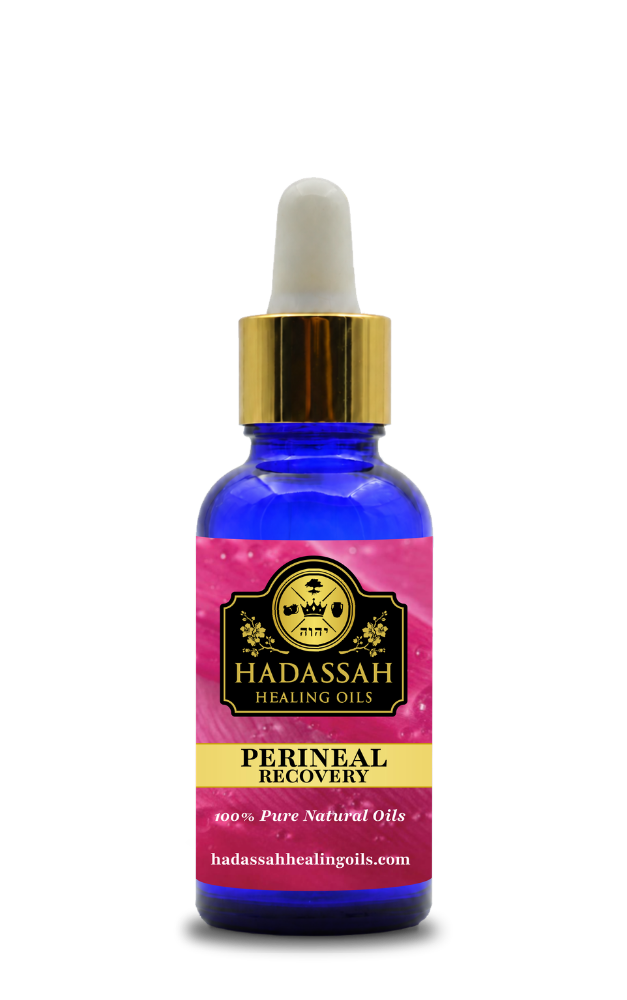
PERINEAL RECOVERY BLEND 30ML
R450.00 Incl. VAT
PERINEAL RECOVERY BLEND 30ML
A concentrated formulation developed specifically to support the recovery of external perineal tissues after childbirth
- 3-5 working days
- All products include VAT.
- Client Testimonies
- 100% Natural
- 100% Pure Essential Oils
- 100% Manufacturing Guarantee
- Share to social media
Description
Directions for Use
Warning
Ingredients
Technical Information
PERINEAL RECOVERY BLEND 30ML
Perineal Recovery is a concentrated topical botanical formulation developed specifically to support the recovery of external perineal tissues after childbirth, once application to the area is medically appropriate.
Childbirth can place considerable mechanical stress on the perineal tissues through:
Stretching and tissue distension
Microtrauma
Bruising
Inflammation
Perineal tears
Episiotomy
Suturing
Swelling
Alteration of the skin barrier
Normal healing then progresses through coordinated biological phases involving:
Haemostasis → Inflammation → Cell proliferation → Re-epithelialisation → Collagen deposition → Tissue remodelling
Perineal Recovery is designed around these normal tissue-repair mechanisms rather than simply functioning as a moisturising oil.
Support controlled inflammatory recovery.
Restore the external skin barrier.
Protect delicate recovering tissue.
Support tissue flexibility and comfort.
Create an optimal environment for normal repair and scar maturation.
PERINEAL RECOVERY BLEND 30ML
Once postpartum tissue has sufficiently healed and topical application has been medically cleared:
Apply a small amount externally to clean, intact perineal skin.
Use clean hands.
Apply gently without aggressive massage.
FOR SCAR SUPPORT
Once the wound is fully closed, gentle application to the external scar and surrounding intact tissue can support lubrication, flexibility and tissue conditioning.
Do not insert into the vagina.
Do not apply internally.
Do not apply to actively bleeding tissue, fresh sutures, an open tear or an incompletely healed episiotomy.
Stop use if significant burning, irritation, swelling or worsening discomfort develops.
PERINEAL RECOVERY BLEND 30ML
This formulation is intended for external use only.
Do not apply inside the vagina.
Do not use directly on fresh tears, open episiotomy wounds, active bleeding or sutures unless specifically approved by the treating healthcare professional.
Patch test on intact skin before first broader use.
Postpartum pain should progressively improve rather than become increasingly severe.
SEEK PROMPT MEDICAL ASSESSMENT FOR:
Increasing rather than decreasing perineal pain
Increasing redness or swelling
Pus or unusual wound discharge
Offensive/foul-smelling discharge
Fever or chills
Wound separation
Persistent or heavy bleeding
Increasing warmth around the wound
Difficulty urinating
Severe pelvic or perineal pain
These may indicate infection, wound breakdown, haematoma or another postpartum complication requiring assessment.
PERINEAL RECOVERY BLEND 30ML
Rosehip Oil
Jojoba Oil
Helichrysum italicum
Frankincense
Myrrh
Lavender
Roman Chamomile
Copaiba
Castor Oil and Olive Oil.
PERINEAL RECOVERY BLEND 30ML
Perineal Recovery is a concentrated topical botanical formulation developed specifically to support the recovery of external perineal tissues after childbirth, once application to the area is medically appropriate.
The formulation combines:
Rosehip • Jojoba • Helichrysum italicum • Frankincense • Myrrh • Lavender • Roman Chamomile • Copaiba • Castor Oil
Childbirth can place considerable mechanical stress on the perineal tissues through:
Stretching and tissue distension
Microtrauma
Bruising
Inflammation
Perineal tears
Episiotomy
Suturing
Swelling
Alteration of the skin barrier
Normal healing then progresses through coordinated biological phases involving:
Haemostasis → Inflammation → Cell proliferation → Re-epithelialisation → Collagen deposition → Tissue remodelling
Perineal Recovery is designed around these normal tissue-repair mechanisms rather than simply functioning as a moisturising oil.
Its botanical components provide complementary support for:
Inflammatory regulation
Oxidative-stress protection
Skin-barrier restoration
Fibroblast and extracellular-matrix support
Collagen-remodelling environment
Local discomfort
Dryness and tissue flexibility
Longer-term scar maturation
UNDERSTANDING POSTPARTUM PERINEAL HEALING
Following vaginal delivery, damaged or overstretched tissue initiates a complex wound-repair response.
PHASE 1 — HAEMOSTASIS
Immediately following tissue injury, blood vessels constrict and platelets form a clot.
This limits bleeding and creates the initial matrix upon which tissue repair begins.
PHASE 2 — INFLAMMATION
Neutrophils and macrophages migrate into damaged tissue.
Inflammatory mediators including:
TNF-α
IL-1β
IL-6
Prostaglandins
Reactive oxygen species
participate in clearing damaged tissue and initiating repair.
Inflammation is therefore necessary.
The objective is not to eliminate inflammation completely, but to prevent excessive or prolonged inflammatory signalling from interfering with recovery.
PHASE 3 — PROLIFERATION
Fibroblasts become increasingly active.
Important processes include:
Collagen synthesis
Extracellular-matrix production
Angiogenesis
Granulation-tissue formation
Keratinocyte migration
Re-epithelialisation
PHASE 4 — REMODELLING
Collagen fibres gradually reorganise and strengthen.
Scar tissue continues to mature for weeks to months.
A well-designed recovery formulation should therefore support the tissue through inflammation, repair and remodelling.
ROSEHIP
Linoleic Acid, α-Linolenic Acid & Skin-Barrier Lipids
Rosehip seed oil provides a lipid-rich foundation for postpartum tissue recovery.
Its fatty-acid fraction commonly contains substantial quantities of:
LINOLEIC ACID — OMEGA-6
α-LINOLENIC ACID — OMEGA-3
along with:
OLEIC ACID
and smaller quantities of other lipid-soluble compounds depending upon processing and quality.
Linoleic acid is particularly important for the epidermal barrier.
Healthy skin requires appropriate lipid organisation to reduce:
TRANSEPIDERMAL WATER LOSS — TEWL
and maintain flexibility and barrier function.
Rosehip preparations have also been investigated clinically in relation to postoperative scar appearance, although this should be considered supportive rather than proof that Rosehip prevents scar formation.
PRINCIPAL ACTIVE FRACTION
Linoleic Acid • α-Linolenic Acid • Oleic Acid
PRIMARY PHARMACOLOGICAL RELEVANCE
Barrier restoration • Essential fatty-acid support • Tissue flexibility • Scar-remodelling support
Rosehip therefore provides an important repair-lipid component of Perineal Recovery.
JOJOBA
Wax Esters & Barrier Protection
Jojoba differs chemically from most conventional vegetable oils.
Rather than being primarily triglyceride-based, it consists largely of:
LONG-CHAIN WAX ESTERS
These wax esters provide excellent:
Emollience
Barrier support
Reduction of moisture loss
Skin conditioning
Surface protection
The lipid structure of Jojoba gives it good oxidative stability and makes it particularly useful where recovering tissue needs a protective, flexible lipid layer.
PRINCIPAL ACTIVE FRACTION
Long-chain wax esters
PRIMARY PHARMACOLOGICAL RELEVANCE
Barrier protection • Emollience • Moisture retention • Tissue flexibility
HELICHRYSUM ITALICUM
Neryl Acetate & Tissue-Recovery Phytochemistry
Helichrysum italicum is one of the key tissue-recovery botanicals within the formulation.
Its essential oil can contain:
NERYL ACETATE
γ-CURCUMENE
α-PINENE
SELINENES
and other compounds depending upon chemotype.
Experimental research involving Helichrysum preparations demonstrates:
Anti-inflammatory activity
Antioxidant activity
Tissue-protective activity
These properties make Helichrysum particularly relevant during the inflammatory and remodelling stages of tissue recovery.
PRINCIPAL ACTIVE COMPONENTS
Neryl Acetate • γ-Curcumene • α-Pinene • Sesquiterpene fraction
PRIMARY PHARMACOLOGICAL RELEVANCE
Inflammatory regulation • Oxidative protection • Tissue-recovery support • Scar-remodelling environment
COPAIBA
β-Caryophyllene — CB2-Mediated Inflammatory Regulation
Copaiba commonly contains substantial concentrations of:
β-CARYOPHYLLENE
β-Caryophyllene acts as a selective agonist of:
CANNABINOID CB2 RECEPTORS
CB2 receptors are strongly associated with immune and inflammatory regulation.
β-Caryophyllene has demonstrated experimental effects involving:
NF-κB signalling
TNF-α
IL-1β
IL-6
Oxidative stress
Pain signalling
Tissue repair
This gives Copaiba a particularly useful role where recovering tissues are simultaneously experiencing inflammation and discomfort.
PRINCIPAL ACTIVE COMPONENT
β-Caryophyllene
PRIMARY PHARMACOLOGICAL RELEVANCE
CB2 activation • Inflammatory regulation • Analgesic support • Tissue-recovery support
LAVENDER
Linalool & Linalyl Acetate — Inflammation, Pain & Tissue Recovery
Lavender provides:
LINALOOL
LINALYL ACETATE
These compounds demonstrate multiple pharmacological actions relevant to postpartum tissue recovery.
Experimental studies have investigated Lavender and linalool in relation to:
Inflammatory signalling
Pain pathways
Oxidative stress
Wound healing
Fibroblast activity
Collagen-related repair
Lavender’s role within this formula therefore extends considerably beyond fragrance.
It contributes to both the inflammatory and sensory components of tissue recovery.
PRINCIPAL ACTIVE COMPONENTS
Linalool • Linalyl Acetate
PRIMARY PHARMACOLOGICAL RELEVANCE
Inflammatory regulation • Analgesic support • Cellular-repair support • Neuro-sensory calming
FRANKINCENSE
Boswellia Volatile Terpenes & Inflammatory Regulation
Frankincense essential oil contains species-dependent concentrations of compounds including:
α-PINENE
α-THUJENE
LIMONENE
SABINENE
and other volatile terpenes.
These compounds demonstrate experimental:
Anti-inflammatory
Antioxidant
Antimicrobial
Tissue-supportive
activity.
Frankincense therefore contributes to the inflammatory and tissue-recovery architecture of the formula.
PRIMARY PHARMACOLOGICAL RELEVANCE
Inflammatory regulation • Antioxidant support • Tissue comfort
MYRRH
Furano-Sesquiterpenes & Tissue-Recovery Support
Myrrh — Commiphora species — provides a complex sesquiterpene-rich volatile fraction.
Important constituents can include various:
FURANO-SESQUITERPENES
and related sesquiterpenoids.
Myrrh preparations have a long history of use in wound and oral-tissue applications, while modern experimental research has investigated their:
Antimicrobial
Anti-inflammatory
Antioxidant
Analgesic
Wound-repair
properties.
Within Perineal Recovery, Myrrh contributes particularly to the tissue-protection and inflammatory-support complex.
PRINCIPAL ACTIVE FRACTION
Furano-sesquiterpenes and related terpenoids
PRIMARY PHARMACOLOGICAL RELEVANCE
Tissue-recovery support • Inflammatory regulation • Antimicrobial phytochemistry • Local comfort
ROMAN CHAMOMILE
Angelate Esters & Local Comfort
Roman Chamomile — Chamaemelum nobile — is characterised by an ester-rich volatile fraction.
Its essential oil commonly contains several:
ANGELATE ESTERS
These compounds contribute to Roman Chamomile’s experimentally observed:
Antispasmodic
Anti-inflammatory
Neuromuscular-relaxing
properties.
This is useful postpartum because perineal discomfort may coexist with protective muscular tension and pelvic-floor guarding.
PRINCIPAL ACTIVE FRACTION
Angelate-rich volatile esters
PRIMARY PHARMACOLOGICAL RELEVANCE
Inflammatory support • Neuromuscular relaxation • Local comfort
CASTOR OIL
Ricinoleic Acid — Protective Lipid Matrix
Castor Oil provides a substantial portion of the carrier system.
Unlike most vegetable oils, Castor Oil is dominated by:
RICINOLEIC ACID
a hydroxylated fatty acid responsible for many of Castor Oil’s unusual physical characteristics.
Castor Oil forms a relatively viscous lipid layer over the skin.
This can help:
Reduce moisture loss
Improve lubrication
Reduce friction
Maintain skin flexibility
Prolong contact of accompanying botanical compounds with the skin
Ricinoleic acid also has experimental inflammatory and analgesic pharmacology.
PRINCIPAL ACTIVE COMPONENT
Ricinoleic Acid
PRIMARY PHARMACOLOGICAL RELEVANCE
Barrier support • Emollience • Friction reduction • Inflammatory support • Topical botanical delivery
This makes Castor Oil particularly appropriate where recovering external tissues need both protection and flexibility.
OLIVE OIL
Oleic-Acid-Rich Carrier Matrix
Olive Oil completes the lipid carrier system.
Its principal fatty acid is:
OLEIC ACID
with smaller concentrations of linoleic acid and other lipid components.
Depending upon the quality and processing of the oil, minor phenolic compounds may also be present.
Within this formulation Olive Oil functions primarily as:
A lipid carrier
An emollient
A diluent for concentrated essential oils
A vehicle supporting even topical distribution
THE MULTI-TARGET MECHANISM OF PERINEAL RECOVERY
Perineal Recovery is built around four major stages of postpartum tissue support.
1. INFLAMMATORY REGULATION
Following tissue trauma:
CELLULAR INJURY
↓
INFLAMMATORY MEDIATORS
TNF-α • IL-1β • IL-6 • Prostaglandins • ROS
↓
SWELLING + TENDERNESS + PAIN
The principal supporting botanicals are:
Copaiba / β-Caryophyllene
Helichrysum / Neryl Acetate + Sesquiterpenes
Lavender / Linalool
Frankincense / Terpenes
Myrrh / Furano-sesquiterpenes
The objective is regulated inflammation, not elimination of the inflammatory response required for normal healing.
2. RE-EPITHELIALISATION & TISSUE-REPAIR ENVIRONMENT
Recovering skin requires:
Keratinocyte migration
Fibroblast activity
Extracellular-matrix production
Collagen deposition
Appropriate hydration
The lipid matrix provided by:
Rosehip
Jojoba
Castor Oil
Olive Oil
helps create a protective external environment while the underlying tissue undergoes repair.
3. SKIN-BARRIER RESTORATION
The repaired epidermis must re-establish its lipid barrier.
ROSEHIP
provides linoleic and α-linolenic acids.
JOJOBA
provides protective wax esters.
CASTOR
provides ricinoleic-acid-rich occlusive/emollient support.
OLIVE
provides the carrier lipid matrix.
Together these help support:
Moisture retention
Tissue flexibility
Reduced friction
Barrier recovery
4. SCAR MATURATION & TISSUE FLEXIBILITY
Following wound closure, collagen continues to remodel.
Early collagen is progressively reorganised and scar tissue matures.
The objective is not to prevent normal scar formation—scar tissue is part of the healing process.
The objective is to support an environment conducive to:
Flexible tissue
Appropriate hydration
Controlled inflammatory signalling
Comfortable scar maturation
Rosehip, Helichrysum, Lavender and the carrier-lipid complex are particularly relevant to this phase.
POSTPARTUM RECOVERY STRATEGY
The formulation can therefore be represented as:
CHILDBIRTH-RELATED TISSUE TRAUMA
↓
INFLAMMATION + SWELLING + DISCOMFORT
Copaiba • Lavender • Helichrysum • Frankincense • Myrrh
↓
INFLAMMATORY-RESPONSE SUPPORT
DAMAGED SKIN BARRIER
Rosehip • Jojoba • Castor • Olive
↓
LIPID & BARRIER RESTORATION
CELLULAR REPAIR
Lavender • Helichrysum • Myrrh + Protective Lipid Matrix
↓
TISSUE-RECOVERY SUPPORT
COLLAGEN REMODELLING
↓
SCAR MATURATION
Rosehip • Helichrysum • Lavender
↓
FLEXIBILITY & LONGER-TERM TISSUE SUPPORT
RELEVANT USES
Perineal Recovery has been designed as complementary support for the external postpartum perineal area following childbirth.
It may be particularly useful during the later recovery period for:
Dry or tight recovering tissue
External perineal discomfort
Skin-barrier recovery
Tissue flexibility
Scar-conditioning after complete wound closure
External tissue recovering from stretching and childbirth trauma
Longer-term perineal skin conditioning
IMPORTANT — TIMING AFTER DELIVERY
The perineum immediately following childbirth is not equivalent to ordinary intact skin.
Fresh tears, episiotomies and sutured wounds require appropriate postpartum wound care.
DO NOT APPLY DIRECTLY TO:
A fresh perineal tear
An open episiotomy
Sutures
Actively bleeding tissue
Open wounds
Areas showing possible infection
unless the woman’s obstetric, midwifery or wound-care professional has specifically approved the finished formulation for that application.
The safest role for this concentrated botanical formula is external application once the tissue is sufficiently closed and healing appropriately.
DIRECTIONS FOR USE
Once postpartum tissue has sufficiently healed and topical application has been medically cleared:
Apply a small amount externally to clean, intact perineal skin.
Use clean hands.
Apply gently without aggressive massage.
FOR SCAR SUPPORT
Once the wound is fully closed, gentle application to the external scar and surrounding intact tissue can support lubrication, flexibility and tissue conditioning.
Do not insert into the vagina.
Do not apply internally.
Do not apply to actively bleeding tissue, fresh sutures, an open tear or an incompletely healed episiotomy.
Stop use if significant burning, irritation, swelling or worsening discomfort develops.
INGREDIENTS
Rosehip Oil, Jojoba Oil, Helichrysum italicum, Frankincense, Myrrh, Lavender, Roman Chamomile, Copaiba, Castor Oil and Olive Oil.
IMPORTANT SAFETY INFORMATION
This formulation is intended for external use only.
Do not apply inside the vagina.
Do not use directly on fresh tears, open episiotomy wounds, active bleeding or sutures unless specifically approved by the treating healthcare professional.
Patch test on intact skin before first broader use.
Postpartum pain should progressively improve rather than become increasingly severe.
SEEK PROMPT MEDICAL ASSESSMENT FOR:
Increasing rather than decreasing perineal pain
Increasing redness or swelling
Pus or unusual wound discharge
Offensive/foul-smelling discharge
Fever or chills
Wound separation
Persistent or heavy bleeding
Increasing warmth around the wound
Difficulty urinating
Severe pelvic or perineal pain
These may indicate infection, wound breakdown, haematoma or another postpartum complication requiring assessment.
PERINEAL RECOVERY
Advanced Postpartum Tissue & Barrier Support
Perineal Recovery has been formulated around the actual biology of postpartum tissue repair.
Rosehip’s linoleic and α-linolenic acids support epidermal lipid restoration and tissue flexibility.
Jojoba wax esters reinforce the external barrier and reduce moisture loss.
Ricinoleic-acid-rich Castor Oil creates a protective, lubricating lipid matrix while providing complementary inflammatory support.
β-Caryophyllene from Copaiba activates CB2 receptors and contributes to inflammatory and pain-pathway regulation.
Linalool and Linalyl Acetate from Lavender provide inflammatory, sensory and tissue-recovery support.
Neryl Acetate and the sesquiterpene fraction of Helichrysum italicum reinforce inflammatory and tissue-remodelling support.
Myrrh and Frankincense terpenes contribute additional inflammatory, antioxidant and tissue-supportive phytochemistry.
Roman Chamomile’s ester-rich fraction supports local comfort and neuromuscular relaxation.
The resulting strategy is:
CHILDBIRTH-RELATED PERINEAL TRAUMA
↓
INFLAMMATION & DISCOMFORT
Copaiba • Lavender • Helichrysum • Frankincense • Myrrh
↓
CONTROLLED INFLAMMATORY SUPPORT
BARRIER DISRUPTION
Rosehip • Jojoba • Castor • Olive
↓
LIPID BARRIER RESTORATION
REPAIRING TISSUE
↓
FIBROBLASTS + COLLAGEN + RE-EPITHELIALISATION
↓
TISSUE-RECOVERY ENVIRONMENT
HEALED PERINEAL SCAR
Rosehip • Helichrysum • Lavender + Lipid Matrix
↓
HYDRATION • FLEXIBILITY • SCAR-CONDITIONING SUPPORT
PERINEAL RECOVERY
Support controlled inflammatory recovery.
Restore the external skin barrier.
Protect delicate recovering tissue.
Support tissue flexibility and comfort.
Create an optimal environment for normal repair and scar maturation.