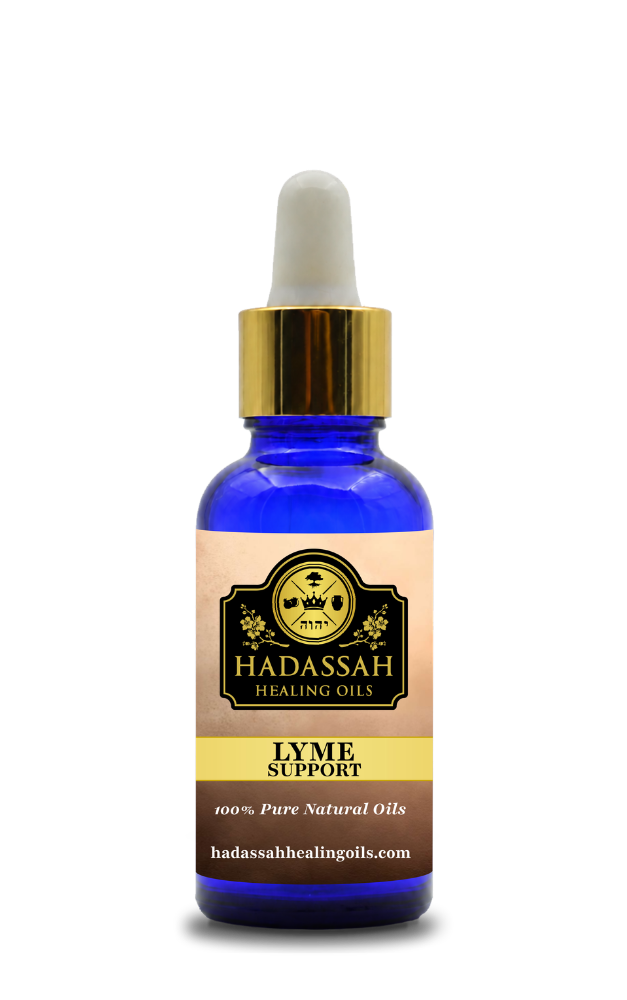
LYMES SUPPORT BLEND 30ML
R500.00 Incl. VAT
LYMES SUPPORT BLEND 30ML
Developed around the biological challenges associated with Lyme disease and recovery.
- 3-5 working days
- All products include VAT.
- Client Testimonies
- 100% Natural
- 100% Pure Essential Oils
- 100% Manufacturing Guarantee
- Share to social media
Description
Directions for Use
Warning
Ingredients
Technical Information
LYMES SUPPORT BLEND 30ML
Lyme Support is a concentrated multi-component medicinal botanical formulation developed around the biological challenges associated with Lyme disease and recovery.
Lyme disease is caused by bacteria belonging to the Borrelia burgdorferi sensu lato complex and is transmitted through infected ticks.
The formulation has been constructed around several complementary pharmacological targets:
Direct experimental anti-Borrelia activity
Broad-spectrum antimicrobial phytochemistry
Inflammatory signalling regulation
NF-κB and cytokine modulation
Oxidative-stress protection
Neuromuscular and physical-comfort support
Cellular and tissue recovery
Particularly significant is the combination of Oregano, Cinnamon and Clove, because these oils have been directly investigated against Borrelia burgdorferi in laboratory studies.
Myrrh and Thyme have also been included in published screens examining stationary-phase B. burgdorferi.
The result is a formulation containing multiple active phytochemicals acting through different biochemical mechanisms rather than relying upon a single botanical constituent.
Target the microbial environment.
Regulate inflammatory signalling.
Protect against oxidative burden.
Support neurological and musculoskeletal recovery.
Support the body through the demands of Lyme disease and recovery.
LYMES SUPPORT BLEND 30ML
TOPICAL DIRECTIONS
Apply a small amount to intact skin and massage gently into areas requiring support.
Suitable areas may include:
Back • Shoulders • Arms • Legs • Feet • Muscles • Intact skin surrounding uncomfortable joints
Patch test before broader use.
This is a potent formulation containing substantial amounts of Oregano, Thyme, Clove and Cinnamon.
Avoid the face, eyes, mucous membranes, genital areas, broken skin and severely inflamed skin.
Wash hands after application.
Discontinue use if significant burning, redness or irritation occurs.
Internal use:
Drink one capsule full daily as needed.
All our blend’s come in a 30ml glass bottle, with a glass pipette and a rubber bulb on top. Don’t forget to buy empty veggie capsules when purchasing an ingestible blend. (Our veggie capsules are now available in 90’s and 150’s).
Never pre-fill capsules for future use, as this will compromise the veggie capsule and melt. Instead, always fill the capsules just before drinking it. (But if no other option, only prepare up to 3 days’ supply. You MUST then keep them upright in the refrigerator in a marked container; to know which blend it is filled with.)
Method – open the veggie capsule, then open your blend, squeeze and release the rubber bulb to draw the oil blend up into the glass pipette dropper. Then gently squeeze the rubber bulb to fill the larger part of the open capsule. Close the capsule before drinking it. Dosage is always a full capsule of a specific blend (between 15 to 18 drops).
If you have to drink more than one capsule a day, spread them throughout the day, never more than two capsules at a time. Spreading the capsules throughout the day assists the body with proper absorption. Always good to have a very small snack/fruit before drinking capsules.
We do suggest using this blend with our Lymes Support Protocol treatment and a full Parasite Cleanse Protocol
LYMES SUPPORT BLEND 30ML
Patch test before broader use.
Avoid the face, eyes, mucous membranes, genital areas, broken skin and severely inflamed skin.
Wash hands after application.
Discontinue use if significant burning, redness or irritation occurs.
Lyme disease is a bacterial infection requiring appropriate diagnosis and treatment.
Lyme Support is intended as complementary botanical support and should not replace prescribed antibiotic treatment.
Untreated Lyme disease can progress to neurological, cardiac, arthritic and other manifestations.
Seek medical evaluation after a suspected tick exposure if symptoms such as an expanding rash, fever, neurological symptoms, facial weakness, severe headache, palpitations, fainting or new joint swelling occur.
Do not discontinue prescribed antibiotics or other medication because symptoms improve while using complementary products.
LYMES SUPPORT BLEND 30ML
Frankincense
Myrrh
Lavender
Oregano
Thyme
Black Seed Oil
Copaiba
Ginger
Rosemary
Lemon
Turmeric
Clove
Cinnamon
Olive Oil
LYMES SUPPORT BLEND 30ML
Lyme Support is a concentrated multi-component medicinal botanical formulation developed around the biological challenges associated with Lyme disease and recovery.
Lyme disease is caused by bacteria belonging to the Borrelia burgdorferi sensu lato complex and is transmitted through infected ticks.
The formulation combines:
Frankincense • Myrrh • Lavender • Oregano • Thyme • Black Seed Oil • Copaiba • Ginger • Rosemary • Lemon • Turmeric • Clove • Cinnamon • Olive Oil
The formulation has been constructed around several complementary pharmacological targets:
Direct experimental anti-Borrelia activity
Broad-spectrum antimicrobial phytochemistry
Inflammatory signalling regulation
NF-κB and cytokine modulation
Oxidative-stress protection
Neuromuscular and physical-comfort support
Cellular and tissue recovery
Particularly significant is the combination of Oregano, Cinnamon and Clove, because these oils have been directly investigated against Borrelia burgdorferi in laboratory studies.
Myrrh and Thyme have also been included in published screens examining stationary-phase B. burgdorferi.
The result is a formulation containing multiple active phytochemicals acting through different biochemical mechanisms rather than relying upon a single botanical constituent.
UNDERSTANDING LYME DISEASE
Lyme disease is a bacterial infection, not simply an inflammatory disorder.
Following transmission from an infected tick, Borrelia organisms can disseminate through the body and may affect several systems.
Depending upon the stage and presentation, Lyme disease can involve:
Skin
Joints
Nervous system
Heart
Musculoskeletal tissues
The body’s immune response to infection can generate substantial inflammatory signalling.
This means there are two very different biological issues to consider:
THE ORGANISM
Borrelia burgdorferi and related pathogenic Borrelia species.
THE HOST RESPONSE
The inflammatory, oxidative, immune and tissue responses generated during infection and recovery.
Lyme Support has been formulated around both sides of this biological equation.
THE BORRELIA RESEARCH BEHIND THE FORMULA
Laboratory researchers have specifically screened essential oils against Borrelia burgdorferi.
One important study investigated 34 essential oils against stationary-phase B. burgdorferi.
Among the strongest oils identified were:
OREGANO
CINNAMON BARK
CLOVE BUD
These demonstrated substantial activity against stationary-phase organisms at low experimental concentrations.
Importantly, the researchers went beyond an initial viability screen.
They performed subculture experiments to determine whether organisms could regrow after exposure.
Oregano and Cinnamon Bark were particularly active in these laboratory experiments.
The study also identified:
CARVACROL
as the most active tested constituent of Oregano oil against stationary-phase B. burgdorferi. (PubMed Central (PMC))
A subsequent laboratory screening study investigated another group of essential oils.
That research identified Myrrh and Thyme, among other oils, as having activity against stationary-phase B. burgdorferi under the experimental conditions.
Myrrh demonstrated particularly interesting activity at 0.1% in the study’s subculture experiments. (PubMed Central (PMC))
These studies provide an important mechanistic foundation for the antimicrobial architecture of Lyme Support.
OREGANO
Carvacrol — Major Anti-Borrelia Component
Oregano is one of the central medicinal oils in Lyme Support.
High-quality Origanum vulgare essential oil can contain substantial concentrations of:
CARVACROL
together with varying concentrations of:
Thymol
p-Cymene
γ-Terpinene
depending upon chemotype and source.
Carvacrol is a phenolic monoterpenoid with substantial antimicrobial activity.
Its antimicrobial mechanisms include effects on bacterial:
Cell-membrane integrity
Membrane permeability
Ion gradients
ATP homeostasis
Cellular metabolism
By disturbing microbial membrane structure, carvacrol can increase permeability and interfere with the electrochemical processes required for bacterial survival.
This is especially important to this formulation because researchers directly compared Oregano constituents against stationary-phase B. burgdorferi.
Carvacrol was considerably more active than p-cymene and α-terpinene in those experiments.
Oregano oil showed activity against stationary-phase Borrelia cultures even at very low experimental concentrations, and no regrowth was observed after treatment at particular concentrations in the study’s subculture system. (PubMed Central (PMC))
PRINCIPAL ACTIVE COMPONENT
Carvacrol
SECONDARY COMPONENTS
Thymol • p-Cymene • γ-Terpinene
PRIMARY PHARMACOLOGICAL RELEVANCE
Experimental anti-Borrelia activity • Bacterial membrane disruption • Antimicrobial activity • Inflammatory modulation
CINNAMON
Cinnamaldehyde — Potent Antimicrobial Phytochemistry
Cinnamon provides another major antimicrobial component.
Where the material used is Cinnamon Bark essential oil, its principal active constituent is generally:
CINNAMALDEHYDE
Cinnamaldehyde is a highly reactive aromatic aldehyde with significant antimicrobial activity.
Its reported antibacterial mechanisms include:
Disruption of microbial membranes
Alteration of membrane permeability
Interference with cellular enzymes
Disruption of energy metabolism
Effects on microbial proteins and cellular homeostasis
Cinnamon Bark essential oil was one of the strongest oils identified in the published B. burgdorferi stationary-phase screen.
The researchers subsequently investigated cinnamaldehyde itself.
Cinnamaldehyde demonstrated strong activity against both stationary-phase and replicating B. burgdorferi in laboratory experiments. (PubMed Central (PMC))
PRINCIPAL ACTIVE COMPONENT
Cinnamaldehyde — when Cinnamon Bark oil is used
PRIMARY PHARMACOLOGICAL RELEVANCE
Experimental anti-Borrelia activity • Antimicrobial membrane disruption • Metabolic interference • Broad antibacterial activity
CLOVE
Eugenol — Phenolic Antimicrobial & Inflammatory Modulator
Clove oil is characteristically rich in:
EUGENOL
Eugenol is a phenolic compound with significant pharmacological activity.
Its experimentally demonstrated actions include:
Antibacterial activity
Membrane disruption
Antioxidant activity
Inflammatory modulation
Analgesic activity
Clove Bud oil was among the strongest oils in the published stationary-phase B. burgdorferi screen.
At particular experimental concentrations, Clove produced substantial reductions in Borrelia viability. (PubMed Central (PMC))
Eugenol additionally affects inflammatory pathways including NF-κB-related signalling and inflammatory mediator production in experimental systems.
This gives Clove a dual role within Lyme Support:
DIRECT MICROBIAL PRESSURE + INFLAMMATORY REGULATION
PRINCIPAL ACTIVE COMPONENT
Eugenol
PRIMARY PHARMACOLOGICAL RELEVANCE
Experimental anti-Borrelia activity • Broad antimicrobial action • Antioxidant activity • Inflammatory modulation • Analgesic activity
THYME
Thymol & Carvacrol
Thyme provides another phenolic antimicrobial fraction.
Depending upon the chemotype, Thymus vulgaris essential oil may be rich in:
Thymol
Carvacrol
Linalool
Geraniol
A thymol-rich medicinal oil has a substantially different chemical profile from a linalool-rich thyme chemotype.
Thymol and carvacrol are potent phenolic monoterpenes.
Their antimicrobial mechanisms include:
Bacterial membrane destabilisation
Increased membrane permeability
Ion leakage
Disturbance of proton gradients
Interference with cellular energy metabolism
White Thyme essential oil was among the oils demonstrating activity against stationary-phase B. burgdorferi in laboratory screening, although it did not sterilise the culture at the lower tested concentrations in the same way as the strongest hits. (PubMed Central (PMC))
PRINCIPAL ACTIVE COMPONENTS
Thymol • Carvacrol — chemotype dependent
PRIMARY PHARMACOLOGICAL RELEVANCE
Antimicrobial activity • Experimental anti-Borrelia activity • Membrane disruption • Inflammatory modulation
MYRRH
Furano-Sesquiterpenes & Direct Experimental Borrelia Activity
Myrrh is particularly interesting because it is not present in this formulation merely as a traditional resin.
Commiphora myrrha essential oil was directly investigated against stationary-phase B. burgdorferi.
In laboratory screening, Myrrh demonstrated significant activity at low experimental concentrations.
In the 0.1% treatment/subculture experiment, researchers reported no Borrelia regrowth following Myrrh treatment, although regrowth occurred at the lower 0.05% concentration. (PubMed Central (PMC))
Myrrh contains a chemically complex fraction rich in sesquiterpenes and furano-sesquiterpenoids.
These compounds have also attracted research for:
Antimicrobial activity
Inflammatory modulation
Antioxidant effects
Analgesic mechanisms
PRINCIPAL ACTIVE FRACTION
Furano-sesquiterpenes and related sesquiterpenoids
PRIMARY PHARMACOLOGICAL RELEVANCE
Experimental anti-Borrelia activity • Antimicrobial support • Inflammatory regulation • Antioxidant activity
BLACK SEED OIL
Thymoquinone — Immune, Oxidative & Inflammatory Regulation
Black Seed Oil provides:
THYMOQUINONE
Thymoquinone is one of the most extensively researched constituents of Nigella sativa.
Its importance in Lyme Support lies predominantly in the host-response side of the formulation.
Thymoquinone has demonstrated effects involving:
NF-κB signalling
Nrf2 antioxidant pathways
TNF-α
IL-1β
IL-6
Reactive oxygen species
Cellular antioxidant defence
These mechanisms are relevant to inflammatory and oxidative stress.
Thymoquinone has also demonstrated broad antimicrobial activity in experimental research.
PRINCIPAL ACTIVE COMPONENT
Thymoquinone
PRIMARY PHARMACOLOGICAL RELEVANCE
Inflammatory regulation • Antioxidant defence • Immunomodulation • Cellular protection • Antimicrobial support
Black Seed therefore complements the direct anti-Borrelia oils by supporting regulation of the biological environment surrounding infection and recovery.
COPAIBA
β-Caryophyllene — CB2-Mediated Inflammatory Regulation
Copaiba oil is frequently rich in:
β-CARYOPHYLLENE
β-Caryophyllene is a selective agonist of the CB2 cannabinoid receptor.
CB2 receptors are strongly associated with immune and inflammatory regulation.
Activation of CB2 has been investigated for downstream effects involving:
NF-κB
TNF-α
IL-1β
IL-6
Oxidative signalling
Immune-cell activation
β-Caryophyllene also has significant experimental analgesic and anti-inflammatory activity.
This makes Copaiba particularly relevant where infection and recovery are accompanied by musculoskeletal discomfort and inflammatory burden.
PRINCIPAL ACTIVE COMPONENT
β-Caryophyllene
PRIMARY PHARMACOLOGICAL RELEVANCE
CB2 receptor activation • Cytokine modulation • NF-κB regulation • Analgesic support • Inflammatory control
TURMERIC
Turmerones — Volatile Anti-Inflammatory Chemistry
Turmeric essential oil must be distinguished pharmacologically from curcumin.
Curcumin is largely a non-volatile polyphenol and is not the principal active component of distilled Turmeric essential oil.
Turmeric essential oil instead contains compounds including:
ar-Turmerone
α-Turmerone
β-Turmerone
depending upon source and extraction.
Turmerones have been investigated for:
Inflammatory signalling
Oxidative stress
Neurological inflammatory mechanisms
Cellular protection
PRINCIPAL ACTIVE COMPONENTS
ar-Turmerone • α-Turmerone • β-Turmerone
PRIMARY PHARMACOLOGICAL RELEVANCE
Inflammatory modulation • Antioxidant support • Neuroinflammatory support • Cellular protection
Turmeric therefore strengthens the host-recovery side of Lyme Support.
GINGER
Zingiberene-Rich Volatile Fraction
Ginger essential oil differs chemically from ginger extracts rich in gingerols.
Its volatile fraction commonly contains:
α-Zingiberene
β-Sesquiphellandrene
β-Bisabolene
Camphene and other terpenes
depending upon source.
These volatile compounds contribute antioxidant and inflammatory-modulating activity.
Ginger also provides a warming circulatory and neuromuscular component to the formula.
PRINCIPAL ACTIVE COMPONENTS
α-Zingiberene • β-Sesquiphellandrene • β-Bisabolene
PRIMARY PHARMACOLOGICAL RELEVANCE
Inflammatory modulation • Antioxidant activity • Musculoskeletal support
ROSEMARY
1,8-Cineole, α-Pinene & Camphor
Rosemary essential oil commonly contains varying proportions of:
1,8-CINEOLE
α-PINENE
CAMPHOR
depending upon chemotype.
These monoterpenes have demonstrated pharmacological effects involving:
Inflammatory signalling
Antioxidant mechanisms
Microbial activity
Neuromuscular physiology
1,8-Cineole in particular has significant research surrounding inflammatory mediator regulation.
Rosemary therefore contributes to both the antimicrobial and physical-recovery components of the formula.
PRINCIPAL ACTIVE COMPONENTS
1,8-Cineole • α-Pinene • Camphor
PRIMARY PHARMACOLOGICAL RELEVANCE
Inflammatory regulation • Antioxidant activity • Antimicrobial support • Neuromuscular support
FRANKINCENSE
Terpene-Mediated Inflammatory Support
Frankincense essential oil contains a species-dependent mixture of compounds including:
α-Pinene
α-Thujene
Limonene
Sabinene
Other monoterpenes and sesquiterpenes
Experimental research on frankincense volatile fractions has demonstrated anti-inflammatory activity involving pathways such as COX-2 and inflammatory mediator production.
Frankincense therefore belongs predominantly to the host inflammatory-response component of Lyme Support.
PRINCIPAL ACTIVE FRACTION
α-Pinene and other Boswellia volatile terpenes
PRIMARY PHARMACOLOGICAL RELEVANCE
Inflammatory mediator regulation • Tissue-comfort support • Cellular recovery
LAVENDER
Linalool & Linalyl Acetate
Lavender contributes:
LINALOOL
LINALYL ACETATE
These compounds have been extensively investigated for neurological and inflammatory effects.
Linalool can influence neuronal excitability and neurotransmitter systems, while Lavender preparations have human research supporting effects on anxiety and nervous-system symptoms.
This is relevant because Lyme disease can be physically and neurologically exhausting.
Lavender provides a neurophysiological and recovery component rather than being included simply for fragrance.
PRINCIPAL ACTIVE COMPONENTS
Linalool • Linalyl acetate
PRIMARY PHARMACOLOGICAL RELEVANCE
Neuronal modulation • Inflammatory support • Sleep/stress physiology • Physical recovery
LEMON
D-Limonene
Lemon essential oil is typically dominated by:
D-LIMONENE
with smaller quantities of:
β-Pinene
γ-Terpinene
Other monoterpenes
Limonene has been investigated experimentally for antioxidant, inflammatory and immunomodulatory activity.
Its role within Lyme Support is primarily supportive rather than one of the formula’s principal direct anti-Borrelia components.
PRINCIPAL ACTIVE COMPONENT
D-Limonene
PRIMARY PHARMACOLOGICAL RELEVANCE
Antioxidant • Anti-inflammatory • Immunomodulatory support
THE MULTI-TARGET MECHANISM OF LYME SUPPORT
The formula can be divided pharmacologically into four major systems.
1. DIRECT EXPERIMENTAL ANTI-BORRELIA COMPLEX
Oregano / Carvacrol
Cinnamon Bark / Cinnamaldehyde
Clove / Eugenol
Myrrh / Sesquiterpenes
Thyme / Thymol-Carvacrol
These ingredients provide the most direct relationship between the formula and published B. burgdorferi laboratory research.
Oregano, Cinnamon Bark and Clove Bud were among the most active oils in one published stationary-phase Borrelia screen.
Myrrh and Thyme demonstrated activity in subsequent screening. (PubMed Central (PMC))
2. INFLAMMATORY-RESPONSE COMPLEX
Black Seed / Thymoquinone
Copaiba / β-Caryophyllene
Frankincense terpenes
Turmeric turmerones
Clove / Eugenol
These compounds provide overlapping activity relevant to:
NF-κB
COX-related pathways
TNF-α
IL-1β
IL-6
Oxidative inflammatory signalling
3. ANTIOXIDANT & CELLULAR-PROTECTION COMPLEX
Thymoquinone
Turmerones
Ginger terpenes
Rosemary terpenes
Myrrh compounds
Limonene
provide complementary mechanisms intended to support cellular defence against oxidative burden.
4. NEUROMUSCULAR & RECOVERY COMPLEX
Copaiba
Lavender
Ginger
Rosemary
Frankincense
Turmeric
provide complementary anti-inflammatory, analgesic, neurological and musculoskeletal-support mechanisms.
WHY THIS FORMULA IS DIFFERENT
The biological strategy can be represented as:
BORRELIA
↓
ANTIMICROBIAL PHYTOCHEMISTRY
Carvacrol • Cinnamaldehyde • Eugenol • Thymol • Myrrh sesquiterpenes
↓
HOST IMMUNE & INFLAMMATORY RESPONSE
Thymoquinone • β-Caryophyllene • Frankincense terpenes
↓
OXIDATIVE & CELLULAR STRESS
Turmerones • Ginger terpenes • Rosemary terpenes • Limonene
↓
PAIN • MUSCULOSKELETAL STRESS • NEUROLOGICAL BURDEN
β-Caryophyllene • Lavender • Ginger • Rosemary • Frankincense
This creates a formulation that addresses both microbial research targets and host-response pathways.
TOPICAL DIRECTIONS
Apply a small amount to intact skin and massage gently into areas requiring support.
Suitable areas may include:
Back • Shoulders • Arms • Legs • Feet • Muscles • Intact skin surrounding uncomfortable joints
Patch test before broader use.
This is a potent formulation containing substantial amounts of Oregano, Thyme, Clove and Cinnamon.
Avoid the face, eyes, mucous membranes, genital areas, broken skin and severely inflamed skin.
Wash hands after application.
Discontinue use if significant burning, redness or irritation occurs.
Internal use: Drink one capsule full daily as needed.
KEY BIOACTIVE COMPOUNDS
Carvacrol — Oregano
Thymol / Carvacrol — Thyme, chemotype dependent
Cinnamaldehyde — Cinnamon Bark
Eugenol — Clove
Thymoquinone — Black Seed Oil
β-Caryophyllene — Copaiba
Furano-sesquiterpenes — Myrrh
Turmerones — Turmeric essential oil
α-Zingiberene and related sesquiterpenes — Ginger essential oil
1,8-Cineole / α-Pinene / Camphor — Rosemary, chemotype dependent
Linalool / Linalyl Acetate — Lavender
α-Pinene and related terpenes — Frankincense, species dependent
D-Limonene — Lemon
INGREDIENTS
Frankincense, Myrrh, Lavender, Oregano, Thyme, Black Seed Oil, Copaiba, Ginger, Rosemary, Lemon, Turmeric, Clove, Cinnamon and Olive Oil.
IMPORTANT SAFETY INFORMATION
Lyme disease is a bacterial infection requiring appropriate diagnosis and treatment.
Lyme Support is intended as complementary botanical support and should not replace prescribed antibiotic treatment.
Untreated Lyme disease can progress to neurological, cardiac, arthritic and other manifestations.
Seek medical evaluation after a suspected tick exposure if symptoms such as an expanding rash, fever, neurological symptoms, facial weakness, severe headache, palpitations, fainting or new joint swelling occur.
Do not discontinue prescribed antibiotics or other medication because symptoms improve while using complementary products.
LYME SUPPORT
Advanced Multi-Target Botanical Support
Lyme Support is constructed around identifiable pharmacological targets rather than nonspecific wellness claims.
Carvacrol from Oregano provides one of the formula’s strongest experimental anti-Borrelia constituents.
Cinnamaldehyde from Cinnamon Bark demonstrated direct laboratory activity against both stationary-phase and replicating B. burgdorferi.
Eugenol-rich Clove provides antimicrobial, antioxidant and inflammatory mechanisms.
Thymol and Carvacrol from Thyme reinforce microbial membrane-targeting activity.
Myrrh provides sesquiterpene chemistry with direct experimental activity against stationary-phase Borrelia.
Thymoquinone from Black Seed targets inflammatory, oxidative and immune signalling.
β-Caryophyllene from Copaiba engages CB2-mediated inflammatory pathways.
Turmerones, Ginger terpenes, Rosemary terpenes and Limonene strengthen antioxidant, inflammatory and cellular-recovery support.
Lavender and Frankincense reinforce neurological, inflammatory and physical-recovery pathways.
The resulting strategy is:
MICROBIAL PRESSURE
Carvacrol • Cinnamaldehyde • Eugenol • Thymol • Myrrh sesquiterpenes
+
INFLAMMATORY REGULATION
Thymoquinone • β-Caryophyllene • Frankincense terpenes • Turmerones
+
OXIDATIVE & CELLULAR PROTECTION
Black Seed • Turmeric • Ginger • Rosemary • Lemon
+
PHYSICAL & NEUROMUSCULAR RECOVERY
Copaiba • Lavender • Ginger • Rosemary • Frankincense
LYME SUPPORT
Target the microbial environment.
Regulate inflammatory signalling.
Protect against oxidative burden.
Support neurological and musculoskeletal recovery.
Support the body through the demands of Lyme disease and recovery.
We do suggest using this blend with our Lymes support protocol treatment and a full parasite cleanse protocol