
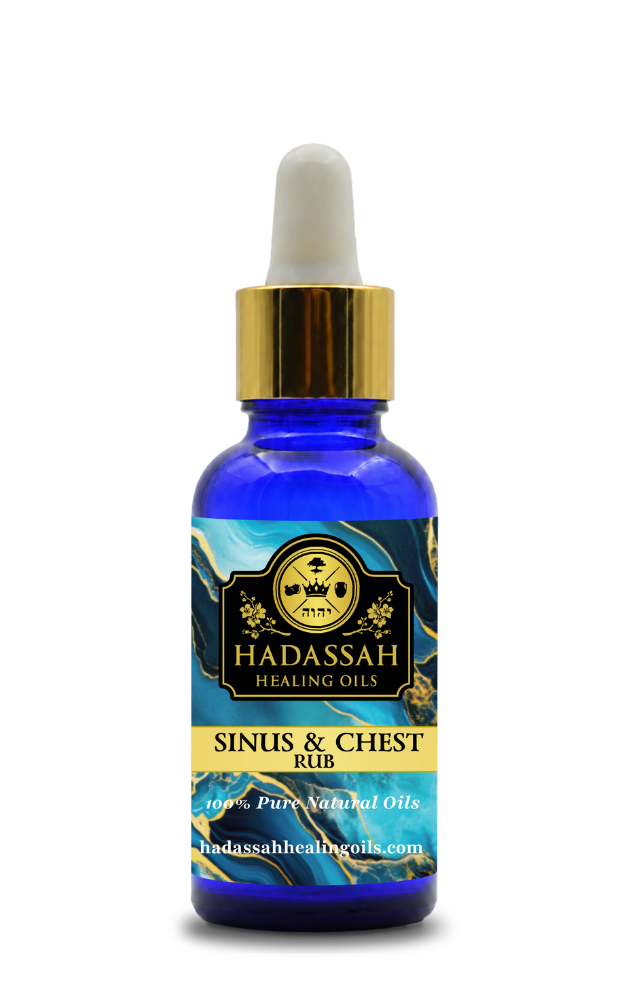
SINUS AND CHEST BLEND 30ML
R400.00 Incl. VAT
SINUS AND CHEST BLEND 30ML
A concentrated topical respiratory formulation developed to support the upper and lower respiratory tract
- 3-5 working days
- All products include VAT.
- Client Testimonies
- 100% Natural
- 100% Pure Essential Oils
- 100% Manufacturing Guarantee
- Share to social media
Description
Directions for Use
Warning
Ingredients
Technical Information
SINUS AND CHEST BLEND 30ML
Sinus & Chest Rub is a concentrated topical respiratory formulation developed to support the upper and lower respiratory tract during periods of nasal congestion, excessive mucus production, chest congestion, cough and respiratory discomfort.
The formulation is particularly rich in eucalyptol.
This creates a multi-oil respiratory complex centred around one of the best researched respiratory monoterpenes used in botanical medicine.
Support mucus clearance.
Improve the sensation of nasal airflow.
Support respiratory inflammatory regulation.
Provide broad-spectrum antimicrobial phytochemistry.
Support chest and upper-airway comfort.
Deliver concentrated respiratory botanicals through an advanced topical carrier system.
SINUS AND CHEST BLEND 30ML
Apply a small amount to intact skin over the:
Upper chest • Upper back, Inhalation throuh hands, back of the neck and sinusses
and massage gently.
Do not apply directly under or inside the nostrils.
Avoid eyes, lips, mucous membranes, broken skin, freshly shaved skin and irritated skin.
Wash hands thoroughly after application.
Because the formulation contains DMSO, ensure the application area is clean and free from perfumes, cosmetics, topical medicines, pesticides, cleaning chemicals or other unwanted residues before application.
Do not place heating pads or occlusive coverings over the application area unless specifically directed.
Patch test before broader use.
SINUS AND CHEST BLEND 30ML
This is a highly concentrated respiratory formulation containing multiple cineole-rich oils, Peppermint, Thyme and DMSO.
Do not ingest.
Do not apply inside the nose or mouth.
Avoid eyes and mucous membranes.
Do not use on broken, damaged or significantly inflamed skin.
DMSO can increase skin penetration of substances applied with it. The skin and hands used for application should therefore be clean and free from unwanted chemical residues.
Do not place heating pads or occlusive coverings over the application area unless specifically directed.
Patch test before broader use.
Seek urgent medical attention for:
Difficulty breathing
Blue or grey lips
Severe wheezing
Chest pain
Confusion
Coughing blood
Significant breathing difficulty at rest
Rapidly worsening respiratory symptoms
Persistent fever, worsening cough, significant shortness of breath or suspected pneumonia requires medical assessment.
SINUS AND CHEST BLEND 30ML
Eucalyptus radiata, Eucalyptus globulus, Peppermint, Thyme, Lavender, Ravintsara, Niaouli, Rosemary, Cardamom, Pine, Fir Needle, Frankincense, Cedarwood, Tea Tree, Lemon, Castor Oil, Dimethyl Sulfoxide (DMSO), Olive Oil.
SINUS AND CHEST BLEND 30ML
Sinus & Chest Rub is a concentrated topical respiratory formulation developed to support the upper and lower respiratory tract during periods of nasal congestion, excessive mucus production, chest congestion, cough and respiratory discomfort.
The formulation combines:
Eucalyptus radiata • Eucalyptus globulus • Peppermint • Thyme • Lavender • Ravintsara • Niaouli • Rosemary • Cardamom • Pine • Fir Needle • Frankincense • Cedarwood • Tea Tree • Lemon • Castor Oil • DMSO • Olive Oil
The formula has been constructed around several complementary pharmacological targets:
1,8-Cineole-mediated respiratory activity
Mucus and mucociliary support
Menthol/TRPM8 sensory airway signalling
Cough and airway-comfort pathways
Inflammatory signalling
Antimicrobial terpene activity
Topical penetration and delivery
The formulation is particularly rich in 1,8-cineole, also known as eucalyptol, because this compound can occur prominently in Eucalyptus globulus, Eucalyptus radiata, Ravintsara, Niaouli and Rosemary.
This creates a multi-oil respiratory complex centred around one of the best researched respiratory monoterpenes used in botanical medicine.
UNDERSTANDING SINUS & CHEST CONGESTION
Respiratory infections and inflammatory airway conditions can produce several simultaneous physiological changes:
MUCOSAL INFLAMMATION
The lining of the nose, sinuses and respiratory tract can become inflamed.
INCREASED MUCUS PRODUCTION
Goblet cells and submucosal glands can increase secretion.
ALTERED MUCUS VISCOSITY
Thicker secretions can become more difficult to clear.
COUGH
Cough receptors respond to mechanical, inflammatory and chemical stimuli.
NASAL OBSTRUCTION
Swollen nasal tissues can reduce airway dimensions.
ALTERED AIRFLOW PERCEPTION
Sensory nerves within the nasal cavity influence whether breathing feels open or obstructed.
Sinus & Chest Rub therefore combines compounds acting on several different aspects of respiratory discomfort rather than relying on a single “decongestant” mechanism.
THE 1,8-CINEOLE RESPIRATORY COMPLEX
One of the most important features of this formulation is the convergence of several botanicals around:
1,8-CINEOLE
Also known as Eucalyptol
1,8-Cineole is a volatile monoterpene oxide extensively investigated in respiratory medicine.
Its pharmacological properties include activity relevant to:
Mucus clearance
Cough
Airway inflammation
Mucociliary physiology
Respiratory secretion management
Human clinical research has investigated cineole in conditions including acute bronchitis and other respiratory disorders.
This makes the cineole-rich oils the central medicinal respiratory component of the formula.
EUCALYPTUS GLOBULUS
1,8-Cineole — Principal Respiratory Component
Eucalyptus globulus is one of the best-known botanical sources of:
1,8-CINEOLE / EUCALYPTOL
Its essential oil commonly contains substantial cineole concentrations, although actual composition should be verified by GC-MS.
Cineole has been studied clinically for respiratory symptoms.
Its pharmacological relevance includes:
Secretolytic/mucus-related activity
Anti-inflammatory activity
Cough support
Airway-comfort support
Mucociliary support
In a placebo-controlled double-blind clinical trial involving acute bronchitis, cineole produced significantly greater improvement in bronchitis symptoms than placebo, with a particularly significant reduction in cough frequency.
PRINCIPAL ACTIVE COMPONENT
1,8-Cineole / Eucalyptol
PRIMARY PHARMACOLOGICAL RELEVANCE
Respiratory secretion support • Cough support • Airway inflammatory regulation • Mucociliary support
EUCALYPTUS RADIATA
Cineole-Rich Upper Respiratory Support
Eucalyptus radiata also contains:
1,8-CINEOLE
alongside compounds such as:
α-Pinene
Limonene
α-Terpineol
depending upon chemotype and source.
It reinforces the cineole concentration provided by Eucalyptus globulus while contributing a somewhat different monoterpene profile.
PRINCIPAL ACTIVE COMPONENT
1,8-Cineole
SECONDARY COMPONENTS
α-Pinene • Limonene • α-Terpineol
PRIMARY PHARMACOLOGICAL RELEVANCE
Upper-airway support • Mucus management • Respiratory comfort • Inflammatory regulation
RAVINTSARA
Cineole-Rich Respiratory Terpenes
True Ravintsara — Cinnamomum camphora ct. 1,8-cineole — is another significant source of:
1,8-CINEOLE
with additional compounds that can include:
Sabinene
α-Terpineol
α-Pinene
β-Pinene
depending upon source.
Its inclusion reinforces the formula’s cineole-rich respiratory architecture.
PRINCIPAL ACTIVE COMPONENT
1,8-Cineole
PRIMARY PHARMACOLOGICAL RELEVANCE
Respiratory support • Mucus-clearance support • Airway inflammatory regulation
NIAOULI
1,8-Cineole & α-Terpineol
Niaouli essential oil commonly contains:
1,8-CINEOLE
together with compounds such as:
α-Terpineol
Limonene
α-Pinene
Viridiflorol
It therefore provides another cineole-rich botanical fraction while adding terpene alcohols with antimicrobial and inflammatory activity.
PRINCIPAL ACTIVE COMPONENTS
1,8-Cineole • α-Terpineol
PRIMARY PHARMACOLOGICAL RELEVANCE
Respiratory support • Antimicrobial phytochemistry • Inflammatory regulation
ROSEMARY
1,8-Cineole, α-Pinene & Camphor
Rosemary essential oil can contain:
1,8-CINEOLE
α-PINENE
CAMPHOR
depending upon chemotype.
1,8-Cineole reinforces the formula’s respiratory activity.
α-Pinene and camphor contribute additional sensory, antimicrobial and neuromuscular pharmacology.
PRINCIPAL ACTIVE COMPONENTS
1,8-Cineole • α-Pinene • Camphor
PRIMARY PHARMACOLOGICAL RELEVANCE
Respiratory support • Mucus-related support • Airway inflammatory regulation • Antimicrobial activity
PEPPERMINT
Menthol & TRPM8 — Nasal Airflow Sensation
Peppermint provides a fundamentally different respiratory mechanism.
Its principal active compound is:
MENTHOL
Menthol activates:
TRPM8
Transient Receptor Potential Melastatin-8
TRPM8 is a cold-sensitive ion channel expressed on sensory nerve fibres, including fibres within human nasal mucosa.
Activation of these sensory pathways creates the characteristic cooling sensation associated with menthol.
This can produce a powerful sensation that the nasal passages are more open.
Importantly, controlled human studies demonstrate that menthol can significantly improve the sensation of nasal airflow without necessarily reducing objective nasal airway resistance.
Menthol does not simply mechanically “open the sinuses.”
It changes the neurological perception of airflow through TRPM8-sensitive sensory pathways.
PRINCIPAL ACTIVE COMPONENT
Menthol
SECONDARY COMPONENTS
Menthone • Menthyl Acetate • 1,8-Cineole
PRIMARY PHARMACOLOGICAL RELEVANCE
TRPM8 activation • Nasal airflow sensation • Cooling sensory modulation • Respiratory comfort
THYME
Thymol & Carvacrol — Antimicrobial Phenolic Activity
Thyme provides an important antimicrobial component.
Depending upon chemotype, Thymus vulgaris may contain:
THYMOL
CARVACROL
or may be dominated by linalool, geraniol or other constituents.
Thymol and carvacrol are phenolic monoterpenes with substantial antimicrobial activity.
Their mechanisms include:
Disruption of microbial membranes
Increased membrane permeability
Loss of cellular ion gradients
Disruption of energy metabolism
Interference with microbial homeostasis
PRINCIPAL ACTIVE COMPONENTS
Thymol • Carvacrol — chemotype dependent
PRIMARY PHARMACOLOGICAL RELEVANCE
Antimicrobial activity • Membrane disruption • Inflammatory modulation
TEA TREE
Terpinen-4-ol — Antimicrobial Membrane Activity
Tea Tree — Melaleuca alternifolia — contains a characteristic terpene profile dominated in quality oils by:
TERPINEN-4-OL
with additional compounds including:
γ-Terpinene
α-Terpinene
α-Terpineol
1,8-Cineole
within specification limits.
Terpinen-4-ol is strongly associated with Tea Tree’s antimicrobial pharmacology.
Tea Tree oil has demonstrated activity against numerous microorganisms in laboratory research through effects involving:
Cell-membrane integrity
Membrane permeability
Cellular respiration
Ion homeostasis
PRINCIPAL ACTIVE COMPONENT
Terpinen-4-ol
PRIMARY PHARMACOLOGICAL RELEVANCE
Antimicrobial activity • Membrane disruption • Inflammatory support
Tea Tree therefore strengthens the antimicrobial architecture surrounding the more respiratory-specific cineole complex.
CARDAMOM
1,8-Cineole & α-Terpinyl Acetate
Cardamom essential oil commonly contains:
1,8-CINEOLE
α-TERPINYL ACETATE
This is an excellent chemical fit within the formula because Cardamom reinforces the cineole fraction while contributing an ester-rich component.
PRINCIPAL ACTIVE COMPONENTS
1,8-Cineole • α-Terpinyl Acetate
PRIMARY PHARMACOLOGICAL RELEVANCE
Respiratory support • Smooth-muscle support • Antimicrobial phytochemistry
PINE
α-Pinene & β-Pinene
Pine essential oil commonly contains substantial concentrations of:
α-PINENE
β-PINENE
with other monoterpenes depending upon species.
Pinenes have demonstrated experimental:
Anti-inflammatory
Antimicrobial
Antioxidant
properties.
Their volatile respiratory profile complements cineole-rich oils.
PRINCIPAL ACTIVE COMPONENTS
α-Pinene • β-Pinene
PRIMARY PHARMACOLOGICAL RELEVANCE
Respiratory comfort • Inflammatory regulation • Antimicrobial support
FIR NEEDLE
Bornyl Acetate & Monoterpenes
Fir Needle essential oils can contain compounds such as:
BORNYL ACETATE
together with:
α-Pinene
β-Pinene
Camphene
Limonene
These volatile monoterpenes contribute to the formula’s respiratory and sensory profile.
PRINCIPAL ACTIVE COMPONENTS
Bornyl Acetate • α-Pinene • β-Pinene • Camphene
PRIMARY PHARMACOLOGICAL RELEVANCE
Respiratory comfort • Sensory airway support • Inflammatory modulation
FRANKINCENSE
α-Pinene & Airway Inflammatory Support
Frankincense essential oil contains species-dependent concentrations of:
α-Pinene
α-Thujene
Limonene
Sabinene
Other volatile terpenes
These compounds have demonstrated experimental inflammatory-modulating activity.
Frankincense therefore contributes primarily to the airway-inflammatory and tissue-comfort component rather than acting as a direct pharmaceutical bronchodilator.
PRINCIPAL ACTIVE FRACTION
α-Pinene and related Boswellia volatile terpenes
PRIMARY PHARMACOLOGICAL RELEVANCE
Inflammatory regulation • Respiratory comfort • Tissue support
CEDARWOOD
Sesquiterpene-Rich Respiratory Support
Cedarwood provides a heavier sesquiterpene fraction.
If Cedrus atlantica is used, constituents can include:
β-Himachalene
α-Himachalene
γ-Himachalene
Atlantones
The precise chemistry depends on botanical species.
Cedarwood complements the highly volatile monoterpene-rich oils by providing a slower, sesquiterpene-dominant fraction.
PRINCIPAL ACTIVE FRACTION
Himachalenes and related sesquiterpenes — species dependent
PRIMARY PHARMACOLOGICAL RELEVANCE
Inflammatory support • Respiratory comfort • Sesquiterpene support
LAVENDER
Linalool & Linalyl Acetate
Lavender contributes:
LINALOOL
LINALYL ACETATE
These compounds provide complementary:
Inflammatory modulation
Neurological calming
Smooth-muscle-related pharmacology
Sensory-comfort support
Lavender is particularly useful in a respiratory formulation because persistent coughing and congestion can also disturb sleep and increase nervous-system arousal.
PRINCIPAL ACTIVE COMPONENTS
Linalool • Linalyl Acetate
PRIMARY PHARMACOLOGICAL RELEVANCE
Inflammatory support • Neurological regulation • Physical comfort
LEMON
D-Limonene
Lemon essential oil is typically rich in:
D-LIMONENE
with:
β-Pinene
γ-Terpinene
and other monoterpenes.
Limonene contributes experimental:
Antioxidant
Anti-inflammatory
Antimicrobial
activity.
PRINCIPAL ACTIVE COMPONENT
D-Limonene
PRIMARY PHARMACOLOGICAL RELEVANCE
Antioxidant support • Inflammatory regulation • Antimicrobial phytochemistry
CASTOR OIL
Ricinoleic Acid — Topical Delivery & Anti-Inflammatory Lipid
Castor Oil is not simply a carrier.
Its fatty-acid composition is unusual because it is dominated by:
RICINOLEIC ACID
Ricinoleic acid is a hydroxylated fatty acid responsible for many of Castor Oil’s distinctive physical and biological properties.
Within Sinus & Chest Rub, Castor Oil provides:
A viscous topical carrier
Prolonged skin contact
Emollient activity
A lipid vehicle for essential-oil constituents
It also has experimental anti-inflammatory and analgesic pharmacology associated with ricinoleic acid.
DMSO
Pharmaceutical Penetration Enhancement
DMSO — Dimethyl Sulfoxide — gives this formulation a very different pharmaceutical profile from an ordinary essential-oil chest rub.
DMSO is a well-established:
SKIN PENETRATION ENHANCER
The outermost skin layer—the stratum corneum—normally restricts penetration of foreign compounds.
DMSO can alter this barrier and increase the movement of other compounds through the skin.
Its pharmaceutical actions involve changes in:
Stratum-corneum lipid organisation
Protein conformation
Solvent partitioning
Skin permeability
DMSO has been used as a penetration enhancer in pharmaceutical topical preparations.
This means the DMSO is not merely another carrier.
It can materially change the dermal and potentially transdermal delivery characteristics of the compounds applied with it.
PRIMARY PHARMACEUTICAL FUNCTION
Penetration enhancement • Increased dermal delivery • Increased transdermal transport potential
The skin must also be clean and free from unwanted topical chemicals before application because a penetration-enhancing system requires greater formulation hygiene than an ordinary massage oil.
THE MULTI-TARGET MECHANISM
Sinus & Chest Rub operates through five principal pharmacological systems.
- CINEOLE-RICH RESPIRATORY COMPLEX
Eucalyptus globulus
Eucalyptus radiata
Ravintsara
Niaouli
Rosemary
Cardamom
provide overlapping concentrations of:
1,8-CINEOLE / EUCALYPTOL
This forms the principal respiratory component.
The target is:
Mucus → Mucociliary clearance → Cough → Airway inflammation → Respiratory comfort
- NASAL SENSORY AIRFLOW COMPLEX
PEPPERMINT → MENTHOL → TRPM8
Menthol activates cold-sensitive TRPM8 receptors in nasal sensory nerves.
This creates an increased sensation of airflow and nasal openness.
The mechanism is:
MENTHOL
↓
TRPM8 ACTIVATION
↓
NASAL SENSORY NERVE SIGNAL
↓
INCREASED PERCEPTION OF AIRFLOW
It is important to distinguish this from physically shrinking swollen nasal tissue.
Menthol can make breathing feel substantially clearer without necessarily changing measured nasal resistance.
- ANTIMICROBIAL TERPENE COMPLEX
Thyme / Thymol + Carvacrol
Tea Tree / Terpinen-4-ol
Lemon / Limonene
Pine / Pinenes
Niaouli / Terpene alcohols
provide overlapping antimicrobial phytochemistry.
These compounds act principally through microbial:
Membrane disruption
Permeability alteration
Ion leakage
Metabolic disruption
This provides broad botanical antimicrobial support.
- AIRWAY-INFLAMMATORY SUPPORT
1,8-Cineole
Linalool
Frankincense terpenes
Pinenes
Terpinen-4-ol
provide complementary mechanisms relevant to inflammatory signalling.
This is particularly important because respiratory congestion is not caused by mucus alone.
Inflamed mucosal tissue can itself contribute substantially to the sensation of obstruction and respiratory discomfort.
- TOPICAL DELIVERY SYSTEM
CASTOR OIL
provides the lipid carrier and prolonged skin contact.
OLIVE OIL
provides additional lipid dilution and emollience.
DMSO
provides penetration enhancement.
This creates a significantly more sophisticated topical-delivery system than essential oils diluted in a conventional carrier alone.
HOW THE FORMULA WORKS
The overall mechanism can be represented as:
SINUS / RESPIRATORY IRRITATION
↓
MUCOSAL INFLAMMATION + MUCUS
↓
1,8-CINEOLE COMPLEX
Eucalyptus • Ravintsara • Niaouli • Rosemary • Cardamom
↓
RESPIRATORY & MUCUS-CLEARANCE SUPPORT
NASAL BLOCKAGE SENSATION
↓
MENTHOL
↓
TRPM8
↓
IMPROVED SENSATION OF NASAL AIRFLOW
MICROBIAL CHALLENGE
↓
THYMOL • CARVACROL • TERPINEN-4-OL • LIMONENE • PINENES
↓
ANTIMICROBIAL MEMBRANE ACTIVITY
INFLAMMATORY RESPONSE
↓
CINEOLE • LINALOOL • FRANKINCENSE TERPENES • PINENES
↓
INFLAMMATORY-RESPONSE SUPPORT
TOPICAL APPLICATION
↓
CASTOR + OLIVE OIL + DMSO
↓
ENHANCED DERMAL DELIVERY
RELEVANT USES
The pharmacological pathways addressed by Sinus & Chest Rub may provide complementary symptomatic support during periods involving:
Common-cold respiratory symptoms
Nasal congestion
Sinus pressure and discomfort
Thick respiratory secretions
Chest congestion
Cough associated with uncomplicated respiratory infections
Upper-airway irritation
Difficulty experiencing clear nasal airflow
Respiratory discomfort during seasonal illness
The product is intended for symptomatic respiratory support and does not replace diagnosis or treatment of bacterial pneumonia, severe asthma, significant lower-respiratory infection or other serious respiratory disease.
DIRECTIONS FOR TOPICAL USE
Apply a small amount to intact skin over the:
Upper chest • Upper back, Inhalation throuh hands, back of the neck and sinusses
and massage gently.
Do not apply directly under or inside the nostrils.
Avoid eyes, lips, mucous membranes, broken skin, freshly shaved skin and irritated skin.
Wash hands thoroughly after application.
Because the formulation contains DMSO, ensure the application area is clean and free from perfumes, cosmetics, topical medicines, pesticides, cleaning chemicals or other unwanted residues before application.
Do not place heating pads or occlusive coverings over the application area unless specifically directed.
Patch test before broader use.
INGREDIENTS
Eucalyptus radiata, Eucalyptus globulus, Peppermint, Thyme, Lavender, Ravintsara, Niaouli, Rosemary, Cardamom, Pine, Fir Needle, Frankincense, Cedarwood, Tea Tree, Lemon, Castor Oil, Dimethyl Sulfoxide (DMSO), Olive Oil.
IMPORTANT SAFETY INFORMATION
This is a highly concentrated respiratory formulation containing multiple cineole-rich oils, Peppermint, Thyme and DMSO.
Do not ingest.
Do not apply inside the nose or mouth.
Avoid eyes and mucous membranes.
Do not use on broken, damaged or significantly inflamed skin.
DMSO can increase skin penetration of substances applied with it. The skin and hands used for application should therefore be clean and free from unwanted chemical residues.
Seek urgent medical attention for:
Difficulty breathing
Blue or grey lips
Severe wheezing
Chest pain
Confusion
Coughing blood
Significant breathing difficulty at rest
Rapidly worsening respiratory symptoms
Persistent fever, worsening cough, significant shortness of breath or suspected pneumonia requires medical assessment.
SINUS & CHEST RUB
Advanced Respiratory Botanical Pharmacology
Sinus & Chest Rub is built around identifiable respiratory and pharmaceutical mechanisms.
1,8-Cineole from Eucalyptus globulus, Eucalyptus radiata, Ravintsara, Niaouli, Rosemary and Cardamom creates the central respiratory complex.
Menthol from Peppermint activates TRPM8 receptors on nasal sensory nerves, increasing the perception of clear nasal airflow.
Thymol and Carvacrol from Thyme provide phenolic antimicrobial activity.
Terpinen-4-ol from Tea Tree reinforces microbial membrane-targeting activity.
Pinenes from Pine, Fir and Frankincense contribute additional respiratory, antimicrobial and inflammatory-supporting terpenes.
Linalool and Linalyl Acetate from Lavender provide inflammatory and neurophysiological support.
Ricinoleic Acid-rich Castor Oil creates a viscous lipid delivery matrix.
DMSO acts as a pharmaceutical penetration enhancer, altering the skin barrier and potentially increasing delivery of accompanying compounds.
The resulting strategy is:
THICK MUCUS & RESPIRATORY CONGESTION
1,8-Cineole Complex
↓
RESPIRATORY CLEARANCE SUPPORT
BLOCKED NASAL SENSATION
Menthol
↓
TRPM8
↓
ENHANCED AIRFLOW PERCEPTION
MICROBIAL CHALLENGE
Thymol • Carvacrol • Terpinen-4-ol • Limonene • Pinenes
↓
ANTIMICROBIAL PHYTOCHEMISTRY
AIRWAY INFLAMMATORY BURDEN
Cineole • Linalool • Frankincense Terpenes
↓
INFLAMMATORY-RESPONSE SUPPORT
TOPICAL DELIVERY
Castor Oil + Olive Oil + DMSO
↓
ENHANCED DERMAL PENETRATION
SINUS & CHEST RUB
Support mucus clearance.
Improve the sensation of nasal airflow.
Support respiratory inflammatory regulation.
Provide broad-spectrum antimicrobial phytochemistry.
Support chest and upper-airway comfort.
Deliver concentrated respiratory botanicals through an advanced topical carrier system.


