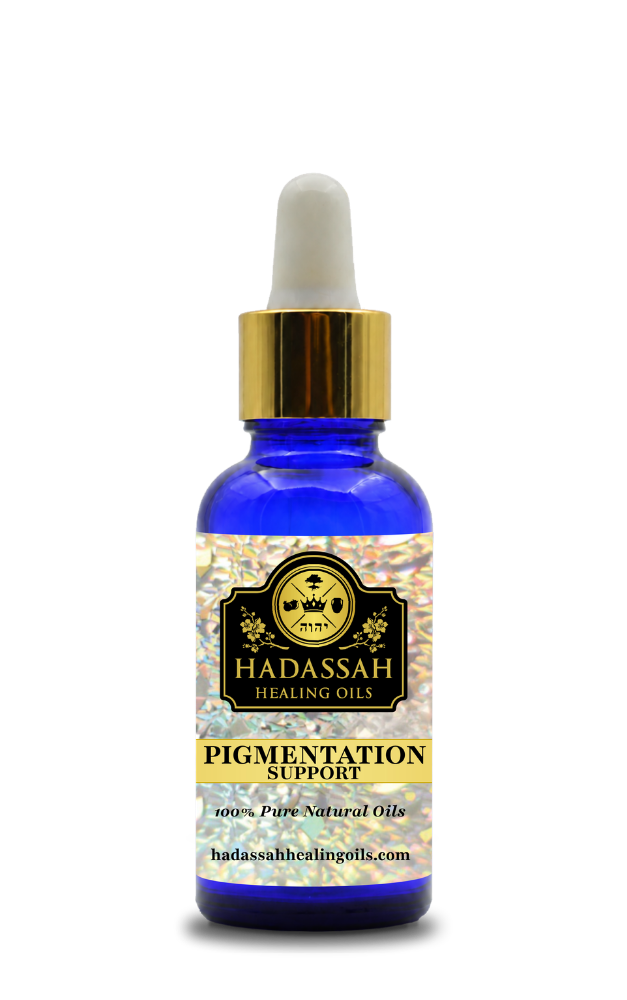
PIGMENTATION BLEND 30ML
R590.00 Incl. VAT
PIGMENTATION BLEND 30ML
Advanced botanical care for skin affected by pigmentation, premature ageing and environmental stress.
- 3-5 working days
- All products include VAT.
- Client Testimonies
- 100% Natural
- 100% Pure Essential Oils
- 100% Manufacturing Guarantee
- Share to social media
Description
Directions for Use
Warning
Ingredients
Technical Information
PIGMENTATION BLEND 30ML
Advanced botanical care for skin affected by pigmentation, premature ageing and environmental stress.
Hadassah Healing Oils Pigmentation Blend combines 16 carefully selected botanical and functional ingredients in a concentrated skincare formulation developed around the biological processes involved in skin ageing, uneven pigmentation, oxidative damage and loss of skin vitality.
The formulation brings together lipid-rich regenerative skincare oils, antioxidant compounds, aromatic plant extracts and a penetration-enhancing ingredient.
Its botanical composition addresses several interconnected aspects of skin health:
- Melanin regulation: The biological pathways responsible for skin pigmentation and dark spots.
- Oxidative stress: Damage associated with ultraviolet radiation, pollution and reactive oxygen species.
- Inflammatory signalling: Processes that may contribute to post-inflammatory pigmentation and premature skin ageing.
- Collagen and elastin preservation: Maintaining the structural proteins responsible for skin firmness and resilience.
- Skin-barrier support: Improving moisture retention and reducing dryness-related irritation.
- Skin renewal: Supporting the environment in which normal epidermal turnover and repair occur.
- Skin conditioning: Improving softness, suppleness, smoothness and the appearance of radiance.
The formulation is designed for the cosmetic care of the face, neck and décolletage, where pigmentation, fine lines, sun damage and changes in skin texture commonly become visible.
PIGMENTATION BLEND 30ML
For external use only. Apply topically after cleaning skin and before moisturazation. Apply as directed to clean, dry skin, avoiding the eye area. Incorporate into your daily Hadassah Healing Oils Skincare Range routine and follow with your preferred moisturiser.
For pigmentation care, use a broad-spectrum SPF 30 or higher sunscreen every morning to help prevent further darkening and protect your skin from UV damage.
TARGETED SKIN CONCERNS
UNEVEN SKIN TONE AND DARK MARKS
The formulation is designed around antioxidant-focused skincare and conditioning for pigmentation-prone skin.
Its ingredients support skin softness and appearance, but the blend has not been clinically established as a treatment for melasma, sunspots or post-inflammatory hyperpigmentation.
FINE LINES AND PREMATURE AGEING
The emollient carrier oils help reduce the appearance of dryness-related fine lines by conditioning the skin surface.
Vitamin E adds lipid-antioxidant activity.
DRY, DULL OR TIRED-LOOKING SKIN
Rosehip, Pomegranate Seed, Castor and Sweet Almond Oils help nourish and soften the skin.
This can improve the appearance of texture and radiance.
NECK AND DÉCOLLETAGE CARE
The formulation’s rich emollient base is particularly relevant to areas where dryness, uneven tone and sun-related ageing are common.
A NOTE ON SKIN RENEWAL
Skin renewal is a continuous biological process.
New keratinocytes form in the deeper epidermis and gradually move towards the surface.
As they mature, they contribute to the skin’s protective outer layer before eventually being shed.
Healthy barrier function and appropriate skincare help maintain an environment in which these processes can occur normally.
True treatment of hyperpigmentation generally requires ingredients with demonstrated activity against melanogenesis, pigment transfer or epidermal turnover, together with consistent sun protection.
PIGMENTATION BLEND 30ML
For pigmentation care, use a broad-spectrum SPF 30 or higher sunscreen every morning to help prevent further darkening and protect your skin from UV damage.
PIGMENTATION BLEND 30ML
- ROSEHIP OIL — Rosa canina / Rosa rubiginosa
Skin focus: Barrier repair, skin renewal, suppleness and the appearance of ageing
Rosehip Oil is particularly valuable because of its high proportion of polyunsaturated fatty acids.
Key compounds
- Linoleic acid
- Alpha-linolenic acid
- Oleic acid
- Tocopherols
- Carotenoids, depending on the oil
How it works on the skin
Supports epidermal barrier function
Linoleic acid is an important fatty acid involved in the skin’s lipid environment.
The outer skin barrier relies on organised lipids to prevent excessive water loss and protect against external irritants.
Rosehip Oil supplies emollient fatty acids that help condition the skin and support its protective surface.
Supports a smoother skin appearance
Well-conditioned skin generally appears softer, smoother and more supple.
By reducing dryness and roughness, Rosehip Oil can improve the visible appearance of fine surface lines.
Contributes antioxidant compounds
Depending on processing and quality, Rosehip Oil may contain tocopherols and carotenoids that contribute antioxidant activity.
Why Rosehip is important in the blend
Rosehip provides the formulation with a nutrient-rich lipid foundation particularly suited to dry, mature and environmentally stressed skin.
It supports the appearance of a smoother, healthier and more radiant complexion.
- POMEGRANATE SEED OIL — Punica granatum
Skin focus: Antioxidant defence, skin ageing and lipid nourishment
Pomegranate Seed Oil is distinguished by its unusual fatty-acid profile.
Key compounds
- Punicic acid
- Linoleic acid
- Oleic acid
- Tocopherols
How it works on the skin
Punicic acid and cellular signalling
Punicic acid is a conjugated fatty acid studied in experimental models for its effects on oxidative and inflammatory processes.
These pathways are relevant to skin ageing because prolonged oxidative stress can affect cellular proteins, membranes and connective tissue.
Lipid nourishment
Pomegranate Seed Oil contributes emollient fatty acids that help maintain skin softness and suppleness.
Supports antioxidant-focused skincare
Pomegranate-derived substances have attracted scientific attention in research involving photoageing and oxidative damage.
However, research on Pomegranate fruit or peel extracts should not be treated as equivalent to research on Pomegranate Seed Oil.
Why Pomegranate Seed Oil is important in the blend
Pomegranate Seed Oil contributes specialised fatty acids and supports the formulation’s focus on skin nourishment and age-defence care.
- HELICHRYSUM — Helichrysum italicum
Skin focus: Inflammation-related pathways, skin comfort and antioxidant research
Helichrysum is one of the more distinctive essential oils used in botanical skincare.
Key compounds
Depending on the chemotype:
- Neryl acetate
- Alpha-pinene
- Italidiones
- Other monoterpenes and sesquiterpenes
How it works on the skin
Inflammatory signalling
Helichrysum preparations have been investigated for effects on inflammation-related biochemical pathways.
This is relevant because inflammation can contribute to redness, irritation and post-inflammatory pigmentation.
Oxidative stress
Some Helichrysum preparations demonstrate antioxidant activity in experimental studies.
Skin recovery research
Helichrysum has been investigated in preclinical models involving tissue responses and repair-related processes.
The results depend on the specific extract, concentration and experimental conditions.
Why Helichrysum is important in the blend
Helichrysum contributes biologically interesting terpenes to a formulation focused on stressed and uneven-looking skin.
Its potential relevance is particularly associated with inflammation-related skincare research.
- CARROT SEED OIL — Daucus carota
Skin focus: Antioxidant-related activity and mature-skin care
Carrot Seed essential oil is rich in distinctive sesquiterpene compounds.
Key compounds
- Carotol
- Daucol
- Other sesquiterpenes
How it works on the skin
Antioxidant-related activity
Carrot Seed essential oil has demonstrated antioxidant properties in certain laboratory systems.
Antioxidants are relevant to skin ageing because reactive oxygen species can contribute to oxidative damage.
Skin-conditioning applications
Carrot Seed essential oil is used in cosmetic preparations designed for mature and environmentally stressed skin.
Why Carrot Seed is important in the blend
Carrot Seed adds sesquiterpene-rich botanical chemistry to the formulation.
It is important to distinguish Carrot Seed essential oil from carotenoid-rich carrot-root extracts. The essential oil is not a concentrated source of beta-carotene or vitamin A.
- FRANKINCENSE — Boswellia species
Skin focus: Inflammation-related pathways and botanical age-defence research
Frankincense is valued for its complex resin-derived aromatic chemistry.
Key compounds
Depending on species:
- Alpha-pinene
- Limonene
- Sabinene
- Other terpenes
How it works on the skin
Inflammation-related signalling
Certain Frankincense essential-oil constituents have been investigated for biological activity involving inflammatory pathways.
Oxidative stress
Frankincense-derived compounds have also been studied in antioxidant research.
Skin ageing relevance
Oxidative and inflammatory processes are involved in premature skin ageing, making these pathways relevant to botanical skincare research.
Why Frankincense is important in the blend
Frankincense complements the formula’s botanical age-defence profile.
Boswellic acids, often discussed in anti-inflammatory research, are associated primarily with certain resin extracts rather than steam-distilled Frankincense essential oil.
- NEROLI — Citrus aurantium amara
Skin focus: Aromatic skincare and antioxidant-related botanical chemistry
Neroli is distilled from bitter-orange blossoms.
Key compounds
- Linalool
- Linalyl acetate
- Limonene
How it works on the skin
Neroli contributes volatile compounds that have been investigated for antioxidant and other biological effects in laboratory settings.
It is also widely used in premium cosmetic formulations because of its complex floral fragrance.
Why Neroli is important in the blend
Neroli contributes a delicate aromatic profile and complements the formulation’s luxury skincare character.
- MYRRH — Commiphora myrrha
Skin focus: Inflammation-related research and botanical skin conditioning
Key compounds
- Curzerene
- Furanoeudesma-related compounds
- Other sesquiterpenes
How it works on the skin
Experimental inflammation-related activity
Myrrh-derived preparations have been studied for effects on inflammatory signalling.
Antioxidant-related properties
Certain Myrrh extracts and constituents have demonstrated antioxidant activity in laboratory studies.
Why Myrrh is important in the blend
Myrrh contributes complex resin-derived compounds to the formulation’s botanical skincare profile.
- DMSO — DIMETHYL SULFOXIDE
Skin focus: Penetration enhancement and formulation delivery
DMSO is different from the botanical oils because its primary function is related to solvent activity and skin permeability.
How it works on the skin
The skin’s outermost layer, the stratum corneum, acts as a protective barrier.
This layer contains tightly organised lipids and proteins that restrict the passage of many substances.
DMSO can interact with these structures and increase the penetration of certain molecules.
Why this matters in a pigmentation formulation
Pigmentation processes occur within living skin layers, while many cosmetic ingredients remain concentrated near the skin surface.
Penetration is therefore an important consideration in the design of topical formulations.
Why DMSO is included
DMSO provides a penetration-enhancing component, although its inclusion does not establish increased clinical effectiveness against pigmentation.
- CASTOR OIL — Ricinus communis
Skin focus: Moisture retention, skin softness and surface protection
Key compound
Ricinoleic acid
How it works on the skin
Castor Oil contains a high proportion of ricinoleic acid, which contributes to its characteristic thick texture.
It functions as an emollient, forming a conditioning layer on the skin.
This helps reduce the appearance of dryness and creates a smoother surface feel.
Why Castor Oil is important in the blend
Castor Oil contributes richness and conditioning, particularly valuable for the neck and décolletage where dryness can accentuate visible signs of ageing.
- ROSE OTTO — Rosa damascena
Skin focus: Aromatic skin care and antioxidant-related research
Key compounds
- Citronellol
- Geraniol
- Nerol
How it works on the skin
Rose Otto contains aromatic alcohols and other volatile constituents that have been investigated for biological activity in laboratory studies.
Some Rose-derived preparations have demonstrated antioxidant and inflammation-related effects.
The effects depend on the specific preparation and should not be attributed equally to all Rose products.
Why Rose Otto is important in the blend
Rose Otto contributes a rich floral fragrance and compounds of interest in botanical skincare research.
- LAVENDER — Lavandula angustifolia
Skin focus: Botanical skin-care research and relaxation
Key compounds
- Linalool
- Linalyl acetate
How it works on the skin
Lavender constituents have been investigated in experimental studies involving inflammation-related processes and skin responses.
Lavender is also well known for its use in relaxation-oriented aromatherapy.
Why Lavender is important in the blend
Lavender contributes floral aromatic compounds and complements the blend’s botanical skin-care profile.
- SANDALWOOD — Santalum species
Skin focus: Inflammation-related signalling and skin comfort research
Key compounds
- Alpha-santalol
- Beta-santalol
How it works on the skin
Sandalwood constituents have been investigated for biological effects involving skin cells and inflammatory pathways.
Some research has explored Sandalwood oil in dermatological applications.
Why Sandalwood is important in the blend
Sandalwood contributes a warm aromatic character and compounds of interest in experimental skin research.
- BLUE TANSY — Tanacetum annuum
Skin focus: Antioxidant research and botanical skin care
Key compounds
- Chamazulene
- Sabinene
- Other terpenes
How it works on the skin
Chamazulene, responsible for the characteristic blue colour of some Blue Tansy oils, has been investigated for antioxidant and inflammation-related activity.
Why Blue Tansy is important in the blend
Blue Tansy contributes chamazulene-containing botanical chemistry to the formulation’s skin-care profile.
- JASMINE ABSOLUTE — Jasminum species
Skin focus: Floral aromatic skincare
Key compounds
Depending on species:
- Benzyl acetate
- Linalool
- Benzyl benzoate
- Other aromatic constituents
How it works on the skin
Jasmine Absolute contains a complex mixture of fragrance compounds.
It is used extensively in perfumery and luxury skincare.
Why Jasmine is important in the blend
Jasmine contributes a rich floral character that enhances the overall sensory experience of the formulation.
- VITAMIN E — TOCOPHEROL
Skin focus: Lipid antioxidant protection and age-defence skincare
Vitamin E is one of the most relevant ingredients in this formulation from an antioxidant perspective.
How it works on the skin
Protects lipids against oxidation
Vitamin E can donate a hydrogen atom to lipid radicals, helping interrupt lipid peroxidation chain reactions.
This is particularly important because cell membranes and skin lipids contain fatty acids that can be damaged by oxidative reactions.
Supports formulation stability
Vitamin E can also help protect susceptible plant oils from oxidative deterioration.
Relevance to photoageing
Oxidative stress is involved in UV-related skin ageing.
Vitamin E has been investigated in topical photoprotection research, particularly in combination with other antioxidants.
Why Vitamin E is important in the blend
Vitamin E provides a recognised lipid-antioxidant function and complements the fatty-acid-rich carrier oils.
- SWEET ALMOND OIL — Prunus amygdalus dulcis
Skin focus: Barrier conditioning, softness and suppleness
Key compounds
- Oleic acid
- Linoleic acid
- Palmitic acid
How it works on the skin
Sweet Almond Oil acts as an emollient.
It helps soften the skin, improve slip during application and reduce the rough appearance associated with dryness.
Why Sweet Almond Oil is important in the blend
Sweet Almond Oil contributes a smooth carrier base and supports the formulation’s nourishing feel on the face, neck and décolletage.
PIGMENTATION BLEND 30ML
Hadassah Healing Oils Pigmentation Blend combines 16 carefully selected botanical and functional ingredients in a concentrated skincare formulation developed around the biological processes involved in skin ageing, uneven pigmentation, oxidative damage and loss of skin vitality.
The formulation brings together lipid-rich regenerative skincare oils, antioxidant compounds, aromatic plant extracts and a penetration-enhancing ingredient.
Its botanical composition addresses several interconnected aspects of skin health:
- Melanin regulation: The biological pathways responsible for skin pigmentation and dark spots.
- Oxidative stress: Damage associated with ultraviolet radiation, pollution and reactive oxygen species.
- Inflammatory signalling: Processes that may contribute to post-inflammatory pigmentation and premature skin ageing.
- Collagen and elastin preservation: Maintaining the structural proteins responsible for skin firmness and resilience.
- Skin-barrier support: Improving moisture retention and reducing dryness-related irritation.
- Skin renewal: Supporting the environment in which normal epidermal turnover and repair occur.
- Skin conditioning: Improving softness, suppleness, smoothness and the appearance of radiance.
The formulation is designed for the cosmetic care of the face, neck and décolletage, where pigmentation, fine lines, sun damage and changes in skin texture commonly become visible.
UNDERSTANDING PIGMENTATION AND SKIN AGEING
THE ROLE OF MELANIN
Melanin is produced by specialised cells called melanocytes.
Within these cells, melanin is synthesised inside structures known as melanosomes and transferred to surrounding skin cells.
The production of melanin is regulated by several important biological factors, including:
Tyrosinase: An enzyme responsible for essential steps in melanin synthesis.
MITF: A transcription factor involved in controlling melanocyte activity and the expression of pigmentation-related proteins.
Alpha-MSH and MC1R: A signalling pathway that can stimulate melanin production, particularly following ultraviolet exposure.
Inflammatory mediators: Chemical messengers that may stimulate pigmentation following irritation, acne or injury.
Reactive oxygen species: Molecules generated by UV exposure and other environmental stressors that can influence pigment production and skin ageing.
A skincare formulation intended for pigmentation-prone skin is therefore most useful when it combines well-tolerated skin conditioning with ingredients that protect against oxidative damage and minimise unnecessary irritation.
HOW SKIN AGEING DEVELOPS
As the skin ages, several biological changes occur.
Collagen production and organisation change, elastin fibres become damaged, and the skin’s ability to retain moisture may decline.
Ultraviolet radiation accelerates many of these processes through oxidative stress and the activation of enzymes known as matrix metalloproteinases, or MMPs.
MMPs can break down collagen and other structural components of the extracellular matrix.
The visible results may include:
- Fine lines and wrinkles
- Reduced firmness
- Uneven skin tone
- Rough texture
- Dryness
- Loss of radiance
- Sun-related dark spots
The ingredients in Hadassah Pigmentation Blend have been selected around these overlapping areas of skin biology.
THE INGREDIENTS: SCIENTIFIC SKIN BENEFITS AND BIOLOGICAL ACTIONS
- ROSEHIP OIL — Rosa canina / Rosa rubiginosa
Skin focus: Barrier repair, skin renewal, suppleness and the appearance of ageing
Rosehip Oil is particularly valuable because of its high proportion of polyunsaturated fatty acids.
Key compounds
- Linoleic acid
- Alpha-linolenic acid
- Oleic acid
- Tocopherols
- Carotenoids, depending on the oil
How it works on the skin
Supports epidermal barrier function
Linoleic acid is an important fatty acid involved in the skin’s lipid environment.
The outer skin barrier relies on organised lipids to prevent excessive water loss and protect against external irritants.
Rosehip Oil supplies emollient fatty acids that help condition the skin and support its protective surface.
Supports a smoother skin appearance
Well-conditioned skin generally appears softer, smoother and more supple.
By reducing dryness and roughness, Rosehip Oil can improve the visible appearance of fine surface lines.
Contributes antioxidant compounds
Depending on processing and quality, Rosehip Oil may contain tocopherols and carotenoids that contribute antioxidant activity.
Why Rosehip is important in the blend
Rosehip provides the formulation with a nutrient-rich lipid foundation particularly suited to dry, mature and environmentally stressed skin.
It supports the appearance of a smoother, healthier and more radiant complexion.
- POMEGRANATE SEED OIL — Punica granatum
Skin focus: Antioxidant defence, skin ageing and lipid nourishment
Pomegranate Seed Oil is distinguished by its unusual fatty-acid profile.
Key compounds
- Punicic acid
- Linoleic acid
- Oleic acid
- Tocopherols
How it works on the skin
Punicic acid and cellular signalling
Punicic acid is a conjugated fatty acid studied in experimental models for its effects on oxidative and inflammatory processes.
These pathways are relevant to skin ageing because prolonged oxidative stress can affect cellular proteins, membranes and connective tissue.
Lipid nourishment
Pomegranate Seed Oil contributes emollient fatty acids that help maintain skin softness and suppleness.
Supports antioxidant-focused skincare
Pomegranate-derived substances have attracted scientific attention in research involving photoageing and oxidative damage.
However, research on Pomegranate fruit or peel extracts should not be treated as equivalent to research on Pomegranate Seed Oil.
Why Pomegranate Seed Oil is important in the blend
Pomegranate Seed Oil contributes specialised fatty acids and supports the formulation’s focus on skin nourishment and age-defence care.
- HELICHRYSUM — Helichrysum italicum
Skin focus: Inflammation-related pathways, skin comfort and antioxidant research
Helichrysum is one of the more distinctive essential oils used in botanical skincare.
Key compounds
Depending on the chemotype:
- Neryl acetate
- Alpha-pinene
- Italidiones
- Other monoterpenes and sesquiterpenes
How it works on the skin
Inflammatory signalling
Helichrysum preparations have been investigated for effects on inflammation-related biochemical pathways.
This is relevant because inflammation can contribute to redness, irritation and post-inflammatory pigmentation.
Oxidative stress
Some Helichrysum preparations demonstrate antioxidant activity in experimental studies.
Skin recovery research
Helichrysum has been investigated in preclinical models involving tissue responses and repair-related processes.
The results depend on the specific extract, concentration and experimental conditions.
Why Helichrysum is important in the blend
Helichrysum contributes biologically interesting terpenes to a formulation focused on stressed and uneven-looking skin.
Its potential relevance is particularly associated with inflammation-related skincare research.
- CARROT SEED OIL — Daucus carota
Skin focus: Antioxidant-related activity and mature-skin care
Carrot Seed essential oil is rich in distinctive sesquiterpene compounds.
Key compounds
- Carotol
- Daucol
- Other sesquiterpenes
How it works on the skin
Antioxidant-related activity
Carrot Seed essential oil has demonstrated antioxidant properties in certain laboratory systems.
Antioxidants are relevant to skin ageing because reactive oxygen species can contribute to oxidative damage.
Skin-conditioning applications
Carrot Seed essential oil is used in cosmetic preparations designed for mature and environmentally stressed skin.
Why Carrot Seed is important in the blend
Carrot Seed adds sesquiterpene-rich botanical chemistry to the formulation.
It is important to distinguish Carrot Seed essential oil from carotenoid-rich carrot-root extracts. The essential oil is not a concentrated source of beta-carotene or vitamin A.
- FRANKINCENSE — Boswellia species
Skin focus: Inflammation-related pathways and botanical age-defence research
Frankincense is valued for its complex resin-derived aromatic chemistry.
Key compounds
Depending on species:
- Alpha-pinene
- Limonene
- Sabinene
- Other terpenes
How it works on the skin
Inflammation-related signalling
Certain Frankincense essential-oil constituents have been investigated for biological activity involving inflammatory pathways.
Oxidative stress
Frankincense-derived compounds have also been studied in antioxidant research.
Skin ageing relevance
Oxidative and inflammatory processes are involved in premature skin ageing, making these pathways relevant to botanical skincare research.
Why Frankincense is important in the blend
Frankincense complements the formula’s botanical age-defence profile.
Boswellic acids, often discussed in anti-inflammatory research, are associated primarily with certain resin extracts rather than steam-distilled Frankincense essential oil.
- NEROLI — Citrus aurantium amara
Skin focus: Aromatic skincare and antioxidant-related botanical chemistry
Neroli is distilled from bitter-orange blossoms.
Key compounds
- Linalool
- Linalyl acetate
- Limonene
How it works on the skin
Neroli contributes volatile compounds that have been investigated for antioxidant and other biological effects in laboratory settings.
It is also widely used in premium cosmetic formulations because of its complex floral fragrance.
Why Neroli is important in the blend
Neroli contributes a delicate aromatic profile and complements the formulation’s luxury skincare character.
- MYRRH — Commiphora myrrha
Skin focus: Inflammation-related research and botanical skin conditioning
Key compounds
- Curzerene
- Furanoeudesma-related compounds
- Other sesquiterpenes
How it works on the skin
Experimental inflammation-related activity
Myrrh-derived preparations have been studied for effects on inflammatory signalling.
Antioxidant-related properties
Certain Myrrh extracts and constituents have demonstrated antioxidant activity in laboratory studies.
Why Myrrh is important in the blend
Myrrh contributes complex resin-derived compounds to the formulation’s botanical skincare profile.
- DMSO — DIMETHYL SULFOXIDE
Skin focus: Penetration enhancement and formulation delivery
DMSO is different from the botanical oils because its primary function is related to solvent activity and skin permeability.
How it works on the skin
The skin’s outermost layer, the stratum corneum, acts as a protective barrier.
This layer contains tightly organised lipids and proteins that restrict the passage of many substances.
DMSO can interact with these structures and increase the penetration of certain molecules.
Why this matters in a pigmentation formulation
Pigmentation processes occur within living skin layers, while many cosmetic ingredients remain concentrated near the skin surface.
Penetration is therefore an important consideration in the design of topical formulations.
Why DMSO is included
DMSO provides a penetration-enhancing component, although its inclusion does not establish increased clinical effectiveness against pigmentation.
- CASTOR OIL — Ricinus communis
Skin focus: Moisture retention, skin softness and surface protection
Key compound
Ricinoleic acid
How it works on the skin
Castor Oil contains a high proportion of ricinoleic acid, which contributes to its characteristic thick texture.
It functions as an emollient, forming a conditioning layer on the skin.
This helps reduce the appearance of dryness and creates a smoother surface feel.
Why Castor Oil is important in the blend
Castor Oil contributes richness and conditioning, particularly valuable for the neck and décolletage where dryness can accentuate visible signs of ageing.
- ROSE OTTO — Rosa damascena
Skin focus: Aromatic skin care and antioxidant-related research
Key compounds
- Citronellol
- Geraniol
- Nerol
How it works on the skin
Rose Otto contains aromatic alcohols and other volatile constituents that have been investigated for biological activity in laboratory studies.
Some Rose-derived preparations have demonstrated antioxidant and inflammation-related effects.
The effects depend on the specific preparation and should not be attributed equally to all Rose products.
Why Rose Otto is important in the blend
Rose Otto contributes a rich floral fragrance and compounds of interest in botanical skincare research.
- LAVENDER — Lavandula angustifolia
Skin focus: Botanical skin-care research and relaxation
Key compounds
- Linalool
- Linalyl acetate
How it works on the skin
Lavender constituents have been investigated in experimental studies involving inflammation-related processes and skin responses.
Lavender is also well known for its use in relaxation-oriented aromatherapy.
Why Lavender is important in the blend
Lavender contributes floral aromatic compounds and complements the blend’s botanical skin-care profile.
- SANDALWOOD — Santalum species
Skin focus: Inflammation-related signalling and skin comfort research
Key compounds
- Alpha-santalol
- Beta-santalol
How it works on the skin
Sandalwood constituents have been investigated for biological effects involving skin cells and inflammatory pathways.
Some research has explored Sandalwood oil in dermatological applications.
Why Sandalwood is important in the blend
Sandalwood contributes a warm aromatic character and compounds of interest in experimental skin research.
- BLUE TANSY — Tanacetum annuum
Skin focus: Antioxidant research and botanical skin care
Key compounds
- Chamazulene
- Sabinene
- Other terpenes
How it works on the skin
Chamazulene, responsible for the characteristic blue colour of some Blue Tansy oils, has been investigated for antioxidant and inflammation-related activity.
Why Blue Tansy is important in the blend
Blue Tansy contributes chamazulene-containing botanical chemistry to the formulation’s skin-care profile.
- JASMINE ABSOLUTE — Jasminum species
Skin focus: Floral aromatic skincare
Key compounds
Depending on species:
- Benzyl acetate
- Linalool
- Benzyl benzoate
- Other aromatic constituents
How it works on the skin
Jasmine Absolute contains a complex mixture of fragrance compounds.
It is used extensively in perfumery and luxury skincare.
Why Jasmine is important in the blend
Jasmine contributes a rich floral character that enhances the overall sensory experience of the formulation.
- VITAMIN E — TOCOPHEROL
Skin focus: Lipid antioxidant protection and age-defence skincare
Vitamin E is one of the most relevant ingredients in this formulation from an antioxidant perspective.
How it works on the skin
Protects lipids against oxidation
Vitamin E can donate a hydrogen atom to lipid radicals, helping interrupt lipid peroxidation chain reactions.
This is particularly important because cell membranes and skin lipids contain fatty acids that can be damaged by oxidative reactions.
Supports formulation stability
Vitamin E can also help protect susceptible plant oils from oxidative deterioration.
Relevance to photoageing
Oxidative stress is involved in UV-related skin ageing.
Vitamin E has been investigated in topical photoprotection research, particularly in combination with other antioxidants.
Why Vitamin E is important in the blend
Vitamin E provides a recognised lipid-antioxidant function and complements the fatty-acid-rich carrier oils.
- SWEET ALMOND OIL — Prunus amygdalus dulcis
Skin focus: Barrier conditioning, softness and suppleness
Key compounds
- Oleic acid
- Linoleic acid
- Palmitic acid
How it works on the skin
Sweet Almond Oil acts as an emollient.
It helps soften the skin, improve slip during application and reduce the rough appearance associated with dryness.
Why Sweet Almond Oil is important in the blend
Sweet Almond Oil contributes a smooth carrier base and supports the formulation’s nourishing feel on the face, neck and décolletage.
THE COMBINED BIOLOGICAL APPROACH
The strength of this botanical concept lies in combining ingredients with different cosmetic functions rather than relying on a single oil.
ANTIOXIDANT-FOCUSED SKINCARE
Vitamin E, Pomegranate Seed Oil, Rosehip Oil and selected botanical extracts contribute antioxidant-related compounds.
These are relevant to protecting lipids and understanding the effects of environmental oxidative stress on the skin.
SKIN-BARRIER CONDITIONING
Rosehip, Castor, Sweet Almond, Pomegranate Seed and other carrier oils provide fatty acids and emollients.
These help maintain skin softness and reduce the dry, rough appearance that can exaggerate fine lines.
INFLAMMATION-RELATED BOTANICAL RESEARCH
Helichrysum, Sandalwood, Frankincense, Myrrh and Blue Tansy contain compounds studied in experimental inflammation-related models.
This is scientifically relevant because inflammation can contribute to skin discomfort, ageing-related processes and post-inflammatory pigmentation.
COMPLEXION RADIANCE
The emollient oils can improve surface smoothness and light reflection, making the skin appear softer and more radiant.
This cosmetic improvement is distinct from reducing the amount of melanin in an established dark spot.
AGE-DEFENCE SUPPORT
Antioxidant protection, lipid nourishment and barrier conditioning are useful parts of an anti-ageing skincare routine.
These mechanisms support the appearance and condition of the skin, although they do not demonstrate that the finished blend rebuilds collagen, reverses wrinkles or removes established pigmentation.
TARGETED SKIN CONCERNS
UNEVEN SKIN TONE AND DARK MARKS
The formulation is designed around antioxidant-focused skincare and conditioning for pigmentation-prone skin.
Its ingredients support skin softness and appearance, but the blend has not been clinically established as a treatment for melasma, sunspots or post-inflammatory hyperpigmentation.
FINE LINES AND PREMATURE AGEING
The emollient carrier oils help reduce the appearance of dryness-related fine lines by conditioning the skin surface.
Vitamin E adds lipid-antioxidant activity.
DRY, DULL OR TIRED-LOOKING SKIN
Rosehip, Pomegranate Seed, Castor and Sweet Almond Oils help nourish and soften the skin.
This can improve the appearance of texture and radiance.
NECK AND DÉCOLLETAGE CARE
The formulation’s rich emollient base is particularly relevant to areas where dryness, uneven tone and sun-related ageing are common.
A NOTE ON SKIN RENEWAL
Skin renewal is a continuous biological process.
New keratinocytes form in the deeper epidermis and gradually move towards the surface.
As they mature, they contribute to the skin’s protective outer layer before eventually being shed.
Healthy barrier function and appropriate skincare help maintain an environment in which these processes can occur normally.
True treatment of hyperpigmentation generally requires ingredients with demonstrated activity against melanogenesis, pigment transfer or epidermal turnover, together with consistent sun protection.
HOW TO USE
For external use only. Apply topically after cleaning skin and before moisturazation. apply as directed to clean, dry skin, avoiding the eye area. Incorporate into your daily Hadassah Healing Oils Skincare Range routine and follow with your preferred moisturiser.
For pigmentation care, use a broad-spectrum SPF 30 or higher sunscreen every morning to help prevent further darkening and protect your skin from UV damage.