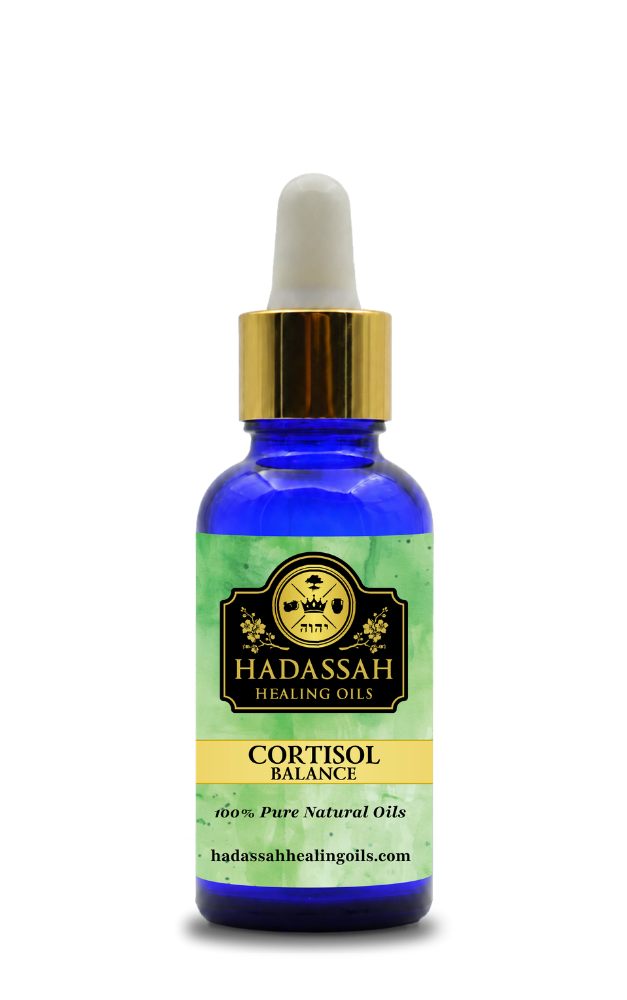
CORTISOL BALANCE BLEND 30ML
R520.00 Incl. VAT
CORTISOL BALANCE BLEND 30ML
Support the neuroendocrine systems responsible for the body’s physiological response to stress.
- 3-5 working days
- All products include VAT.
- Client Testimonies
- 100% Natural
- 100% Pure Essential Oils
- 100% Manufacturing Guarantee
- Share to social media
Description
Directions for Use
Warning
Ingredients
Technical Information
CORTISOL BALANCE BLEND 30ML
Cortisol Balance is a concentrated medicinal botanical formulation developed to support the neuroendocrine systems responsible for the body’s physiological response to stress.
Rather than approaching cortisol as a hormone that should simply be “lowered,” Cortisol Balance has been formulated around the physiology responsible for appropriate cortisol production, stress adaptation, autonomic recovery and restoration of the body’s normal stress-response state.
The principal biological systems addressed include:
Hypothalamic-pituitary-adrenal signalling
Cortisol stress responses
Sympathetic/parasympathetic balance
GABAergic and glutamatergic neurotransmission
Serotonergic signalling
Inflammatory cytokine regulation
Oxidative-stress protection
Sleep and circadian recovery
CORTISOL IS NOT THE ENEMY
Cortisol is an essential glucocorticoid hormone produced by the adrenal cortex.
It participates in:
Blood-glucose regulation
Blood-pressure maintenance
Immune regulation
Inflammatory control
Energy mobilisation
Wakefulness
Stress adaptation
Metabolism
Normal cortisol production follows a circadian rhythm.
Levels generally rise toward waking, producing the cortisol awakening response, and then decline progressively throughout the day toward lower nighttime concentrations.
The problem is not cortisol itself.
The problem can arise when the timing, magnitude or regulation of the stress response becomes disturbed.
Regulate the stress signal.
Support the HPA axis.
Promote parasympathetic recovery.
Support an appropriate cortisol response.
Protect against the inflammatory burden of chronic stress.
Restore the body’s capacity to move from activation back into recovery.
Advanced medicinal botanical support for neuroendocrine stress regulation and healthy cortisol physioloy
CORTISOL BALANCE BLEND 30ML
Drink one capsule filled daily as needed
Apply a small amount to intact skin and massage gently.
Suitable application areas include:
Wrists • Back of neck • Shoulders • Upper back • underneath Feet
For evening stress and sleep support, apply during the period leading up to bedtime.
For daytime stress regulation, apply conservatively during periods of sustained psychological demand.
All our blend’s come in a 30ml glass bottle, with a glass pipette and a rubber bulb on top. Don’t forget to buy empty veggie capsules when purchasing an ingestible blend. (Our veggie capsules are now available in 90’s and 150’s).
Never pre-fill capsules for future use, as this will compromise the veggie capsule and melt. Instead, always fill the capsules just before drinking it. (But if no other option, only prepare up to 3 days’ supply. You MUST then keep them upright in the refrigerator in a marked container; to know which blend it is filled with.)
Method – open the veggie capsule, then open your blend, squeeze and release the rubber bulb to draw the oil blend up into the glass pipette dropper. Then gently squeeze the rubber bulb to fill the larger part of the open capsule. Close the capsule before drinking it. Dosage is always a full capsule of a specific blend (between 15 to 18 drops).
If you have to drink more than one capsule a day, spread them throughout the day, never more than two capsules at a time. Spreading the capsules throughout the day assists the body with proper absorption. Always good to have a very small snack/fruit before drinking capsules.
CORTISOL BALANCE BLEND 30ML
Avoid eyes, mucous membranes and broken skin.
Patch test before first use.
Persistent symptoms attributed to “high cortisol” should not be diagnosed from symptoms alone.
Cortisol abnormalities can occur in genuine endocrine disorders and may require appropriate testing.
Symptoms such as severe unexplained muscle weakness, major unexplained weight change, persistent hypertension, significant glucose abnormalities, unusual bruising, severe fatigue, fainting or other significant endocrine symptoms warrant medical assessment.
People using corticosteroid medication should never abruptly stop prescribed corticosteroids in an attempt to “balance cortisol.”
Cortisol Balance is designed as complementary botanical support for physiological stress regulation and does not replace medical assessment or treatment of adrenal, pituitary or other endocrine disease.
CORTISOL BALANCE BLEND 30ML
Lavender
Clary Sage
Turmeric
Frankincense
Myrrh
Roman Chamomile
Bergamot
Holy Basil
Sandalwood
Copaiba
Mandarin
Neroli
Vetiver
Ylang Ylang and Olive Oil.
CORTISOL BALANCE BLEND 30ML
Cortisol Balance is a concentrated medicinal botanical formulation developed to support the neuroendocrine systems responsible for the body’s physiological response to stress.
The formulation combines:
Lavender • Clary Sage • Turmeric • Frankincense • Myrrh • Roman Chamomile • Bergamot • Holy Basil • Sandalwood • Copaiba • Mandarin • Neroli • Vetiver • Ylang Ylang • Olive Oil
Rather than approaching cortisol as a hormone that should simply be “lowered,” Cortisol Balance has been formulated around the physiology responsible for appropriate cortisol production, stress adaptation, autonomic recovery and restoration of the body’s normal stress-response state.
The principal biological systems addressed include:
Hypothalamic-pituitary-adrenal signalling
Cortisol stress responses
Sympathetic/parasympathetic balance
GABAergic and glutamatergic neurotransmission
Serotonergic signalling
Inflammatory cytokine regulation
Oxidative-stress protection
Sleep and circadian recovery
CORTISOL IS NOT THE ENEMY
Cortisol is an essential glucocorticoid hormone produced by the adrenal cortex.
It participates in:
Blood-glucose regulation
Blood-pressure maintenance
Immune regulation
Inflammatory control
Energy mobilisation
Wakefulness
Stress adaptation
Metabolism
Normal cortisol production follows a circadian rhythm.
Levels generally rise toward waking, producing the cortisol awakening response, and then decline progressively throughout the day toward lower nighttime concentrations.
The problem is not cortisol itself.
The problem can arise when the timing, magnitude or regulation of the stress response becomes disturbed.
THE HPA AXIS
Cortisol production is controlled by the:
HYPOTHALAMIC-PITUITARY-ADRENAL AXIS
The pathway is:
STRESS SIGNAL
↓
HYPOTHALAMUS
releases CRH — Corticotropin-Releasing Hormone
↓
PITUITARY
releases ACTH — Adrenocorticotropic Hormone
↓
ADRENAL CORTEX
releases CORTISOL
↓
CORTISOL FEEDBACK
signals back to the hypothalamus and pituitary
This negative-feedback system normally prevents unnecessary prolonged activation.
At the same time, the sympathetic nervous system activates the more immediate stress response involving adrenaline and noradrenaline.
Cortisol Balance is therefore formulated around both:
HPA-AXIS REGULATION
and
AUTONOMIC NERVOUS-SYSTEM REGULATION.
CLARY SAGE
Linalyl Acetate, Linalool & Direct Human Cortisol Research
Clary Sage — Salvia sclarea — is one of the most important ingredients in this formulation because it has actually been studied in humans with plasma cortisol measurement.
Its essential oil commonly contains substantial concentrations of:
LINALYL ACETATE
LINALOOL
with smaller quantities of:
α-Terpineol
Germacrene D
Sclareol
depending upon the oil.
In a human study involving menopausal women, inhalation of Clary Sage essential oil produced a significant decrease in plasma cortisol and an increase in 5-hydroxytryptamine — serotonin/5-HT.
The cortisol response was particularly notable in participants with depressive tendencies. (PubMed)
A separate chemically characterised human pilot study found its tested Clary Sage oil contained approximately 61.3% linalyl acetate and 22.1% linalool, demonstrating how dominant these two compounds can be in authentic Clary Sage oil. (PubMed)
PRINCIPAL ACTIVE COMPONENTS
Linalyl Acetate • Linalool • Sclareol-related diterpene fraction
PRIMARY PHARMACOLOGICAL RELEVANCE
Cortisol-response modulation • Serotonergic effects • Neuroendocrine regulation • Autonomic stress support
Clary Sage therefore forms one of the principal cortisol-directed components of Cortisol Balance.
LAVENDER
Linalool & Linalyl Acetate — Neuronal Excitability and Stress Regulation
Lavender provides another concentrated source of:
LINALOOL
LINALYL ACETATE
These compounds have substantial neuropharmacological research.
Linalool and Lavender preparations have demonstrated activity involving:
Glutamatergic/NMDA signalling
Serotonergic signalling
Voltage-dependent calcium channels
Neuronal excitability
Autonomic regulation
These mechanisms are important because cortisol secretion begins with central nervous-system perception and processing of stress.
Lavender therefore acts considerably further upstream than the adrenal gland.
Its role is to support regulation of the neurological signals capable of initiating and maintaining the stress response.
Human research is not completely uniform. One controlled study found Lavender reduced a salivary stress marker, chromogranin A, without significantly changing cortisol, while another randomized clinical trial in hypertensive patients reported reductions in serum cortisol, heart rate, blood pressure and anxiety. (PubMed)
PRINCIPAL ACTIVE COMPONENTS
Linalool • Linalyl Acetate
PRIMARY PHARMACOLOGICAL RELEVANCE
Neuronal-excitability regulation • Glutamatergic modulation • Autonomic regulation • Stress-response support
BERGAMOT
Limonene, Linalyl Acetate & Parasympathetic Regulation
Bergamot contains a pharmacologically useful combination of:
LIMONENE
LINALYL ACETATE
LINALOOL
together with other monoterpenes.
Bergamot is particularly relevant because human research has measured both cortisol and autonomic nervous-system activity.
In a human crossover study, Bergamot essential-oil exposure produced lower salivary cortisol compared with resting alone and increased high-frequency heart-rate variability during recovery.
High-frequency heart-rate variability is associated with parasympathetic/vagal activity. (PubMed)
This is important.
Recovery from stress requires more than stopping cortisol secretion.
The nervous system must transition from:
SYMPATHETIC ACTIVATION
fight-or-flight
toward:
PARASYMPATHETIC RECOVERY
rest-and-recovery physiology
PRINCIPAL ACTIVE COMPONENTS
Limonene • Linalyl Acetate • Linalool
PRIMARY PHARMACOLOGICAL RELEVANCE
Parasympathetic support • Cortisol-response modulation • Autonomic regulation • Stress recovery
HOLY BASIL
Stress Adaptation & HPA-Axis Resilience
Holy Basil — Ocimum tenuiflorum — provides one of the most compelling botanical stress-response components in the formulation.
Whole-plant preparations contain compounds including:
Eugenol
Rosmarinic Acid
Ursolic Acid
Linalool
β-Caryophyllene
depending upon preparation.
A randomized, double-blind, placebo-controlled human trial of a standardized Holy Basil extract investigated both chronic and acute biological stress markers.
After eight weeks, participants receiving Holy Basil demonstrated:
Lower hair cortisol
and during an experimental acute stress test:
Lower salivary cortisol
Lower salivary amylase
Lower systolic blood pressure
Lower diastolic blood pressure
Lower subjective stress
compared with placebo. (PubMed)
This is highly relevant because hair cortisol reflects longer-term cortisol exposure, while salivary cortisol during a laboratory stress test provides information about the acute HPA-axis response.
PRINCIPAL PHYTOCHEMICALS IN HOLY BASIL PREPARATIONS
Eugenol • Rosmarinic Acid • Ursolic Acid • Linalool • β-Caryophyllene
PRIMARY PHARMACOLOGICAL RELEVANCE
HPA-axis resilience • Stress-response modulation • Antioxidant defence • Inflammatory regulation • Metabolic stress support
Holy Basil therefore provides an important adaptation and resilience component within Cortisol Balance.
NEROLI
Linalool, Limonene & Human Neuroendocrine Research
Neroli — the essential oil of Citrus aurantium var. amara flowers — commonly contains compounds including:
Linalool
Limonene
Linalyl acetate
Nerolidol
α-Terpineol
depending upon source.
Neroli has also been studied in humans with endocrine measurements.
In a randomized controlled trial involving postmenopausal women, Neroli inhalation was associated with improvements in several physiological outcomes; the study also measured serum cortisol and found a tendency toward improvement in cortisol concentrations. (PubMed)
Neroli was additionally included with Lavender and Ylang Ylang in a human essential-oil blend that significantly reduced salivary cortisol and blood-pressure parameters compared with controls. (PubMed)
PRINCIPAL ACTIVE COMPONENTS
Linalool • Limonene • Linalyl Acetate • Nerolidol
PRIMARY PHARMACOLOGICAL RELEVANCE
Neuroendocrine regulation • Autonomic support • Stress-response modulation
YLANG YLANG
Sesquiterpene & Aromatic-Ester Autonomic Support
Ylang Ylang — Cananga odorata — has a complex volatile profile that can include:
Linalool
Germacrene D
β-Caryophyllene
Benzyl acetate
Benzyl benzoate
Farnesene derivatives
depending upon distillation fraction and grade.
Human studies have investigated Ylang Ylang in relation to:
Blood pressure
Heart rate
Autonomic activity
Stress responses
A blend containing Lavender, Ylang Ylang, Marjoram and Neroli significantly reduced salivary cortisol and several blood-pressure measures compared with placebo and control groups. (PubMed)
Another human study using Lavender, Ylang Ylang and Bergamot reported significant differences in serum cortisol, blood pressure, pulse, subjective stress and anxiety. (PubMed)
PRINCIPAL ACTIVE COMPONENTS
Linalool • Germacrene D • β-Caryophyllene • Benzyl Acetate and related constituents
PRIMARY PHARMACOLOGICAL RELEVANCE
Autonomic regulation • Stress-response support • Cardiovascular stress-response modulation
COPAIBA
β-Caryophyllene — CB2-Mediated Neuroinflammatory Regulation
Copaiba commonly contains substantial concentrations of:
β-CARYOPHYLLENE
β-Caryophyllene is a selective agonist of the:
CANNABINOID CB2 RECEPTOR
CB2 receptors participate extensively in immune and inflammatory regulation.
β-Caryophyllene has been investigated experimentally for effects involving:
NF-κB
TNF-α
IL-1β
IL-6
Neuroinflammation
Oxidative stress
Stress-related behavioural pathways
Chronic psychological stress and inflammatory signalling interact bidirectionally.
Copaiba therefore provides an important bridge between the stress system and inflammatory system.
PRINCIPAL ACTIVE COMPONENT
β-Caryophyllene
PRIMARY PHARMACOLOGICAL RELEVANCE
CB2 receptor activation • Neuroinflammatory regulation • Cytokine modulation • Stress-recovery support
TURMERIC
Turmerones — Neuroinflammatory & Cellular Stress Support
Turmeric essential oil contains a different pharmacological profile from curcumin-containing turmeric extracts.
Its volatile fraction commonly includes:
ar-TURMERONE
α-TURMERONE
β-TURMERONE
These sesquiterpenes have been investigated for:
Neuroinflammatory regulation
Oxidative-stress modulation
Cellular protection
Inflammatory signalling
The importance of Turmeric within Cortisol Balance is therefore primarily downstream of the stress response.
Persistent stress can interact with inflammatory and oxidative pathways.
Turmerones provide a cellular-recovery component designed to support this side of chronic stress physiology.
PRINCIPAL ACTIVE COMPONENTS
ar-Turmerone • α-Turmerone • β-Turmerone
PRIMARY PHARMACOLOGICAL RELEVANCE
Neuroinflammatory support • Antioxidant defence • Cellular stress protection
FRANKINCENSE
α-Pinene & Inflammatory Stress Signalling
Frankincense essential oil contains a species-dependent volatile profile that may include:
α-Pinene
α-Thujene
Limonene
Sabinene
Other monoterpenes and sesquiterpenes
These compounds have demonstrated experimental anti-inflammatory and neuroactive effects.
Frankincense contributes primarily to the inflammatory and neurological recovery component rather than directly suppressing adrenal cortisol production.
PRINCIPAL ACTIVE FRACTION
α-Pinene and related Boswellia volatile terpenes
PRIMARY PHARMACOLOGICAL RELEVANCE
Inflammatory regulation • Neurophysiological support • Cellular recovery
MYRRH
Furano-Sesquiterpenes & Cellular Stress Protection
Myrrh contains a complex mixture of:
FURANO-SESQUITERPENES
and related terpenoids.
These compounds have demonstrated experimental:
Anti-inflammatory
Antioxidant
Analgesic
Cellular-protective
properties.
Within Cortisol Balance, Myrrh contributes to the formula’s downstream protection against inflammatory and oxidative consequences of prolonged physiological stress.
PRINCIPAL ACTIVE FRACTION
Furano-sesquiterpenes and related sesquiterpenoids
PRIMARY PHARMACOLOGICAL RELEVANCE
Inflammatory regulation • Antioxidant activity • Cellular protection
ROMAN CHAMOMILE
Angelate Esters & Inhibitory Neurophysiology
Roman Chamomile — Chamaemelum nobile — is chemically different from German Chamomile.
Its essential oil is characteristically rich in ester compounds, including:
ANGELATE ESTERS
with exact composition dependent upon origin.
These compounds contribute to Roman Chamomile’s:
Antispasmodic
Neuromuscular-relaxing
Inflammatory-modulating
Central calming
pharmacological profile.
Roman Chamomile therefore reinforces the inhibitory side of the formulation—particularly where stress manifests as physical tension, inability to settle and somatic hyperarousal.
PRINCIPAL ACTIVE FRACTION
Angelate-rich volatile esters
PRIMARY PHARMACOLOGICAL RELEVANCE
Neuromuscular regulation • Antispasmodic effects • Stress-associated physical-tension support
SANDALWOOD
α-Santalol & β-Santalol
True sandalwood essential oil contains high concentrations of:
α-SANTALOL
β-SANTALOL
These sesquiterpene alcohols have been investigated for neurophysiological and anti-inflammatory activity.
Human research with sandalwood essential oils has also examined salivary cortisol and physiological responses following psychological stress, with one pilot study reporting reduced cortisol during recovery for one sandalwood preparation. (PubMed)
PRINCIPAL ACTIVE COMPONENTS
α-Santalol • β-Santalol
PRIMARY PHARMACOLOGICAL RELEVANCE
Neurophysiological regulation • Stress-recovery support • Inflammatory modulation
VETIVER
Sesquiterpene-Rich Nervous-System Regulation
Vetiver — Chrysopogon zizanioides — contains a chemically dense sesquiterpene fraction including compounds such as:
Khusimol
Vetivones
Vetiverol-related compounds
Khusimene derivatives
depending upon source.
Vetiver contributes a distinctly different chemical profile from the linalool-rich oils.
Its role is primarily within the CNS and autonomic-regulation component of Cortisol Balance, particularly where chronic stress is accompanied by restlessness and difficulty disengaging from a state of heightened activation.
PRINCIPAL ACTIVE FRACTION
Khusimol • Vetivones • Sesquiterpene alcohols
PRIMARY PHARMACOLOGICAL RELEVANCE
CNS regulation • Autonomic recovery • Hyperarousal support
MANDARIN
D-Limonene & Stress-State Regulation
Mandarin/Tangerine essential oil is typically dominated by:
D-LIMONENE
with smaller quantities of:
γ-Terpinene
α-Pinene
β-Pinene
Myrcene
Limonene has demonstrated experimental neuroactive, anti-inflammatory and antioxidant effects.
Within Cortisol Balance, Mandarin reinforces the autonomic and emotional stress-response component while adding additional antioxidant phytochemistry.
PRINCIPAL ACTIVE COMPONENT
D-Limonene
PRIMARY PHARMACOLOGICAL RELEVANCE
Neurophysiological support • Stress-state regulation • Antioxidant activity
THE MULTI-TARGET MECHANISM OF CORTISOL BALANCE
The formulation operates across four major physiological levels.
1. CENTRAL STRESS PERCEPTION & NEURONAL EXCITABILITY
Lavender / Linalool + Linalyl Acetate
Clary Sage / Linalool + Linalyl Acetate
Roman Chamomile
Vetiver
Sandalwood
support neurological regulation upstream of the adrenal gland.
The objective is to reduce unnecessary propagation of the stress signal through the central nervous system.
2. HPA-AXIS & CORTISOL RESPONSE
The most important botanicals with human cortisol-related evidence include:
Clary Sage
Holy Basil preparations
Bergamot
Lavender-containing interventions
Neroli-containing interventions
Ylang-Ylang-containing interventions
Sandalwood preparations
The human research includes measurements of:
Plasma cortisol
Serum cortisol
Salivary cortisol
Hair cortisol
Clary Sage inhalation significantly reduced plasma cortisol in one human study. (PubMed)
Standardised Holy Basil supplementation reduced hair cortisol and blunted the salivary-cortisol response to laboratory stress. (PubMed)
Bergamot exposure has produced changes in salivary cortisol and parasympathetic activity. (PubMed)
This gives Cortisol Balance an unusually strong human physiological research foundation for a botanical stress formulation.
3. AUTONOMIC NERVOUS-SYSTEM RECOVERY
Bergamot
Lavender
Neroli
Ylang Ylang
Clary Sage
Mandarin
support the transition from excessive:
SYMPATHETIC DRIVE
toward more appropriate:
PARASYMPATHETIC RECOVERY.
This matters because cortisol regulation does not occur independently from autonomic nervous-system activity.
4. INFLAMMATORY & OXIDATIVE CONSEQUENCES OF CHRONIC STRESS
Black Seed is not present in this formula, so the antioxidant/inflammatory architecture is instead provided principally by:
Turmeric / Turmerones
Copaiba / β-Caryophyllene
Frankincense terpenes
Myrrh sesquiterpenes
Sandalwood santalols
Limonene-containing citrus oils
These compounds provide complementary mechanisms involving:
NF-κB-associated inflammatory signalling
CB2 signalling
Cytokine regulation
Oxidative-stress defence
Neuroinflammatory pathways
WHY CORTISOL SHOULD BE BALANCED — NOT SIMPLY LOWERED
This distinction is central to the formulation.
TOO MUCH CORTISOL AT THE WRONG TIME
can be associated with disturbed sleep, metabolic effects, heightened stress physiology and impaired recovery.
But:
TOO LITTLE CORTISOL
can also be medically serious.
The physiological objective is therefore:
APPROPRIATE CORTISOL AT THE APPROPRIATE TIME.
A healthy pattern is characterised by stronger morning signalling followed by progressive decline toward evening.
Cortisol Balance is therefore designed to support:
Appropriate stress responsiveness
Recovery after stress
Autonomic regulation
Evening down-regulation
Restorative sleep physiology
rather than continuously suppressing cortisol.
THE STRESS–CORTISOL–SLEEP CYCLE
Chronic stress can create a self-reinforcing pattern:
PSYCHOLOGICAL OR PHYSICAL STRESS
↓
HPA-AXIS ACTIVATION
↓
CORTISOL + SYMPATHETIC ACTIVATION
↓
DIFFICULTY SWITCHING OFF
↓
DISRUPTED RECOVERY & SLEEP
↓
GREATER STRESS REACTIVITY THE FOLLOWING DAY
↓
FURTHER HPA-AXIS DEMAND
Cortisol Balance has been formulated to support several points within this cycle simultaneously.
WHO MAY FIND CORTISOL BALANCE RELEVANT?
The physiological pathways addressed by Cortisol Balance may be particularly relevant during periods characterised by:
Chronic psychological stress
Feeling persistently “wired”
Difficulty switching off
Stress-associated sleep disturbance
Mental overactivation
Physical tension
Stress-associated fatigue
Periods of high emotional demand
Poor recovery after prolonged stress
Perimenopausal or menopausal stress-related symptoms
DIRECTIONS FOR USE
Drink one capsule filled daily as needed
Apply a small amount to intact skin and massage gently.
Suitable application areas include:
Wrists • Back of neck • Shoulders • Upper back • underneath Feet
For evening stress and sleep support, apply during the period leading up to bedtime.
For daytime stress regulation, apply conservatively during periods of sustained psychological demand.
Avoid eyes, mucous membranes and broken skin.
Patch test before first use.
KEY BIOACTIVE COMPOUNDS
Linalool / Linalyl Acetate — Lavender
Linalyl Acetate / Linalool / Sclareol-related chemistry — Clary Sage
ar-Turmerone / α-Turmerone / β-Turmerone — Turmeric
α-Pinene and related terpenes — Frankincense
Furano-sesquiterpenes — Myrrh
Angelate Esters — Roman Chamomile
Limonene / Linalyl Acetate / Linalool — Bergamot
Eugenol / Rosmarinic Acid / Ursolic Acid and related phytochemistry — Holy Basil preparations
α-Santalol / β-Santalol — Sandalwood
β-Caryophyllene — Copaiba
D-Limonene — Mandarin
Linalool / Limonene / Nerolidol — Neroli
Khusimol / Vetivones / Sesquiterpene alcohols — Vetiver
Linalool / Germacrene D / β-Caryophyllene / Benzyl esters — Ylang Ylang
INGREDIENTS
Lavender, Clary Sage, Turmeric, Frankincense, Myrrh, Roman Chamomile, Bergamot, Holy Basil, Sandalwood, Copaiba, Mandarin, Neroli, Vetiver, Ylang Ylang and Olive Oil.
IMPORTANT MEDICAL INFORMATION
Persistent symptoms attributed to “high cortisol” should not be diagnosed from symptoms alone.
Cortisol abnormalities can occur in genuine endocrine disorders and may require appropriate testing.
Symptoms such as severe unexplained muscle weakness, major unexplained weight change, persistent hypertension, significant glucose abnormalities, unusual bruising, severe fatigue, fainting or other significant endocrine symptoms warrant medical assessment.
People using corticosteroid medication should never abruptly stop prescribed corticosteroids in an attempt to “balance cortisol.”
Cortisol Balance is designed as complementary botanical support for physiological stress regulation and does not replace medical assessment or treatment of adrenal, pituitary or other endocrine disease.
CORTISOL BALANCE
Advanced Neuroendocrine Stress Regulation
Cortisol Balance is not simply a relaxing oil blend.
It is constructed around the physiology of the:
BRAIN → HYPOTHALAMUS → PITUITARY → ADRENAL → CORTISOL AXIS.
Linalool and Linalyl Acetate from Lavender regulate neuronal excitability and stress signalling.
Clary Sage has direct human evidence demonstrating changes in plasma cortisol and serotonin following inhalation. (PubMed)
Holy Basil preparations have demonstrated reduced hair cortisol and a blunted salivary-cortisol response during experimental stress in randomized human research. (PubMed)
Bergamot has human evidence involving salivary cortisol and increased parasympathetic activity during recovery. (PubMed)
Neroli and Ylang Ylang strengthen the autonomic and neuroendocrine architecture, with cortisol-related human research involving essential-oil combinations. (PubMed)
β-Caryophyllene from Copaiba adds CB2-mediated inflammatory regulation.
Turmerones, Frankincense terpenes and Myrrh sesquiterpenes support the inflammatory, oxidative and cellular consequences of prolonged physiological stress.
Vetiver and Sandalwood add sesquiterpene-rich neurophysiological support.
The resulting strategy is:
STRESS PERCEPTION
↓
NEURONAL EXCITATION
Lavender • Clary Sage • Roman Chamomile • Vetiver
↓
HYPOTHALAMUS / HPA AXIS
Clary Sage • Holy Basil • Bergamot
↓
CORTISOL RESPONSE
↓
AUTONOMIC RECOVERY
Bergamot • Neroli • Ylang Ylang • Lavender
↓
INFLAMMATORY & OXIDATIVE RECOVERY
Copaiba • Turmeric • Frankincense • Myrrh
↓
RESTORATION OF A MORE REGULATED STRESS STATE
CORTISOL BALANCE
Regulate the stress signal.
Support the HPA axis.
Promote parasympathetic recovery.
Support an appropriate cortisol response.
Protect against the inflammatory burden of chronic stress.
Restore the body’s capacity to move from activation back into recovery.
Advanced medicinal botanical support for neuroendocrine stress regulation and healthy cortisol physioloy